
Top 25 Things to Do in Madeira: Must-See Attractions, Activities, and Hidden Gems

Often called the “Pearl of the Atlantic,” Madeira is a volcanic island packed with dramatic landscapes, lush forests, and rugged coastline. Whether you’re here for hiking, adventure, or just to relax with a view, the island has something for everyone. From black sand beaches to jaw-dropping mountain peaks, Madeira’s variety is what makes it so special.
In this guide, I’ve rounded up 25 of the best things to see and do in Madeira, a mix of must-visit attractions, hikes, local experiences, and a few hidden gems. I’ve also included a Google Map so you can easily find each location.
To make it easier, I’ve split the list into:
15 must-visit places: The top Madeira highlights you shouldn’t miss
10 additional places and experiences worth considering
General things to do that capture the island’s best moments
At the end, I’ve also listed my personal top five favourite places on the island.
Pico Do Areeiro
Pico Ruivo
Final Forest
Pico Grande
Sexial Black Sand Beach
Porto Moniz Natural Sea Pool
Vereda da Ponta de São Lourenço
Bica da Cana
Achadas da Cruz Cable car
Miradouro do Guindaste
Ribeira da Janela rock
Levada Nova
Lagoa do Vento
Vereda Dos Balcoes
Traditional Wicker Toboggan
Madeira FAQs
-
One of the standout attractions of Madeira is its year-round warm weather. The local climate is notably stable, with temperatures on the coast seldom falling below 20°C (68°F) or exceeding 30°C (86°F).
That being said the best time to visit Madeira is typically during the spring (March to May) and fall (September to October). During these months, the weather is pleasantly mild, with fewer tourists (although it will never be quiet), making it ideal for outdoor activities like hiking and exploring the beautiful landscape.
Spring offers blooming flowers, lush greenery, and flowing waterfalls, while fall provides warm temperatures and the chance to enjoy local festivals.
The only negatives of visiting in of fall is that the some of the waterfalls will be reduced to a trickle or might have dried up completely. The island is also prone to wildfires throughout summer which can result in some of the hiking trails remaining closed.
I visited twice in October, everyday was sunny with temperatures ranging between 22-30 degrees. The waterfalls however resembled more of trickle and several of the major trails (including PR1) were closed due to previous wildfires which had left them unsafe and damaged
I recently went back in late April/ early May 2026 to hike across the island. and the waterfalls were much more impressive and the flowers were beautiful.
-
At a minimum, I would recommend five days in Madeira. Although the island is not particularly big, there are so many unique and interesting things to see and do that anything less will feel rushed.
Madeira is also incredibly hilly, and the roads are ludicrously steep and windy. Getting from one side of the island to the other often takes longer, and requires a lot more concentration, than you might expect. A 30km drive on Madeira is not the same as a 30km drive at home.
A week is a great amount of time for a first visit. It gives you enough time to see some of the island’s highlights, do a few hikes, explore Funchal, visit the coast, and still have a little bit of breathing room.
However, I think 10 days is the perfect amount of time to properly experience Madeira. That gives you enough time to explore the island’s landscapes, towns, viewpoints, levadas and mountain trails, while also having the occasional slower day.
If you have more time, two weeks would allow for a much more relaxed trip. With that amount of time, you can see modt of the main highlights without rushing, spend more time enjoying your hotel, and even revisit places at both sunrise or sunset
-
Madeira has a notably mild climate, with coastal temperatures rarely feeling too cold or too hot. Most of the time, temperatures sit somewhere between 20°C and 30°C, which is one of the reasons the island is such a good year-round destination.
However, Madeira’s weather is not as simple as “warm and sunny”. Its location in the Atlantic, combined with the island’s steep mountainous terrain, means the weather can change quickly and vary dramatically from one part of the island to another.
It is not uncommon to experience multiple weather conditions in a single day. One side of the island can be covered in cloud or rain, while the other is sitting in glorious sunshine. The mountains can also feel completely different to the coast, with cooler temperatures, stronger winds, low cloud and reduced visibility.
The northern side of Madeira is generally wetter, while the south tends to be drier and sunnier. The wettest period usually runs from November to February, but rain can still happen at any time of year, especially in the mountains.
Alongside checking the forecast, I would recommend downloading the Madeira Weather app for local conditions and using Windy to check wind speed, wind direction and cloud movement.
Madeira also has a number of webcams spread across the island, and these are incredibly useful. Before driving to a hike or viewpoint, it is worth quickly checking the webcams to see what the conditions actually look like on the ground. They can save you a wasted drive across the island to stare at a wall of cloud.
-
Where you stay in Madeira depends on how long you are visiting for, whether you have a car, and what you want to do while you are there.
Funchal is the most convenient option if you are short on time. It has plenty of hotels, restaurants, tours, transport links and easy access to excursions, so it makes sense for a first visit, especially if you do not plan on hiring a car.
That said, Funchal is busy, tourist driven, and in my opinion, it is not where Madeira is at its best. I have only spent a couple of half days in Funchal across my trips, because for me the real beauty of Madeira lies away from the city, out on the coast, in the mountains, along the levadas and in the smaller villages.
Funchal can still work well as a base if you plan on exploring the island, mainly because of its central location and the wider choice of places to eat in the evening. However, if you want dramatic coastlines, quieter villages, easier mountain access and a better feel for Madeira beyond the capital, I would also consider staying elsewhere.
I have visited Madeira three times. On my first two visits, I stayed in one location: Calheta for 10 days and Caniço for 7 days. I can recommend both, although I found Caniço slightly more practical for exploring the island. On my third visit, I hiked across Madeira and stayed in a variety of hotels along the route.
If you want to see as much of Madeira as possible, be prepared to spend a lot of time driving. The island is small, but the roads are steep, slow and winding, so travel times can be longer than expected.
Below are hotels I can personally recommend. I have paid to stay in all of them and have no affiliation with the hotels themselves. However, the links are affiliate Booking.com links, which means I may earn a small commission if you book through them, at no extra cost to you;
The Views Baía, Funchal - an adults-only hotel in Funchal with modern, comfortable rooms and great facilities, including a spa. The buffet breakfast was probably one of the best I have ever had, anywhere, and that is saying something. I only stayed here for one night before hiking across Madeira, but the French toast alone was almost worth the price. It was also one of the cheapest good quality hotels I could find in Funchal, which made it a very solid option before starting the Madeira Trail.
Sentido Galosol, Caniço - A great option if you want to explore the east of Madeira and the central interior without doing marathon drives every day. The hotel is built into the cliffs, with direct sea access and excellent facilities, including a fitness club, wellness centre and a lido built into the sea cliff. Despite its size, it still manages to feel peaceful and uncrowded. The breakfast buffet was also excellent, made even better by watching sunrise from the terrace with a coffee and croissant in hand.
Savoy Saccharum, Calheta - We here for our 10 day honeymoon, and it was stunning. The hotel has a beautiful infinity rooftop pool, great facilities and a really polished feel. Calheta is also one of the sunniest parts of Madeira, with a small marina, a handful of good restaurants, and two golden sand beaches sheltered by a large sea wall.It is a great base for exploring the west and north west of the island, including Paul do Mar, Jardim do Mar and Fanal Forest. The main downside is the driving. Reaching the eastern side of the island can take a while, and by the end of our 10 day trip we had clocked 1,379km in the car. Some of the must-see spots took around 60 to 80 minutes each way, so keep that in mind if you want to explore the whole island.
Santana in Nature Bed & Breakfast - I stayed here while hiking across Madeira, and I could not fault it. The balcony view was genuinely one of the best I have ever had from a hotel, and I watched sunrise from there the next morning. It also has three rooftop jacuzzis with brilliant views, which felt like a ridiculous luxury after a long day on the trail. It is not the most modern hotel but the rooms were clean and comfortable. It is also a great base for exploring the north coast, with easy access to Pico Ruivo, São Jorge, Faial and some of Madeira’s most dramatic coastal scenery.
-
Technically no, but practically yes.
Buses do exist in Madeira, but they are limited, infrequent, and not especially useful if you want to reach trailheads, viewpoints, sunrise spots or more remote areas. Renting a car gives you the freedom to explore the island properly, which is especially useful if you want to get beyond Funchal and visit the harder to reach hidden gems.
Having your own car also means you can head out early for sunrise, stay out for sunset, or change plans last minute depending on the weather. In Madeira, that flexibility is a huge advantage.
When renting a car, I would choose something small but powerful. The roads are narrow, steep and winding, so you do not want anything too big, but you also do not want to spend every climb frantically switching between first and second gear. If you are not fully confident with clutch control, consider an automatic. Your nerves and your passengers will thank you.
On all three occasions I have visited Madeira, I have rented through Discover Cars. They search both local and international companies to find the best deals, then let you choose the supplier that suits you best, whether that is based on price, reviews or reputation.
You can use my affiliate link below to book your car hire. It comes at no extra cost to you, but helps me keep this website running.
Book your vehicle using Discover Cars
-
Driving in Madeira is unforgettable, mostly because the roads are some of the steepest and most dramatic I have ever encountered.
I was genuinely blown away by Madeira’s road network. The infrastructure, road surfaces and tunnels are incredibly impressive for an island in the middle of the Atlantic. The amount of concrete they must have used is unfathomable. Take note, Welsh Government.
The island is laced with tunnels that slice straight through mountains and connect once remote towns with surprising efficiency. The main ring road, the VR1, loops around much of the island and makes coastal journeys far quicker than you might expect.
That said, it can be a bit of a wild ride.
I would liken driving in Madeira to a Mario Kart course: twisty, fast, full of tunnels, and occasionally confusing. The locals drive with purpose, indicators can feel optional, and some slip roads appear to have been designed by someone who enjoys watching tourists panic. You can find yourself joining a fast road from a standing start, sometimes on a bend, which is always character building.
Away from the main roads, things get even more entertaining. The mountain roads are narrow, steep and winding, with junctions perched on gradients that feel entirely unreasonable. Locals also have an impressive ability to park on already narrow roads, making some sections even tighter.
Do not let that put you off completely though. Once you get used to it, driving in Madeira becomes part of the adventure. The roads are generally well maintained, the views are ridiculous, and having a car gives you the freedom to explore the island properly.
My main advice would be to take your time, use lower gears on steep descents, avoid driving mountain roads in bad weather if you are nervous, and do not blindly trust Google Maps if it tries to send you up a vertical side street that looks like a driveway with ambition.
-
Not really. I found Madeira pretty affordable, and it did not feel wildly different to mainland Portugal, especially when it comes to food and drink.
Drinks were generally very reasonable. In local cafés and snack bars, a small beer can often cost around €1 to €2, while a larger beer or pint is usually closer to €2.50 to €4. Coffee is often around €1 to €3, although you can pay more in hotels, speciality cafés or tourist-heavy areas.
Food prices vary depending on where you eat. There are plenty of small snack bars dotted around the island where you can grab a sandwich, pastry, light bite or simple meal for around €2 to €8.
If you are eating in a restaurant, expect to pay around €12 to €25 for a main meal, depending on where you are and what you order. Simple local dishes and snack bars will be cheaper, while fresh fish, steak, seafood and more tourist-focused restaurants will cost more. Portion sizes are usually generous, and the quality is generally very good, especially if you order fresh fish or local meat dishes.
Sides usually cost around €3 to €5, although some main meals already include sides.
Overall, I would not describe Madeira as expensive. The main costs to factor in are accommodation, car hire, fuel, parking, paid PR trail reservations and any tours or excursions. Once you have those sorted, many of the best things to do on the island are outdoors, scenic and relatively low cost.
-
Poncha - Poncha is the traditional drink of Madeira, made from sugar cane brandy, honey and lemon juice. Unless you do not drink alcohol, it is something you simply have to try. Just go easy, it is as strong as it is delicious. One of the most famous places to try it is Taberna da Poncha in Serra de Água.
Coral - Coral is the local beer, cheap, cheerful and found everywhere. It is light, refreshing and exactly what you want after a long hike or a hot beach day.
Madeira wine - Madeira is world famous for its fortified wine, which is produced locally and aged in the island’s warm climate. It has a distinctive rich flavour and you will find plenty of opportunities to taste it across the island.
Bolo do Caco - Bolo do Caco is traditional Madeiran garlic bread, soft and fluffy with a crisp exterior, usually served warm and covered in garlic butter. It comes with many meals and never disappoints.
Bolo de Mel de Cana - Bolo de Mel de Cana is a rich honey cake made with dark sugar cane molasses, nuts and sultanas. It is dense, sticky and full of flavour, a true island classic that also makes a great souvenir.
Espetada Madeirense - chunks of beef marinated in garlic and bay leaves, grilled over wood or charcoal and traditionally served on a skewer. It is hearty, smoky and perfect after a big day exploring.
Fish, fish and more fish - Madeira’s coastal location means the seafood is exceptional. I had some of the freshest and tastiest fish I have ever eaten here. The local speciality is scabbardfish, an unusual deep sea fish that is often served with banana. It sounds strange, but it is a proper Madeiran classic. One of my favourite restaurants was The Fish Factory in Paul do Mar, which serves freshly caught fish cooked over a barbecue. Simple, authentic and absolutely delicious.
-
Madeira is famous for its dramatic landscapes, world class hiking trails, lush green mountains, Madeira wine, Poncha and its year-round springlike climate. It is also known for its spectacular viewpoints, colourful gardens, levadas, waterfalls and warm hospitality.
It is also the birthplace of Cristiano Ronaldo, one of the ‘greatest footballers of all time’. The island is incredibly proud of its connection to him. There is a CR7 Museum in Funchal dedicated to his life and career, and the island’s main airport is named Cristiano Ronaldo International Airport in his honour.
Just maybe do not show up wearing a Lionel Messi shirt, unless you fancy a few raised eyebrows.
-
Yes, Madeira generally feels very safe. Crime rates are low, locals are friendly, and the island has a relaxed, welcoming atmosphere that makes it a great destination for solo travellers, couples and families.
That said, if you are hiking alone, still take normal mountain safety precautions. Let someone know your route, check the weather, carry enough water, download offline maps and do not underestimate the terrain. Madeira is safe, but the mountains are still mountains.
-
Yes, but not many. Madeira is more cliffs, coves and volcanic coastline than long sandy beaches.
Calheta and Machico both have imported golden sand, while Seixal has a beautiful black volcanic sand beach that is incredibly photogenic. The natural pools at Porto Moniz are also a must visit.
If you are after a classic sandy beach holiday, Madeira probably is not the destination for you. But what it lacks in beaches, it more than makes up for in dramatic scenery, hiking and adventure.
-
Language- The official language of Madeira is Portuguese, but many people on the island speak and understand English, especially in tourist areas.
Currency - The currency in Madeira is the Euro.
Plugs and voltage - Madeira uses Type F plugs, and the standard voltage is 230V.
Paying by card - Most shops, hotels and restaurants accept debit and credit cards. I used Monzo almost everywhere without any issues. However, it is still worth carrying some cash for smaller purchases, remote areas, cafés, parking and tips.
Tipping is appreciated in Madeira, but it is not usually expected in the same way as some other countries. If you receive good service, rounding up the bill or leaving around 5-10% is a nice gesture.
Do not litter- This should go without saying, but always take your rubbish with you, especially when hiking. Madeira’s landscapes are stunning, so let’s keep them that way.
-
Yes, Madeira’s official PR walking trails now require an online reservation before you hike. This is done through the official SIMplifica portal, where you select your route, choose a date and time slot, and pay the access fee.
-
The standard access fee for many official PR trails is €4.50 per person, per trail. PR1 Vereda do Areeiro is currently more expensive at €10.50 per person. Prices and rules can change, so always check SIMplifica before setting off.
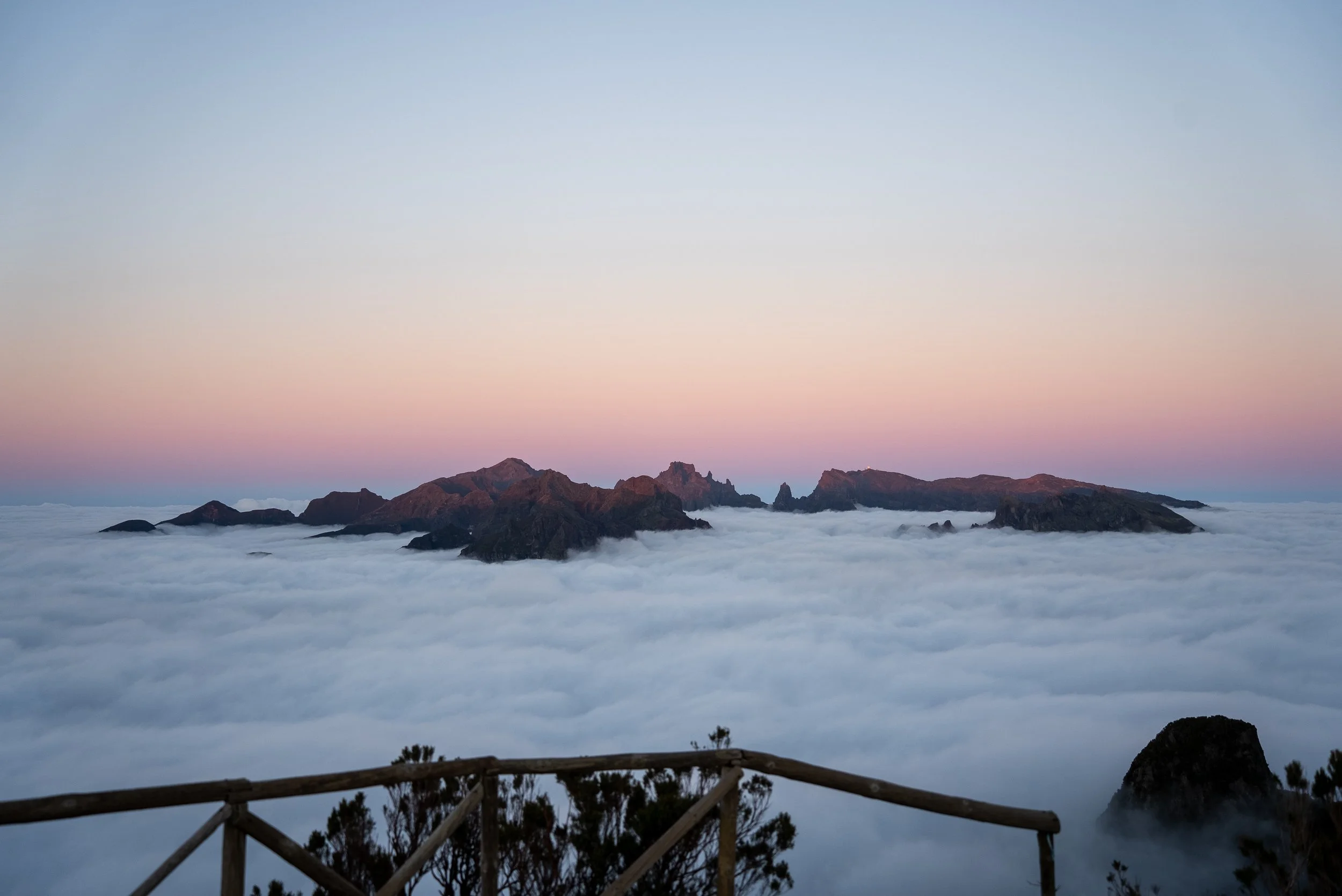
2026 Madeira hiking update
Madeira now has a paid reservation system for its official PR hiking trails. The system has been introduced to help manage overcrowding, protect fragile landscapes, improve safety, and spread visitor numbers across busy routes.
All official PR hikes need to be booked through the SIMplifica portal
The standard cost is €4.50 per person, per hike, although PR1 is currently €10.50.
Slots are limited and allocated in 30-minute entry windows.
Bookable time slots generally run from around 07:00 to 18:00.
Outside of these hours, you may not need a time slot, although PR1 is different as the gate is locked outside of official access times.
Payment is made online. There is no cash payment at the trailhead, and you should keep your digital confirmation or QR code with you.
Madeira residents are exempt from payment and booking.
Multi-day passes are available, including 3-day and 7-day options, but they are only likely to save you money if you plan to hike five or more paid PR trails.
Trail status should be checked on Visit Madeira trail page
My experience hiking in Madeira
I first visited Madeira in September 2024 on my honeymoon, then returned again in September 2025. Most recently, I hiked across the island in May 2026, as well as doing two individual day hikes before starting the Madeira Trail.
Based on my own experience, speaking to other hikers, and reading recent reports online, it seems the more popular and easier-to-access PR trails are the ones most likely to have people checking tickets. PR1 is the only trail where I have personally seen tickets being checked, with security at the entrance gate.
A lot of trails, especially routes around Pico do Areeiro, have wide or multiple entry points with no obvious place to stop hikers and check tickets. This makes it difficult and costly to monitor every person using the trail. However, this may be different on some of the more popular levada walks, as they often have one or two main entry points which are narrower and easier to manage.
When I hiked across Madeira in May 2026, I did not realise that I needed to book a time slot for each individual PR trail used along the route. As a result, I unknowingly hiked several PR sections without a booked time slot, including PR17, PR1.3, PR1.2, PR6, PR6.3 and PR1.1.
I was not checked once on any of these trails. However, it is worth noting that I was often starting early and finishing late, outside the busiest times of day.
That said, this may change. The system is still relatively new, and the authorities may become stricter with checks over time. For that reason, I would still recommend booking and paying for the relevant PR trails through the SIMplifica portal before you hike.
If a trail is sold out, some hikers may choose to chance it and turn up anyway. For PR1, you will not get through without a valid booking. The route has controlled access, tickets are checked at the entrance, and the gate is locked outside the official access hours.
For other PR trails, checks may be less consistent. You may arrive and find nobody checking tickets, but if you attempt to hike without a valid reservation, you need to know that you run the risk of being fined or refused access.
If you do decide to take that risk, I would strongly recommend going very early or later in the day, so you do not contribute to the overcrowding the system is trying to prevent.
Regardless of whether you have managed to secure a time slot or not, please pay the hiking fee if possible. It is not a large amount, and the money helps support trail maintenance, safety work and the long-term protection of Madeira’s hiking routes so future visitors can continue to enjoy them.
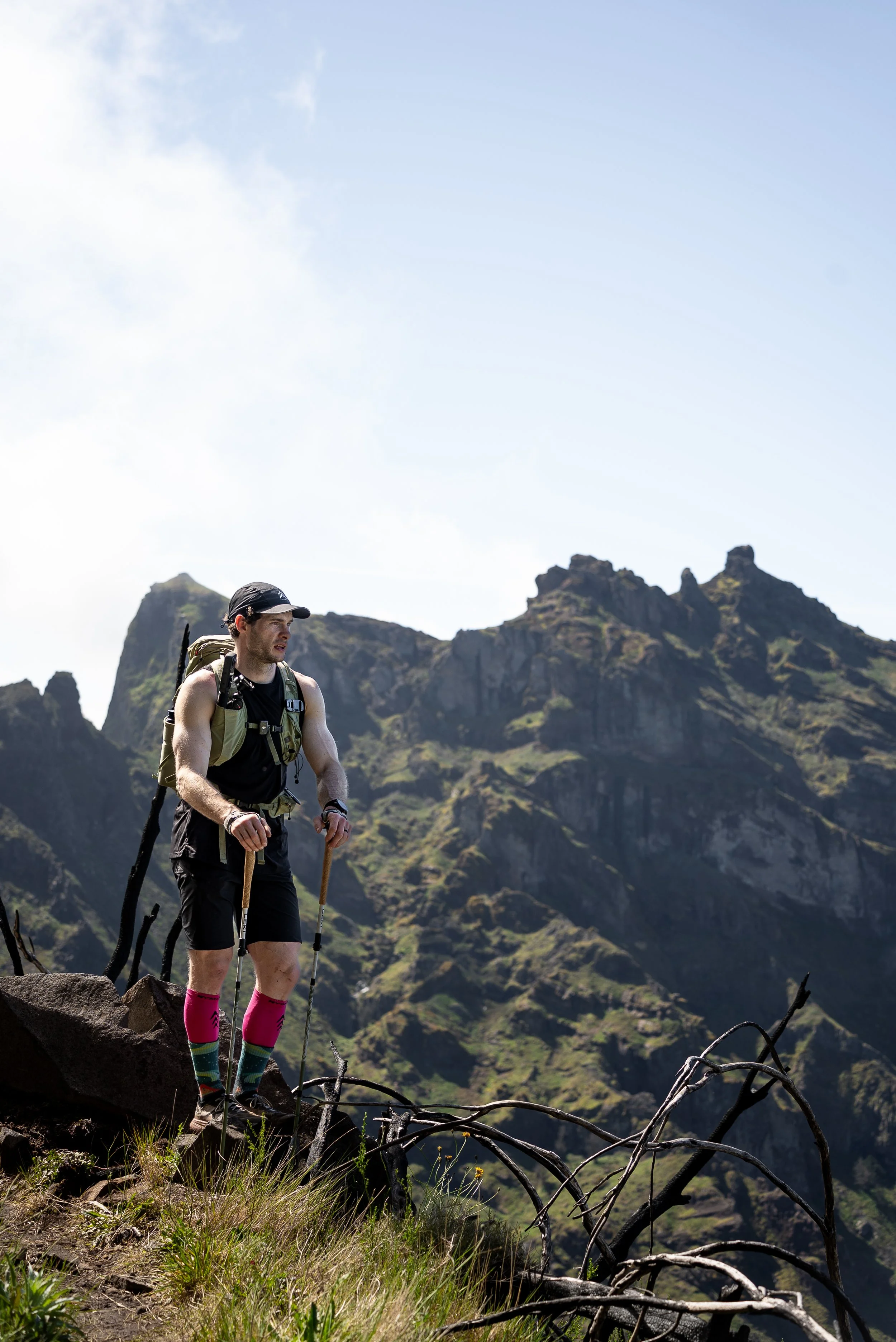
Madeira Hiking FAQs
-
Yes, Madeira’s official PR walking trails now require an online reservation before you hike. This is done through the official SIMplifica portal, where you select your route, choose a date and time slot, and pay the access fee.
-
The standard access fee for many official PR trails is €4.50 per person, per trail. PR1 Vereda do Areeiro is currently more expensive at €10.50 per person. Prices and rules can change, so always check SIMplifica before setting off.
-
All trail payments and reservations are made through the official SIMplifica portal. Before you can book a trail, you will need to create a SIMplifica account. This is required for all visitors, including children.
Once your account is set up, the process is straightforward:
Create your account on the SIMplifica portal and log in
Select the PR walking trail you want to hike
Choose the date of your visit
Select an available 30-minute time slot
Enter the details for every visitor in your group, including children
Pay the access fee online, usually €4.50 per person
Check your email for your digital confirmation and QR code
Make sure you save the confirmation before setting off, as you may need to show your QR code on the trail.
-
The 2026 reservation system applies to Madeira’s official PR walking trails managed by IFCN. These are the main classified hiking routes across the island.
PR1 - Vereda do Areeiro, to Pedra Rija
PR1.1 - Vereda da Ilha
PR1.2 - Vereda do Pico Ruivo
PR2 - Vereda do Urzal
PR5 - Vereda das Funduras
PR6 - Levada das 25 Fontes
PR6.1 - Levada do Risco
PR6.2 - Levada do Alecrim
PR6.3 - Vereda da Lagoa do Vento
PR6.4 - Levada Velha do Rabaçal
PR6.5 - Vereda do Pico Fernandes
PR6.6 - Vereda do Túnel do Cavalo
PR6.7 - Vereda Câmara de Carga do Rabaçal
PR6.8 - Levada do Paul II
PR8 - Vereda da Ponta de São Lourenço
PR9 - Levada do Caldeirão Verde
PR9.1 - Caldeirão Verde accessible route
PR11 - Vereda dos Balcões
PR12 - Caminho Real da Encumeada
PR13 - Vereda do Fanal
PR13.1 - Vereda da Palha Carga
PR14 - Levada dos Cedros
PR15 - Vereda da Ribeira da Janela
PR17 - Caminho do Pináculo e Folhadal
PR18 - Levada do Rei
PR19 - Caminho Real do Paul do Mar
PR21 - Caminho do Norte
PR22 - Vereda do Chão dos Louros
-
Bookable time slots generally run from around 07:00 to 18:00, with reservations allocated in 30-minute entry windows. Your time slot is your start window, not the time you need to finish the hike.
For example, if you book the 08:00 slot, you should start the trail during that 30-minute period. You can then complete the hike at your own pace.
-
You can chance it, but you risk not being allowed onto the trail. This is especially important for PR1 Vereda do Areeiro, where tickets are checked and access is controlled by a gate. If you arrive outside your booked slot for the PR1, there is a chance you may be refused entry.
For other PR trails, I am less sure how strictly the time slots are currently being checked, as this seems to vary by route. Witth the most popular hikes being more closely monitored. However, the safest option is to arrive during the 30-minute time window you selected when booking.
You should also factor in parking, especially on popular routes where spaces can fill up quickly. Give yourself enough time to park, get organised and reach the trail entrance before your booked slot starts.
-
Yes, PR1 Vereda do Areeiro is part of the reservation system. It is also currently the only gated hike I have personally experienced in Madeira.
You must have a valid ticket for PR1, your ticket will be checked at the entrance, and the gate is locked outside the official access hours. PR1 is also one of the busiest and most changeable routes in Madeira, so check the latest access information carefully before planning your hike.
-
Yes, all visitors need to be included in the booking, including children. When reserving a trail, you will need to enter the details for everyone in your group.
-
Yes, once you book and pay for a trail, you should receive a digital confirmation and QR code. Save this to your phone or take a screenshot before setting off, as you may be asked to show it on the trail.
-
Everything has to be done online and there is no way to pay in person, or with cash, You can try book online when you are at the trailhead but you run the risk of not having signal or the hike being booked up. I would not rely on paying at the trailhead. The safest option is to book online in advance through SIMplifica, especially for popular routes, busy dates or trails with limited entry slots.
For PR1, you should definitely book in advance. It is gated, tickets are checked, and access is controlled.
-
You may be fined if you hike an official PR route without a valid reservation or payment where one is required. I haven’t heard of this happening, but you don’t want to be on the receiving end of a fine
-
Not always. For most visitors, individual tickets at €4.50 per trail are usually cheaper and more flexible. A pass only really makes sense if you are planning several official PR hikes in a short period.
-
Yes. Booking and paying for a trail does not automatically mean conditions will be safe or that every route is fully open.
Madeira’s trails can be affected by weather, landslides, maintenance, wildfire damage and safety restrictions.
Always check the official Visit Madeira trail page for updates
It is also worth checking recent reviews on AllTrails or similar apps, as hikers often share useful up-to-date information about trail conditions, closures and diversions.
-
If your multi day route uses official PR trails that require payment, you should check and book the relevant trails for each day. That being said, you can start early and risk not booking them. My passes wern’t checked on the first three days of my 5 Hike across Madeira between Fanal and Pico Ruivo
-
Yes, popular routes and time slots can become unavailable, especially during busy periods. PR1 is likely to be one of the hardest to secure, so book early where possible.
-
Choose a realistic entry time based on your transport, start point and walking pace. Do not pick an early slot if you still need to drive across the island, park, or wait for a transfer.
You should also factor in parking. Popular trailheads in Madeira can fill up quickly, so allow enough time to find a space, get ready and reach the trail entrance before your booked slot starts.
For longer routes, avoid booking too late in the day unless you are confident you have enough daylight to finish safely.
For sunrise hikes, check SIMplifica carefully. The earliest bookable slots generally appear to start around 07:00, which may not be early enough for a true sunrise start on some routes.
-
Levadas are narrow irrigation channels built to carry water across Madeira, often with walking paths running alongside them. They usually pass through forests, valleys and mountains, and are one of the most unique hiking experiences on the island.
Veredas are traditional mountain trails that often connect villages, viewpoints, ridges and summits. As a general rule, levadas tend to be flatter and easier, while veredas are usually steeper, more exposed and more physically demanding.
-
Trail difficulty in Madeira varies a lot.
Some levada walks are gentle and beginner friendly, while others involve narrow paths, tunnels, steep drops and long distances. The veredas and mountain routes are usually more challenging, with bigger climbs, steeper descents and more exposed terrain.
Always check the route distance, elevation gain, weather forecast and trail status before setting off. I would also recommend wearing proper footwear, carrying water, downloading offline maps and allowing more time than you think you need. Madeira is steep, and even short hikes can feel surprisingly tough.
-
Yes, most popular hikes in Madeira can be done without a guide.
Many of the official PR trails are well marked and easy to follow, especially if you have offline maps or a GPX route downloaded. All the hikes I have listed in my Madeira hiking guide are straightforward enough to do independently if you are comfortable hiking and prepared for the terrain.
However, if you are planning a remote, exposed or less maintained route, a local guide can be useful for safety, navigation and local knowledge.
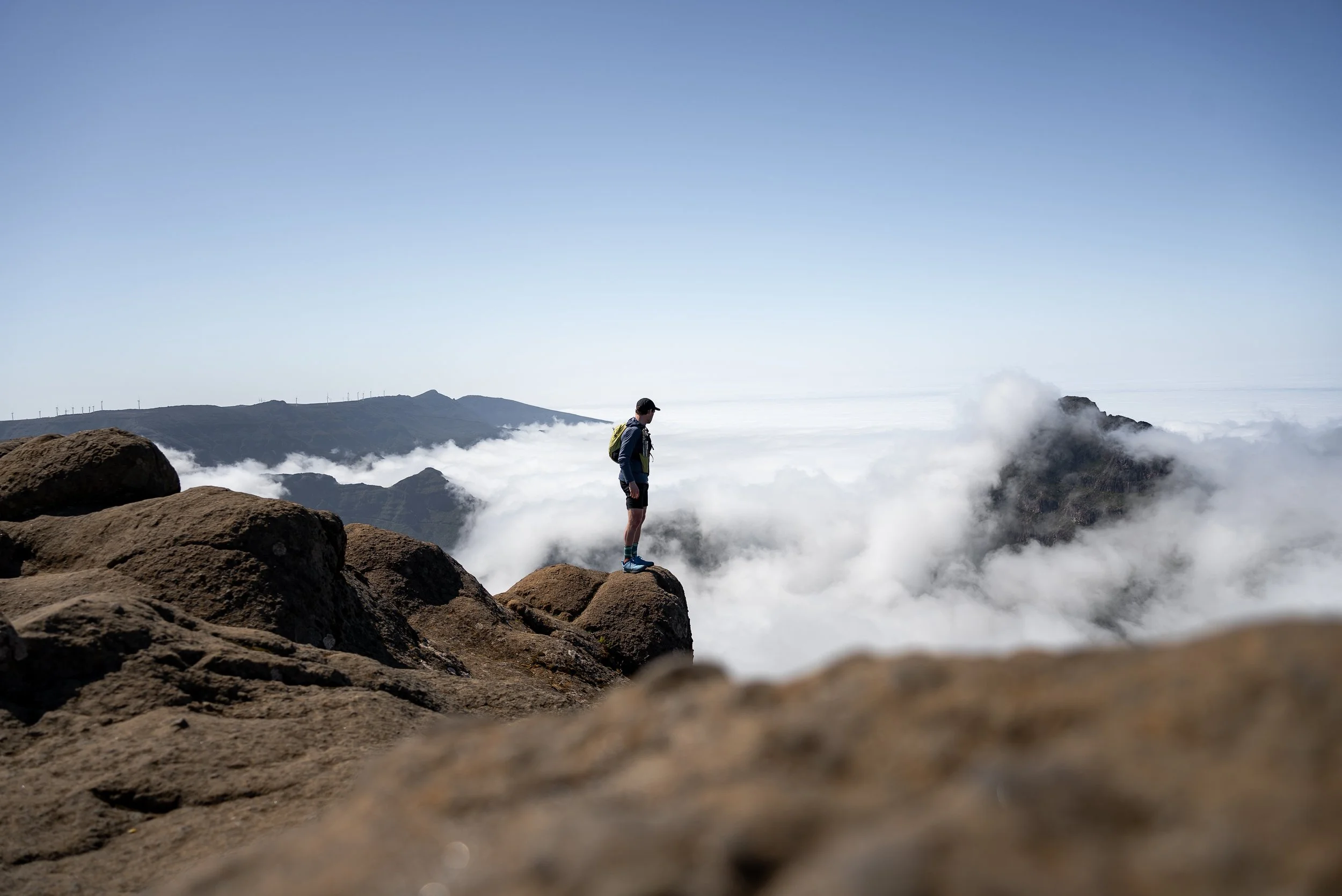
Pico do Areeiro
Location: Pico do Arieiro Viewpoint
What It Is: The third-highest peak on the island (1,818 m)
How Long You Need: 1–2 hours
Best Time to Visit: Sunset
Pico do Arieiro is one of Madeira’s most iconic viewpoints, offering some of the most dramatic mountain scenery anywhere in Europe. At 1,818 metres above sea level, the views are incredible.
It’s also the starting point for the PR1 trail to Pico Ruivo, the island’s highest peak. The route is world-famous for its steep ridgelines, tunnels, and panoramic views, but as of now, the trail remains closed due to fire damage. You can, however, still walk the first 1.2 km to the “Stairway to Heaven” viewpoint and it’s absolutely worth it.
Another thing that makes Pico do Arieiro great is how easy it is to access. There’s parking right near the summit, plus a café and toilets, so you can enjoy the view without any hiking required.
I’d highly recommend coming up for sunset rather than sunrise, t’s far quieter, you’re more likely to get a parking spot near the top, and the light over the mountains is spectacular.


Hike up to Pico Ruivo
What It Is: The highest peak in Madeira
How Long You Need: 2-3 hours
Key Info: Moderate 6.5km out & back hike with <400m of elevation gain
Best time to visit: Sunset
I’ve done this hike twice for sunset, and both times were unforgettable.
At 1,862 metres, Pico Ruivo is the highest peak in Madeira and an absolute must-do hike for anyone visiting the island. It’s a relatively short and straightforward out-and-back trail, but the views from the summit are on another level.
The hike follows a well-built, clearly marked path that winds gently along the mountainside. Along the way, you’re treated to sweeping views of the surrounding peaks and deep valleys that carve through the heart of the island.
The final stretch involves a short, punchy climb to the summit. Its not very difficult just enough to get your heart rate up before you’re rewarded with a 360° panorama of Madeira’s mountains, coastline, and the endless Atlantic beyond.
For the best experience, I highly recommend hiking this one for sunset. The crowds thin out, the light and views are even better, and if you’re lucky, you might witness one of Madeira’s magical cloud inversions beneath you.
The path itself is solid, well maintained, and easy to follow, making it safe to descend even after dark. That said, I’d still suggest bringing a proper head torch rather than relying on your phone light — it’ll make the return walk far more comfortable and enjoyable.


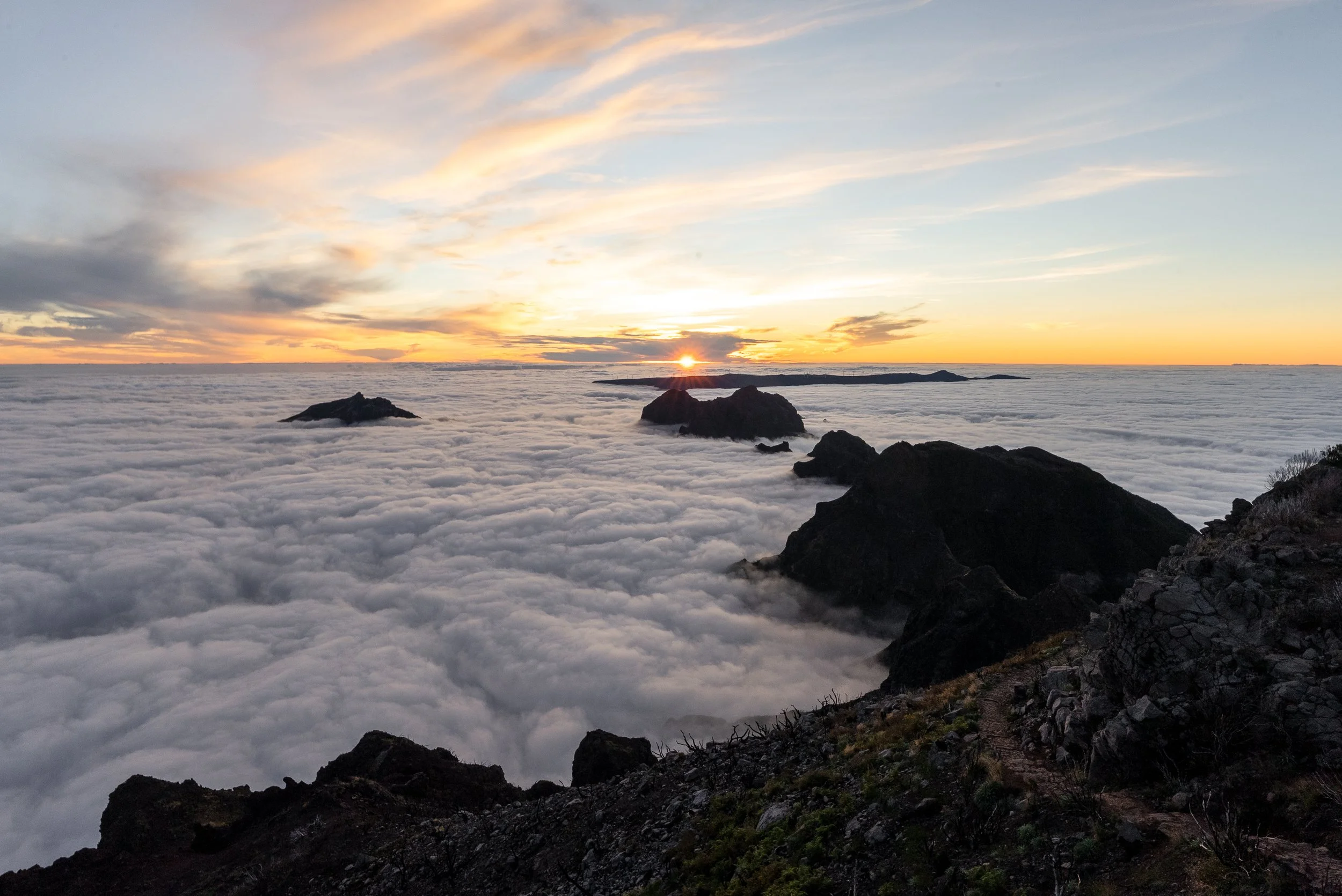
Hike Pico Grande
What It Is: One of Madeira’s most rewarding mountain hikes
Key Info: Hard 10km out & Back hike with 700m of elevation gain
How Long You Need: 4–6 hours
Best Time to Visit: Sunset
Parking and Start Point: Pico Grande Trailhead – Boca da Corrida
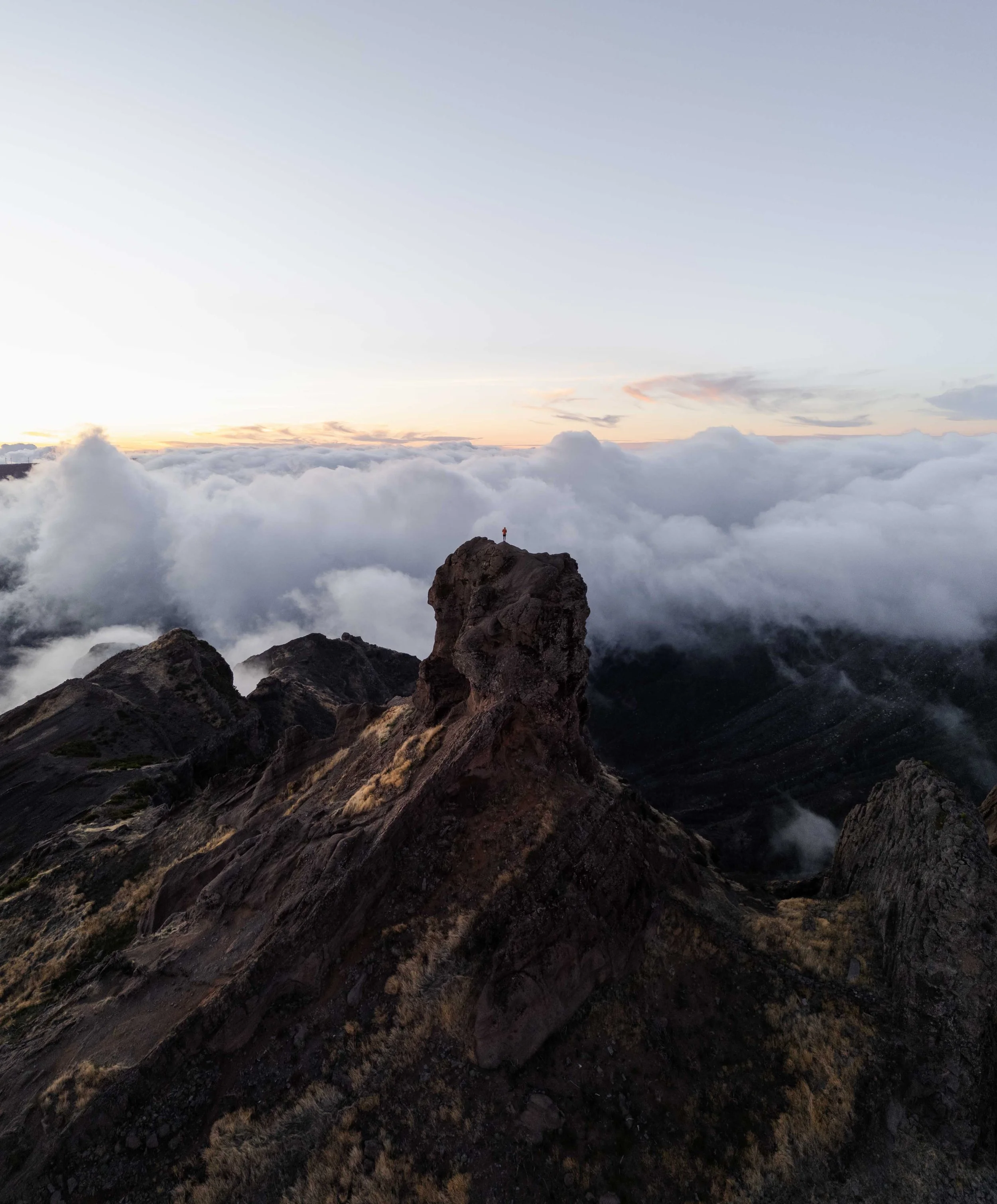
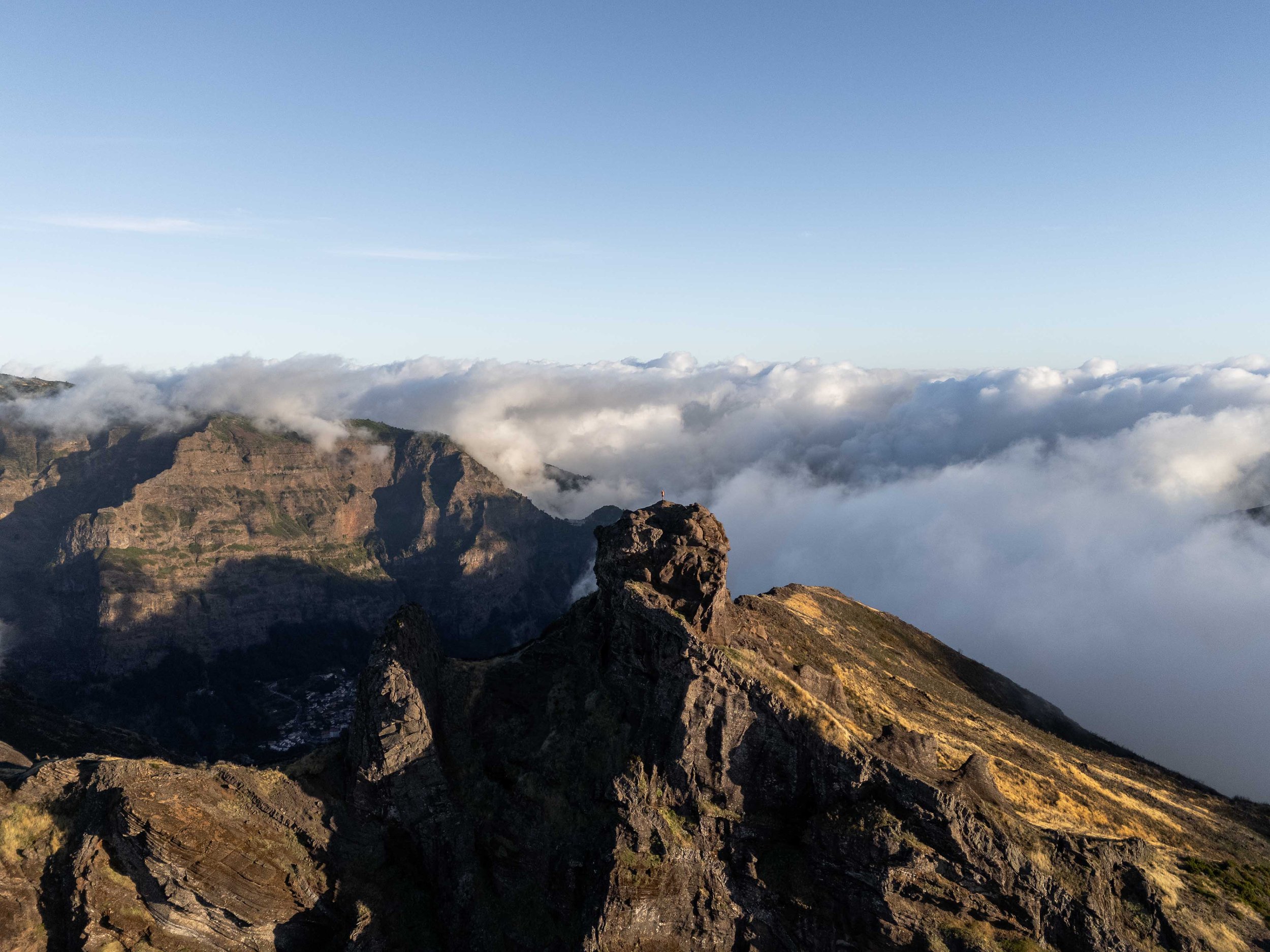
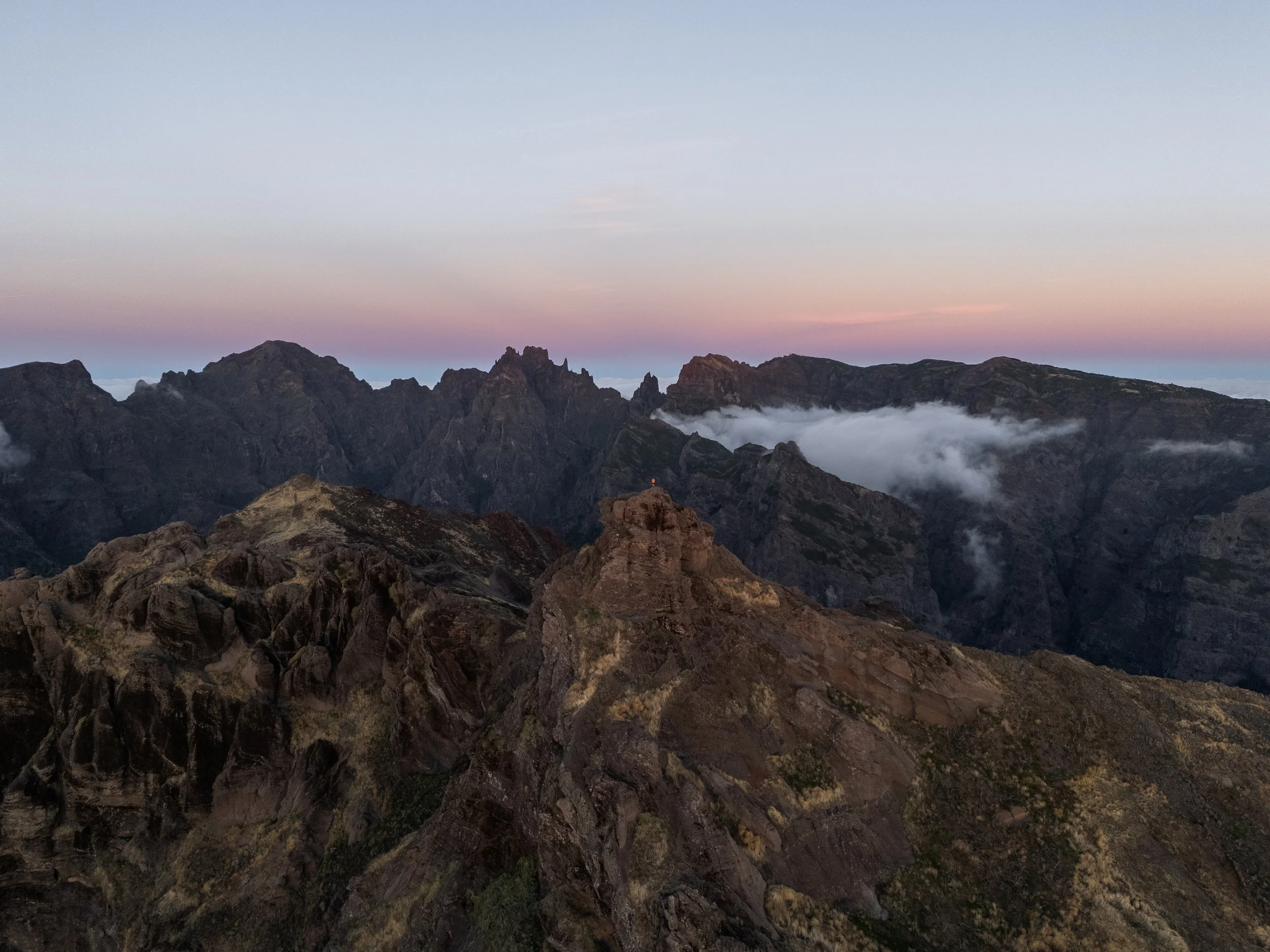
In my opinion, this is a must-do hike and currently the best on the island (especially while PR1 remains closed).It may not be the highest mountain, but its sense of remoteness and adventure make it truly special
Tucked between Madeira’s two celebrity peaks, Pico Grande is the hidden gem of the central mountains. From the 1,654m summit, you’re rewarded with breathtaking panoramic views across the island’s spine.
The trail offers everything: incredible views, dramatic yet safe paths, and a feeling of solitude that’s hard to find elsewhere on Madeira. The summit viewpoint is arguably among the best on the island.
The catch? The final kilometre is super steep gaining nearly 300m in elevation with 400m consisting of loose dirt and rock. In addition the final 25m involves a short scramble up the rounded summit using fixed cables. It sounds scarier than it is, and most hikers wont find it all difficult
If that final climb isn’t for you, it’s still worth hiking 3.5km one way up to the saddle above Curral das Freiras (Nun’s Valley). The views and trail to that point are fantastic
I did this for sunset and passed just one other hiker on their way down. A partial cloud inversion lit up the entire sky and it was simply majestical. If you stay for sunset, bring a head torch, power bank, and charging cable. You’ll definitely need them for the hike back.
Fanal Forest
Location: Fanal Forest, Paul da Serra
What It Is: A surreal laurel forest nestled high in the mountains
How Long You Need: 1–3 hours, depending on how much you explore
Best Time to Visit: When it’s misty or overcast
I thought Fanal Forest was overhyped until I visited it. It genuinely feels like stepping into another world. The gnarled, ancient laurel trees twist out of the ground like something from a fantasy film, and when the mist rolls in, the whole place turns eerie, quiet, and completely surreal.
The forest is part of Madeira’s ancient Laurisilva Forest, a UNESCO World Heritage Site, and is one of the most atmospheric places on the island. It’s great for slow walks, photography, or just standing still and taking it all in.
Ironically, this is one of the few places on the island where bad weather makes it better. Skip it on a sunny day and head up when it’s cloudy or foggy as that’s when Fanal really shows off its magic.

Seixal Black Sand Beach & Sea Pools
Location: Seixal Beach & Natural Pools
What It Is: A scenic seaside village with a volcanic black sand beach and natural sea pools
How Long You Need: 1–3 hours
Best Time to Visit: Anytime
Located on Madeira’s north coast, Seixal is one of the island’s most picturesque villages. It’s home to a stunning black sand beach, created by the island’s volcanic origins, backed by towering sea cliffs that look like something straight out of Jurassic Park.
The village also has several natural sea pools carved into the volcanic rock. They’re free to visit and provide sheltered, spots for swimming and relaxing. Whether you’re here for a swim, a photo stop, or just to take in the views, Seixal perfectly captures Madeira’s wild coastal beauty.


Porto Moniz Natural Sea Pools
Location: Porto Moniz Natural Pools
What It Is: Natural volcanic rock pools filled by the Atlantic Ocean
How Long You Need: 1–3 hours
Best Time to Visit: Anytime
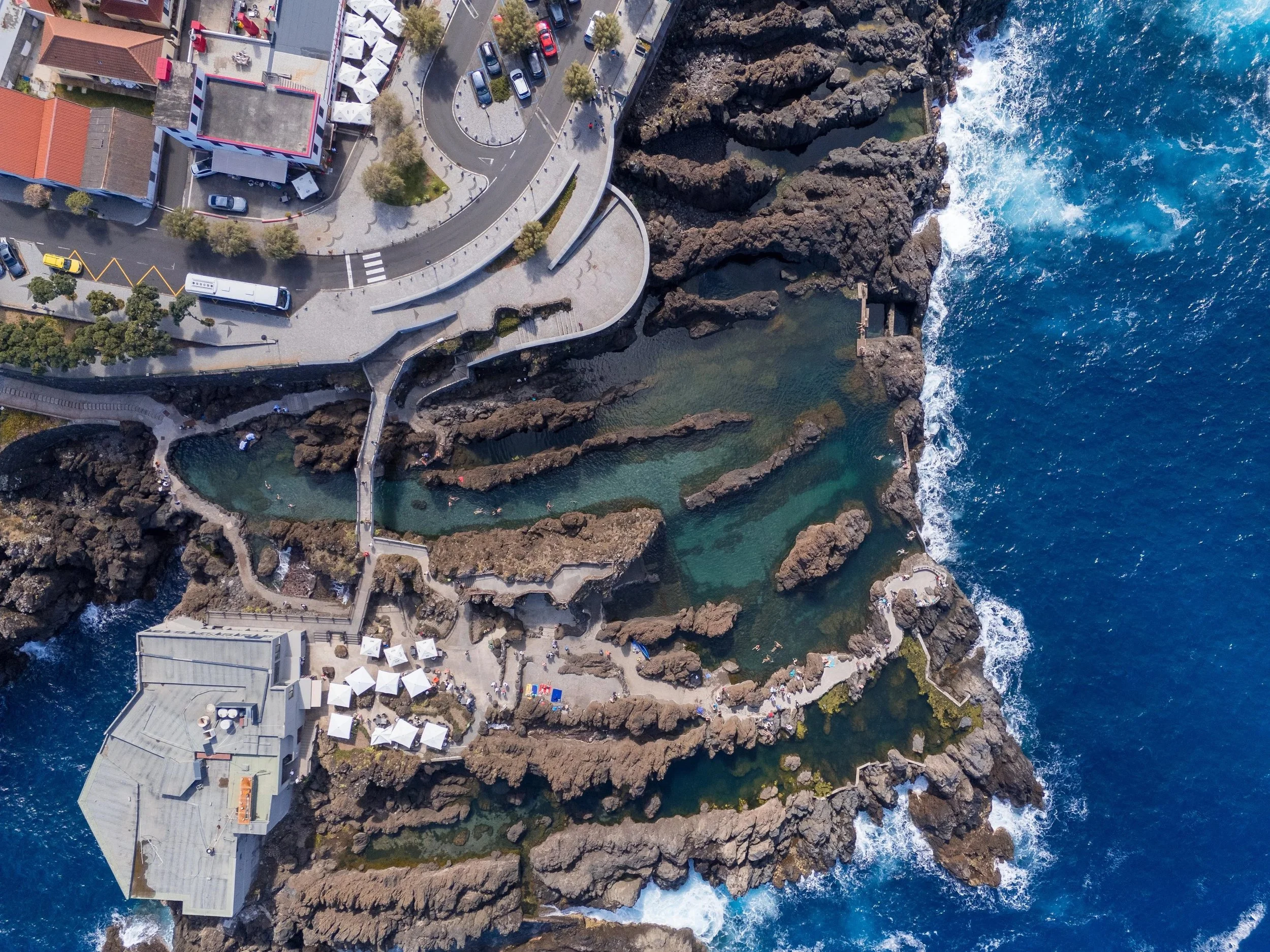
The Porto Moniz sea pools are one of Madeira’s most famous natural attractions Sheltered from the open ocean, these volcanic rock pools let you swim in clear, calm water while waves crash dramatically against the outer rocks. The setting, surrounded by the cliffs and the small coastal town of Porto Moniz, makes it even more special.
There are two sets of pools worth visiting. The eastern pools are rugged, completely natural, and free to enter. The western pools have been slightly developed, with walkways, lifeguards, and changing facilities, and cost a few euros to access.
Both options are great, and it’s easy to spend a couple of hours here relaxing, swimming, or just soaking up the view. It’s also a perfect stop for families, with shallow areas for kids and deeper pools for confident swimmers.


Vereda da Ponta de São Lourenço
What It Is: A coastal hiking trail along the island’s easternmost point.
Key info: moderate 8km Out & Back trail with 522m of elevation
Parking & Start Point: Ponta de São Lourenço Trailhead
How Long You Need: 3-4 hours.
Best Time To Visit: Sunrise or early morning
Located on the eastern tip of Madeira, the Vereda da Ponta de São Lourenço trail winds out along a serpent-like peninsula, offering breathtaking views of the island’s rugged coastline and dramatic cliffs.
Although moderately challenging, the trail is accessible for most hikers and follows a well-built path that rolls gently through the peninsula’s unique volcanic landscape. Along the way, you’ll pass a series of panoramic viewpoints that showcase the sheer scale and beauty of Madeira’s eroded cliffs and endless Atlantic horizons.
The trail culminates at Ponta de São Lourenço, where you’ll be rewarded with spectacular views of both the northern and southern coasts.
This is one of the island’s most photogenic hikes and is best enjoyed early in the morning or late in the afternoon when the light is golden, the temperature cooler, and the crowds thinner. I’d recommend catching sunrise from the nearby Miradouro da Ponta do Rosto before starting your hike


Bica da Cana Viewpoint
Location: Bica da Cana Viewpoint
What It Is: A scenic viewpoint with panoramic views of Madeira’s central mountains and valleys
How Long You Need: Around 1 hour
Best Time to Visit: Sunrise or Sunset
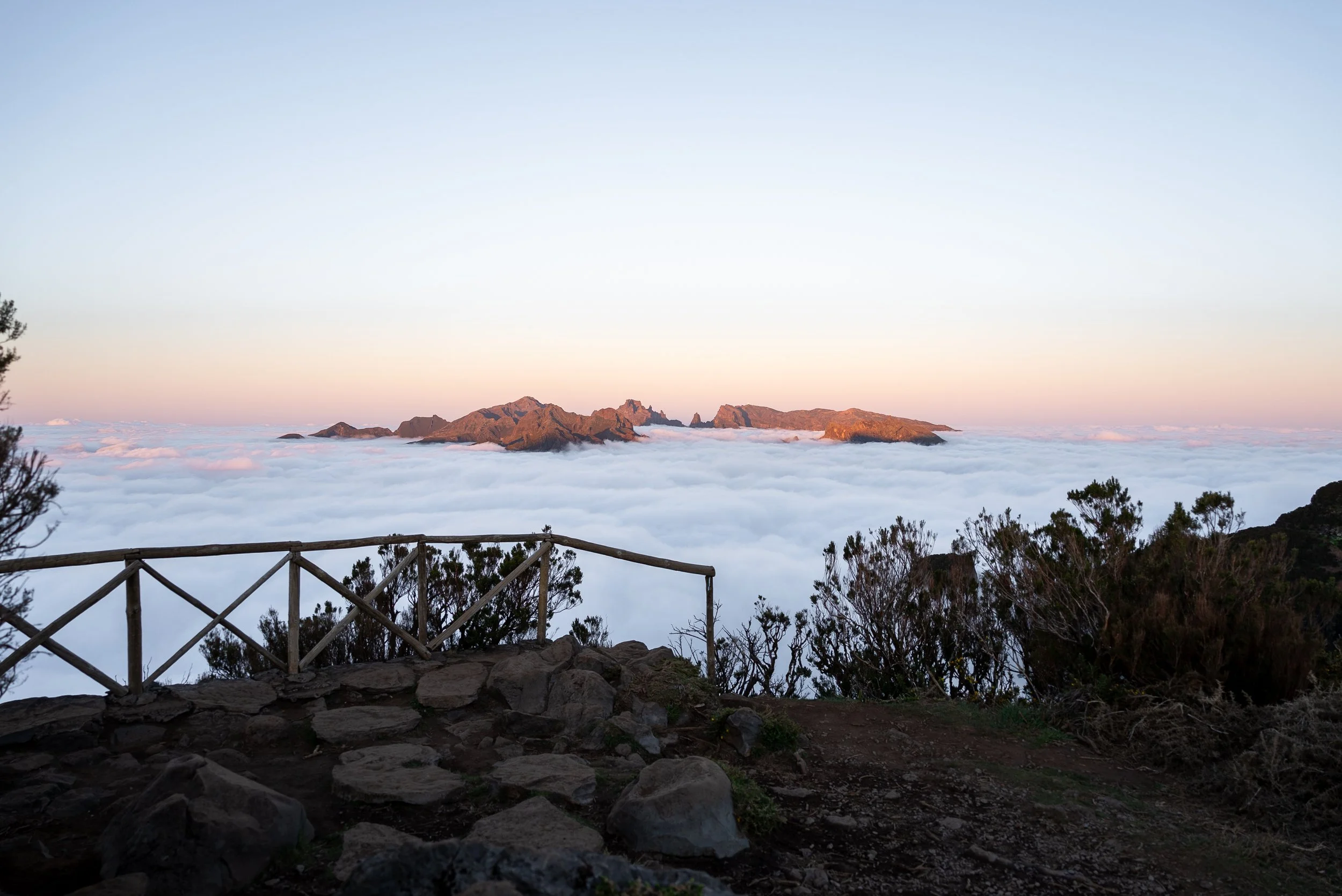
Located in the heart of the island at around 1,560 metres, it offers sweeping views of Madeira’s central peaks, including Pico Ruivo (1,862 m) and Pico do Arieiro (1,818 m).
It’s an ideal spot for sunrise or sunset, when you can often catch the magical sight of clouds spilling through the valleys below in a perfect cloud inversion. On clear days, you can even see both the north and south coasts of the island.
The walk itself is straightforward , a short uphill stroll from the car park, but the views are anything but ordinary. Just make sure to get there early, as parking is limited and this viewpoint is popular with photographers and sunrise chaser


Achadas da Cruz Cable Car
Location: Achadas da Cruz Cable Car
What It Is: Europe’s second-steepest cable car, descending to a remote coastal village
How Long You Need: 2–3 hours
Best Time to Visit: Morning
The Achadas da Cruz Cable Car is one of the most unique experiences in Madeira — and one of the steepest rides in Europe. The cable car drops nearly 450 metres down a 98% gradient to Fajã da Quebrada Nova, a tiny and isolated coastal village where farming terraces meet the ocean.
At the bottom, you’ll find yourself surrounded by towering cliffs, rocky shores, and complete silence. It’s an incredible off-the-beaten-path spot that feels untouched and far removed from the busier parts of the island. There’s even a small beach bar serving drinks if you fancy relaxing before heading back up.
The six-person cable car costs €6 per person (return) and runs from 9:00–12:00 and 13:00–18:00. I’d recommend going early to avoid the heat and any queues — and to enjoy the place before it wakes up.


Miradouro do Guindaste
Location: Miradouro do Guindaste
What It Is: A dramatic viewpoint overlooking Madeira’s northern coastline
How Long You Need: 15–45 minutes
Best Time to Visit: Sunrise
Miradouro do Guindaste is one of the most striking viewpoints on Madeira’s north coast, offering incredible views of towering cliffs, crashing waves, and endless Atlantic horizon. From here, you can see the rugged coastline stretch all the way toward Ponta de São Lourenço, the island’s eastern tip.
It’s a brilliant spot for sunrise, an the neighbouring viewpoint has recently been updated with a modern glass platform, allowing you to step right out over the edge. It’s easily accessible, with a small car park nearby and only a short walk to the viewing area.
This is a popular stop for photographers, so if you want it quiet, go early. Even if you’re not into taking photos, it’s a must-see stop if you’re exploring the north coast or passing through Faial.

Ribeira da Janela Rock
Location: Ribeira da Janela Viewpoint
What It Is: A dramatic sea stack formation on Madeira’s north-west coast
How Long You Need: 20-40 minutes
Best Time to Visit: Sunrise or early morning
Ribeira da Janela is one of Madeira’s most photogenic coastal spots. The beach here is made up of smooth volcanic pebbles and framed by towering sea cliffs, but the real star is the three jagged sea stacks rising dramatically from the Atlantic just offshore.
The name translates to “River of the Window,” referring to a natural rock arch in the cliffs above the viewpoint. You can climb a short set of steps to reach the upper platform for a closer look, or head down to the shoreline for that classic wide-angle shot of the sea stacks with the waves rolling in.
It’s a fantastic place to visit at sunrise, especially when there’s easy parking right next to the viewpoint, and it’s only a short walk down to the beach.

Miradouro dos Balcões
What It Is: A short, easy hiking trail that leads to a panoramic viewpoint.
How Long You Need: 1-2 hours.
Best Time To Visit: In the morning
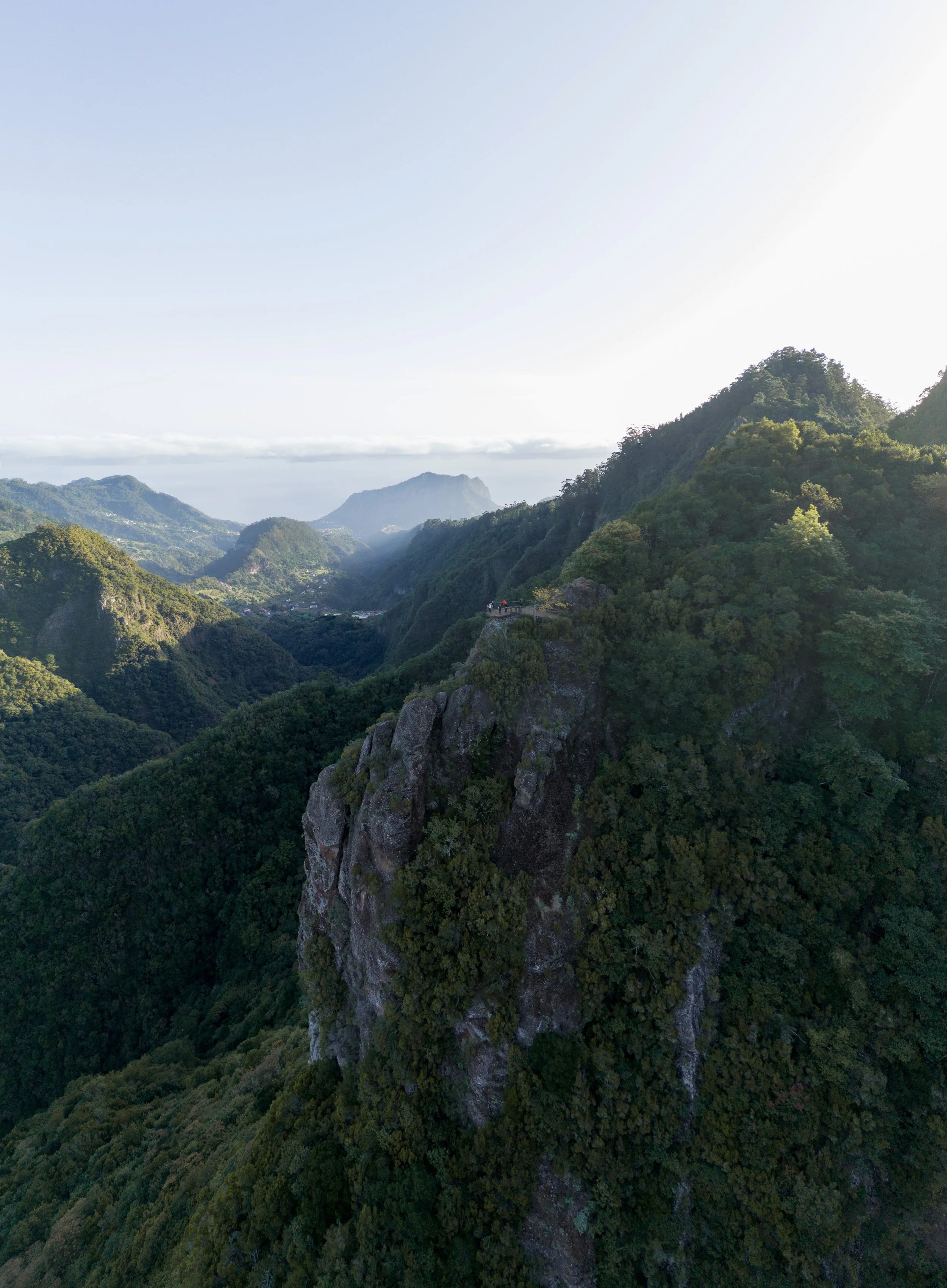
This easy low level walk is perfect for all ages and fitness levels. It takes you through lush forests and ends at a scenic balcony that overlooks the Ribeiro Frio valley. From the viewpoint, you’ll have stunning views of the island’s central mountains, including Pico Ruivo and Pico do Arieiro. It’s also a great spot for birdwatching, with several species endemic to Madeira found in the area.

Levada Nova
What It Is: A relatively flat scenic Levada walk
Key Info: Moderate 7km Loop with 320 meters of elevation gain
How Long You Need: 2-4 hours.
Best Time To Visit: In the morning
This was hands down my favourite levada walk in Madeira. The trail follows a narrow, exposed levada carved into the side of a cliff, leading to a waterfall you can actually walk behind.
What makes it even better is that it’s not a strenuous trail, with only about 140 metres of elevation gain. If I had to recommend just one levada walk on the island, this would be it.
That said, while it’s not physically demanding, it’s definitely not for everyone. The path is less than a metre wide in places and is quite exposed, with steep drops into the valley below. If you’ve got a serious fear of heights, you might find your heart rate spiking more from adrenaline than from exercise.


Levada do Vento
What It Is: A Scenic Levada walk
Key Info: Moderate 7km Loop with 320 meters of elevation gain
Duration: 2 - 4 hours
Parking & Start Point: Levada do Vento Trailhead – Rabaçal
Another must do Levada hike. This trail strikes a perfect balance between accessibility and adventure, a classic Madeira levada walk with forest tunnels, dramatic drops, and just enough effort to make you earn those views.
This trail follows a beautiful levada along the mountainside before dropping into the valley to reach the impressive Vento Waterfall. The walk starts off gently, winding through shaded forest and along moss-covered walls before the path dives down a steep descent to the falls . (Unfortunately you’ll need to climb back up the same way)
Despite being a fairly popular route, it didn’t feel crowded, and much of the trail is shaded, making it a comfortable choice even on warmer days. The final section finishes with a short but punchy climb followed by a little road walking to return to the start point.
If you’ve got the energy, it’s well worth extending the hike by 2.5 km to visit the Risco Waterfall, a taller and equally spectacular cascade that sits just below Vento.


Ride a Traditional Wicker Toboggan
Location: Monte, near Funchal
What It Is: A unique downhill ride in a traditional wicker sled, steered by “carreiros”
How Long You Need: 1–2 hours (including getting to the start, ride down, and exploring Monte)
Best Time to Visit: Anytime
This experience dates back to the 19th century when wicker toboggans were used to transport locals from Monte to Funchal. Today it remains one of Madeira’s most iconic and fun activities. Two men, known as “carreiros” , steer the sleds down narrow, winding streets for about 3 km, offering a mix of excitement and history.
The ride runs Monday to Saturday from 09:00 to 18:00 and tickets cost
€27.50 for one person
€35.00 for two people
€52.50 for three people
While some may see it as a bit gimmicky, it’s genuinely fun. It combines local tradition with a bit of adventure, perfect if you want a different way to see the island from the street level.
Nearby, you should also check out the Monte Palace Tropical Garden, which is next to the toboggan start point and is a great add-on if you’ve got the time.

Other Things and Places to consider
Cabo Girão skywalk
Location: Cabo Girão Viewpoint
What It Is: One of Europe’s highest sea cliffs (580m)
How Long You Need: 30–45 minutes
Best Time to Visit: Morning or late afternoon
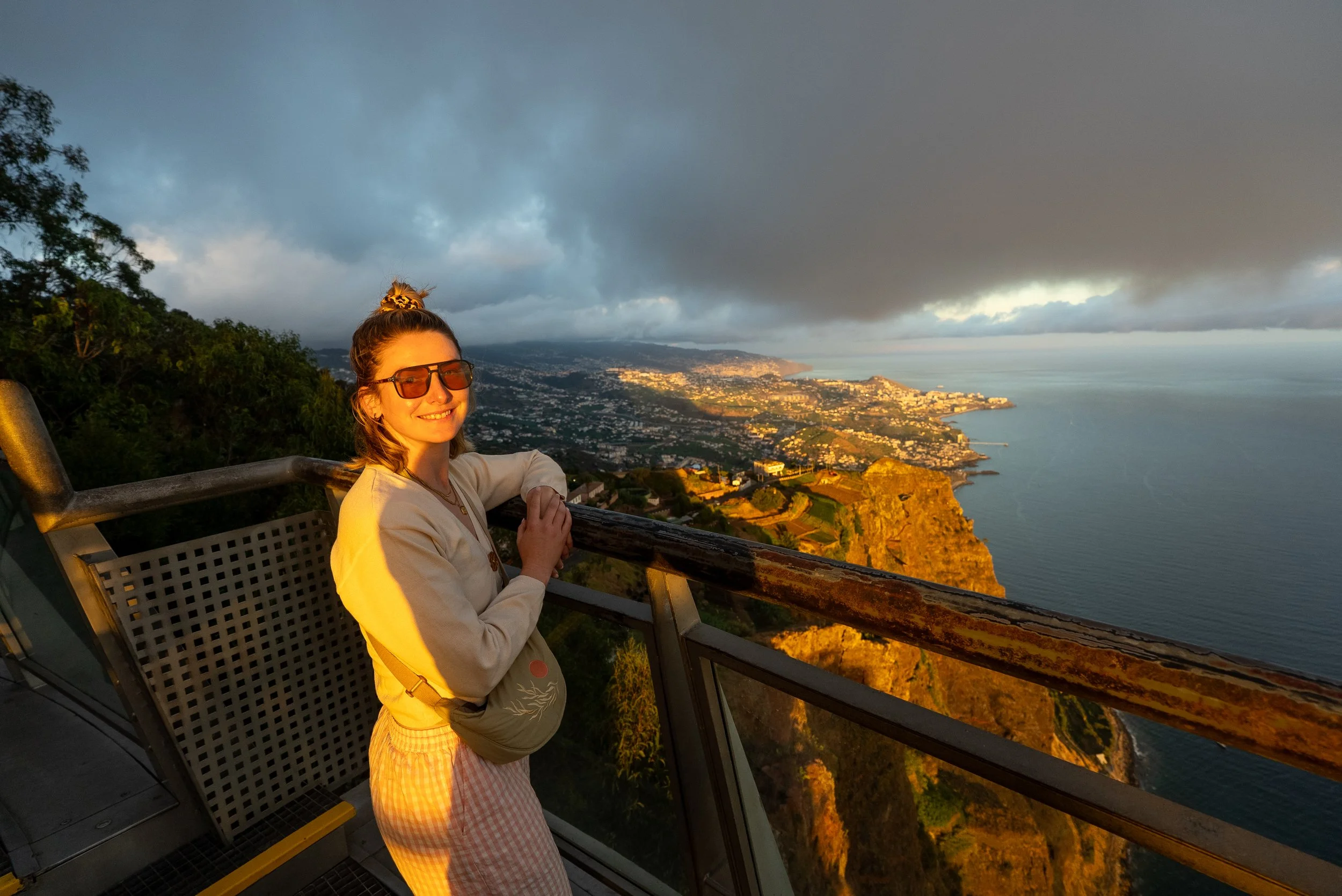
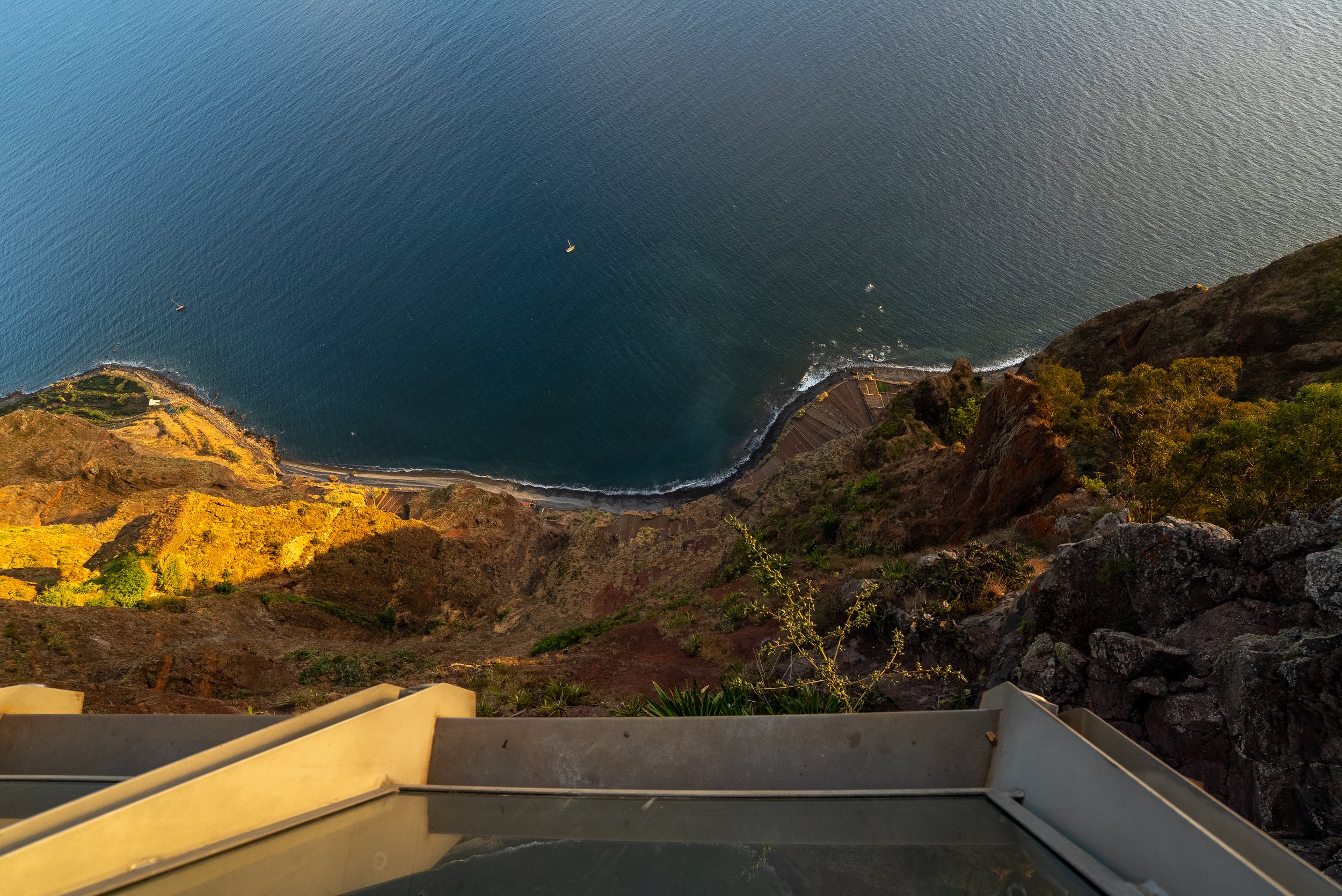
At 580 metres above sea level, Cabo Girão is one of Europe’s highest sea cliffs — and definitely not one for those scared of heights. The highlight is the glass skywalk, which juts out over the edge of the cliff, giving you vertigo-inducing views straight down to the ocean and terraced farms below.
The viewpoint is easily accessible by car, with a large free car park and small café nearby. It can get busy with tour buses, so aim to go early or late in the day. On clear days, you’ll get sweeping views across Funchal, the south coast, and out to the open Atlantic.
Cascata dos Anjos
Location: Cascata dos Anjos, Ponta do Sol
What It Is: A roadside waterfall that you can drive beneath
How Long You Need: 15–30 minutes
Best Time to Visit: Late afternoon / Sunset
Cascata dos Anjos (literally “Waterfall of the Angels”) is one of Madeira’s most unique and photogenic spots. It a waterfall that flows directly onto a coastal road and you can actually drive right under it.
It’s become incredibly popular thanks to social media, so don’t expect to have it to yourself. There’s usually a small crowd of people taking photos or waiting for their turn to drive through, but it’s still worth stopping by, especially at sunset, when the light hits the water and the ocean behind it glows golden.
Google Maps shows the road as closed, but you can still access it by car. If you’ve got time, I’d also recommend heading a few minutes up the road to 90° Bar & Restaurant , me and my wife ate here on our Honeymoon and ate on their sunset terrace overlooking the coast.


Cristo Rei do Garajau
Location: Cristo Rei Viewpoint
What It Is: Coastal viewpoint with a Christ the Redeemer statue
How Long You Need: 30–45 minutes
Best Time to Visit: Sunrise or Sunset
Perched on a high cliff just east of Funchal, the Cristo Rei viewpoint is one of the most recognisable landmarks on Madeira’s south coast. The large statue of Christ faces out over the Atlantic, making it one of the island’s most scenic coastal lookouts.
The viewpoint offers stunning ocean views, especially at sunset, when the cliffs and statue are bathed in golden light. There’s a small café nearby, and the short walk from the car park is easy, even with flip-flops.
It’s also a great sunrise spot if you’re staying in Caniço. I stayed just down the coast at Sentido Galosol, and the views from the hotel terrace at breakfast were incredible. Coffee, croissants, and sunrise.


Santana Traditional Houses
Location: Santana Village
What It Is: A small village famous for its traditional A-frame houses
How Long You Need: 30–60 minutes
Best Time to Visit: Morning or early afternoon
Santana is one of Madeira’s most famous postcard spots, known for its colourful thatched triangular houses (called palheiros). These traditional homes were once common across the island, but only a few remain and most of which are now preserved for visitors in Santana’s town centre.
The site is small, so you don’t need long to visit, but it’s worth stopping if you’re exploring the island’s northeast. The setting is charming and photogenic, and there are a few small souvenir shops nearby selling local crafts. It can get busy with tour groups later in the day, so aim to arrive early morning to enjoy it before the crowds arrive.

Ponta do Pargo Lighthouse
Location: Ponta do Pargo Lighthouse
What It Is: A lighthouse at the island’s westernmost point
How Long You Need: 30–60 minutes
Best Time to Visit: Sunset
Sitting on the western tip of Madeira, the Ponta do Pargo Lighthouse offers one of the most dramatic coastal views on the island. The lighthouse itself stands on the edge of towering cliffs, with the ocean stretching endlessly in front of you.
It’s one of the best spots for watching the sun drop directly into the Atlantic, and you can see both the south and west coasts from the viewing area. Parking is right beside the lighthouse, but it fills up quickly near sunset so get there early to grab a good spot.


Funchal
Funchal is the beating heart of Madeira , a mix of traditional Portuguese charm and modern coastal life. You can easily spend half a day wandering the old town’s narrow streets, visiting the Mercado dos Lavradores (farmers’ market), or taking a cable car up to Monte for panoramic views over the city.
Don’t miss the painted doors in the old town and the Monte Palace Tropical Garden, one of the most beautiful gardens on the island. Funchal also has plenty of cafés, bars, and restaurants for when you’ve had enough sightseeing. If you’re staying nearby, it’s well worth exploring in the evening when the city lights reflect off the harbour.
Key Highlights in Funchal:
Madeira Wine Museum - Located in an old wine lodge, this museum provides an in-depth look at the history of Madeira wine. You can tour the wine cellars, learn about the wine-making process, and, of course, sample some of Madeira’s finest vintages.
Mercado dos Lavradores: A bustling farmers' market offering a vibrant mix of tropical fruits, flowers, fresh fish, and local handicrafts.
Monte Palace Tropical Garden: Take the cable car from the city center up to Monte to visit this lush botanical garden filled with exotic plants, serene ponds, and artistic sculptures.
Funchal Cathedral (Sé): This Gothic-style cathedral dates back to the 16th century and is one of the city's architectural gems.

Photo by Jong Hyun Baek

Calheta Beach and harbour
Location: Calheta Beach
What It Is: One of Madeira’s few sandy beaches
How Long You Need: 1–2 hours
Best Time to Visit: Afternoon or Sunset
Calheta Beach is one of the only man-made sandy beaches on the island, making it a great stop if you’re craving a proper swim or just want to relax for a few hours. The golden sand (imported from Morocco) contrasts beautifully with the surrounding cliffs, and the sheltered bay keeps the water calm, which is ideal for a dip after a morning of hiking.
The beach has changing facilities, sunbeds, and plenty of cafés and restaurants nearby. Parking is free on the roadside above the marina, and it’s a short walk down to the beach. Stick around for sunset as you will be treated to incredible view.

Praia da Ponta do Sol
Location: Praia da Ponta do Sol
What It Is: A scenic pebble beach and swimming spot
How Long You Need: 1–2 hours
Best Time to Visit: Afternoon / Sunset
Praia da Ponta do Sol sits at the base of the cliffs in one of the island’s prettiest coastal towns. While it’s a pebble beach, the water here is usually calm, and the surrounding cliffs make it a great place to relax or go for a swim.
There are several restaurants and bars along the waterfront, so it’s ideal for a lazy afternoon or early evening drink. It’s also a great sunset spot, as the light reflects beautifully across the bay. Parking can be tight, but if you arrive mid-afternoon, you’ll usually find a space along the main road.

Miradouros do Paredão & Other Midadouros
Location: Miradouro do Paredão
What It Is: A scenic viewpoint in west-central Madeira
How Long You Need: 10–30 minutes
Best Time to Visit: Morning or Sunset
Miradouro do Paredão is one of several lesser-known viewpoints scattered across the Encumeada and Paul da Serra regions. These viewpoints offer some of the best panoramic views on the island, often with fewer people than the more famous spots.
Paredão in particular gives a stunning perspective over the mountains and valleys below, especially in the early morning when low clouds drift through the peaks. If you’re driving between Ribeira Brava and São Vicente, or heading up to Pico De Areeiro it’s well worth pulling over for a quick photo stop.
Madeira has hundreds of “miradouros” (viewpoints) dotted across the island, some marked and some hidden, so it’s always worth keeping an eye on Google Maps as you drive. The best ones are often the ones you stumble across unexpectedly. Miradouro da Raposeira (below is another great spot for sunset.


Hike the other Trails
Whether you’re a casual walker or an experienced hiker, Madeira offers a vast network of hiking trails to suit people of every level. from coastal walks to mountain treks, each trail offers its own unique perspective of the island’s diverse landscapes. Some of the most famous hikes include the trek from Pico do Arieiro to Pico Ruivo, the Vereda da Ponta de São Lourenço, and Levada walks

Watch a Sunrise
Watching the sunrise is any place is special but it can be a magical experience in Madeira. Its unique coastal location means its common to get cloud inversions, which when combined with its easily accessible mountain viewpoints, means its never been easier to watch the first light break over a sea of clouds. The island’s Northern coast and mountainous terrain provides plenty of great spots for watching the sunrise, with early risers are rewarded with incredible colours and serenity. The most popular spots are Pico do Arieiro and Ponta de São Lourenço.

Watch a Sunset
Watching the sun set over the Atlantic is one of the most peaceful and picturesque ways to end a day in Madeira. Alongside the Islands highest peaks, Madeira’s westward-facing coastline offers ideal spots for watching the sunset, with many viewpoints accessible by car or in as little as a 5-10 minute walk.

Chase a Waterfall
Madeira is home to many beautiful waterfalls, from roadside attractions to hidden gems deep in the forest. Cascata dos Anjos, made famous by Instagram, tumbles over a cliff and onto the road below. Many of the waterfalls located more centrally in the islands rich forests are often accessible via a easy to moderate flat Levada walks, making them popular among visitors.


Take One of the Many Tours on Offer
Whether you want to explore the island by land or sea, Madeira has a tour for you. Whale and dolphin watching tours depart from Funchal, offering a chance to see these incredible creatures in their natural habitat. Jeep tours take you off the beaten path to explore remote villages, volcanic landscapes, and rugged coastlines. There are also vineyard tours where you can taste Madeira’s famous wine. Madeira’s rugged terrain also offers endless opportunities for adrenaline-fueled activities including canyoning, mountain biking , paragliding and coasteering.
Yu can even head over to Porto Santo Island, neighbouring island of Madeira, known for its long, golden sandy beach and more relaxed vibe.
Accessible by ferry from Madeira, Porto Santo offers a stark contrast to Madeira’s rugged landscape, with its 9 km golden sand beach being a major draw. The island also has historical significance as the former home of Christopher Columbus. It’s perfect for a day trip or overnight stay if you’re looking for beach relaxation.

Photo by Daniele Franchi
What is the best way to get around Madeira?
The most effective way to get around Madeira is by car as it allows you freedom to visit the locations you want, whenever you want, in the shortest time possible. Meaning you can take advantage of the many incredible locations on the island to watch the sunrise and sunset.
If you do rent a car I would advise the following:
I would avoid renting a big car as many of the mountain roads and residential streets in Madeira are very narrow.
I would avoiding renting a car with a low powered engine, otherwise you will be spending most of your uphill journey changing between 1st and 2nd gear.
If you struggle with clutch control then I would definitely opt for an automatic car as some of the junctions are savagely steep.
I booked my car rental through discovercars.com, I have used them all over Europe and they search both international and local operators for the best deal.
We ended up getting a Renault Clio which was perfect, it was compact enough to handle the narrow roads but powerful enough that we weren’t stuck in the lower gears when going uphill.

Help support my website
I created and run this website in order to help inform, amaze, inspire people (for free) to get outside and explore the adventurous side of the UK.
Although I do run some google ads, I have limited them in order to make your experience on this website far more enjoyable.
If you’d like to support this website, you can use the affiliate links below to book your accommodation or transport. These come at no extra cost to you, but help keep this site running.
Book your vehicle using Discover Cars
Book your accommodation using Booking.com
If you are feeling generous you can also Buy me a Coffee to say thank you, and give me a follow on social media.
Thank you, and if you have any questions, leave them in the comments below or drop me an email!
For more Madeira travel inspiration check out the following blog posts: