A landlocked country in the heart of Central Asia, Kyrgyzstan is in fact, the furthest country on Earth from any ocean.
While that might sound like an odd claim to fame, it helps explain why this remarkable nation has remained one of the world's most underrated adventure destinations.
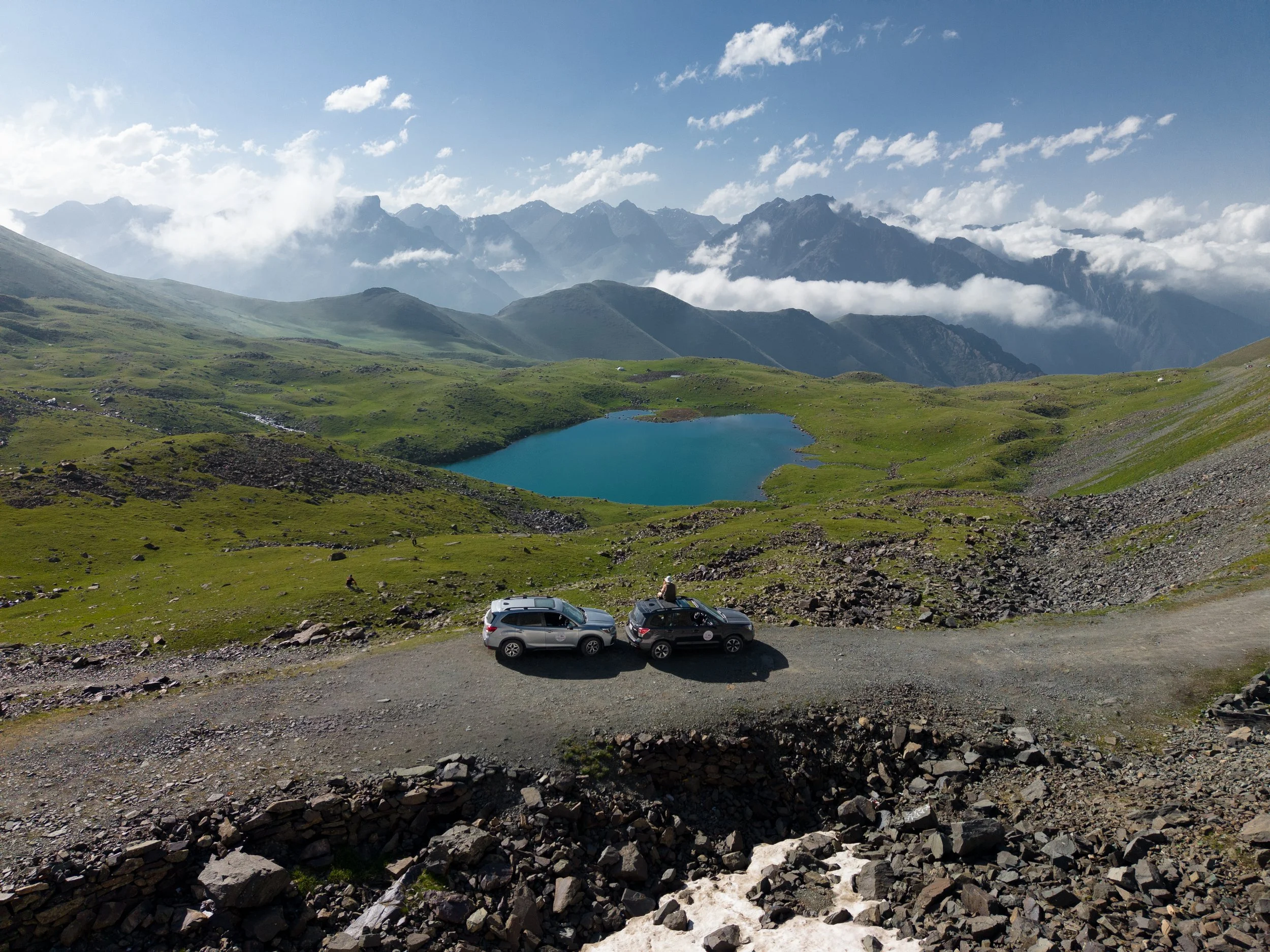
With more than 90% of the country covered by mountains and an average elevation of around 2,750 metres above sea level, Kyrgyzstan is a adventure lovers dream and is a country of towering peaks, turquoise lakes, endless steppe, and wild mountain roads.
I've been fortunate enough to explore some of the world's most spectacular mountain regions, from the Dolomites and the Canadian Rockies to New Zealand and the Pacific Northwest. Yet despite all of that, Kyrgyzstan still managed to completely blow me away.
In July 2026, my long-term friend Harry McNulty and I spent ten days road-tripping around the country on a self-guided 4x4 adventure with Kyrgyzstan Nomads.
Over the course of the trip, we drove over 1,600 kilometres, crossing high mountain passes, following rivers through deep gorges, swimming in alpine lakes, riding horses across the steppe and sleeping in traditional yurts.
The thing that blew me away most wasn't just how beautiful Kyrgyzstan was, but how unbelievably diverse it felt.
One moment we'd be driving through lush green valleys beneath snow-capped peaks that reminded me of the Alps. A couple of hours later, we'd find ourselves winding through red rock canyons that looked as though they'd been lifted straight from the American Southwest, before emerging onto vast open plateaus more reminiscent of Iceland. Every valley we drove through felt completely different from the last, yet every one was just as jaw-droppingly spectacular.
Just as memorable as the scenery were the people. We shared meals in remote villages, met nomadic families living alongside their herds and were welcomed with a level of warmth and hospitality that I don't think Kyrgyzstan gets anywhere near enough credit for.
By the time we returned to Bishkek, Kyrgyzstan had exceeded every expectation I had. It left us with unforgettable memories, more than a few ridiculous stories and an immediate desire to return.
In this guide, I'll take you through our full ten-day road trip, sharing the route we followed, the places we visited, the experiences that made the journey so memorable and everything you need to know if you're planning your own self-drive adventure through one of the most beautiful countries on Earth.
What is Kyrgyzstan Nomads?
Kyrgyzstan Nomads is a self-guided adventure travel company that specialises in 4x4 road trips across Kyrgyzstan.
Rather than joining a traditional guided tour, you're given everything you need to explore the country independently, while they take care of all the planning and logistics behind the scenes.
The route has been carefully designed to showcase some of the very best landscapes, roads and experiences Kyrgyzstan has to offer. Throughout the trip you'll drive yourself between each destination, but with accommodation, activities and logistics already organised, allowing you to simply enjoy the adventure.
One of the things I liked most was that, despite following a planned itinerary, there was still enough flexibility to make the trip your own. If there was a particular hike, viewpoint or activity that interested us, we could easily adjust the day to suit our own plans. That's exactly what I did by swapping one of the scheduled days for my hike to Ala-Köl.
Although every vehicle travels independently during the day, you'll often meet the rest of the group again at viewpoints, activities and your accommodation in the evenings. It gives you the freedom of an independent road trip, while still creating a sociable atmosphere. By the end of the trip, what had started as a group of strangers had become a group of friends.
-
One of the biggest advantages of travelling with Kyrgyzstan Nomads is that they take care of almost all of the planning and logistics, leaving you free to simply enjoy the adventure.
Our package included:
Nine nights' accommodation, including hotels, traditional yurts and family-run homestays.
A fully equipped Subaru Forester 4x4.
Airport transfers.
The majority of our meals, including nine breakfasts, five dinners and one lunch.
A detailed day-by-day roadbook.
Full access to the Kyrgyzstan Nomads app.
Offline maps and navigation.
Local support throughout the trip if needed.
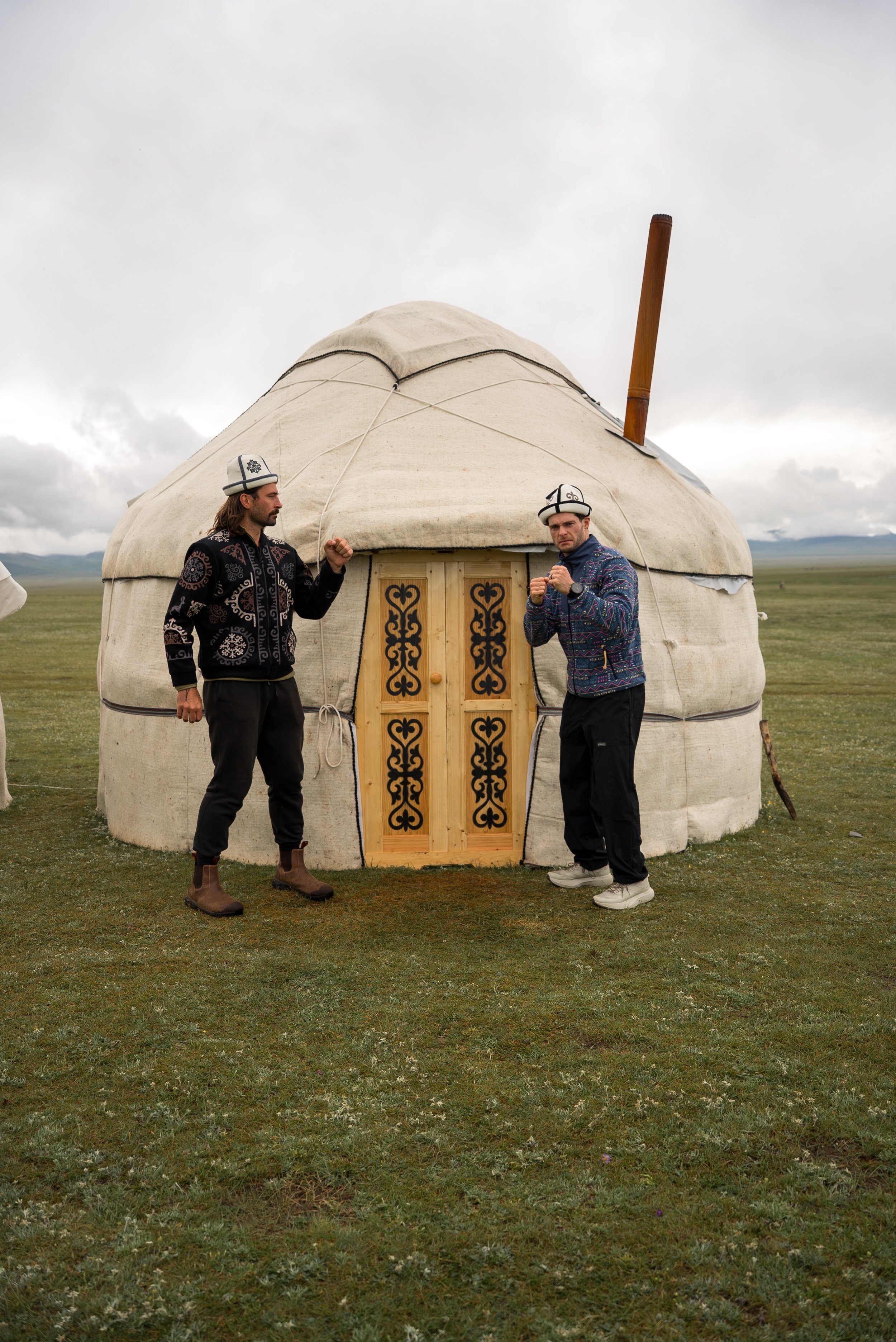
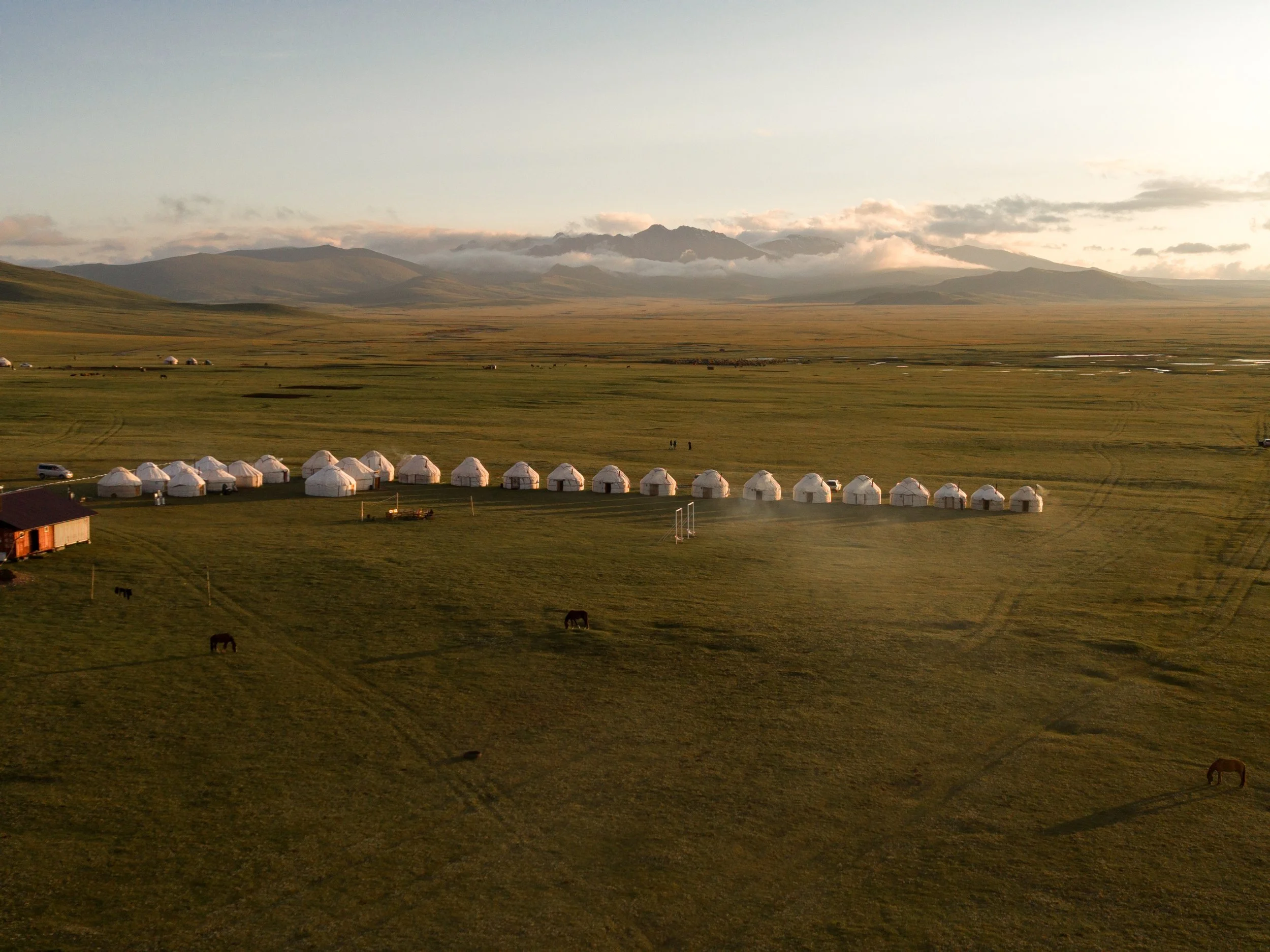
Accommodation was one of the biggest surprises. Every place we stayed was clean, comfortable and full of character. Sleeping in traditional yurts beside Song-Kul Lake and staying with local families became some of the most memorable parts of the trip.
The Subaru Forester also deserves plenty of praise. It tackled everything we threw at it, from smooth mountain passes to rough gravel tracks, while remaining comfortable on some of the longer driving days. Having a capable and reliable vehicle gave us the confidence to simply enjoy the journey.
The app deserves a special mention too.
Once downloaded, everything but the google hyperlinks worked completely offline, which proved invaluable given how often we found ourselves without signal. Each day included:
Offline maps.
Detailed driving instructions.
Clickable Google Maps pins.
Information about every stop.
Recommended viewpoints.
Places to eat.
Fuel stations.
Supermarkets.
Practical advice for each day's drive.
As someone who usually spends hours researching and planning road trips, I found it genuinely impressive. It removed almost all of the stress that normally comes with navigating a country I'd never visited before.
f you'd like to follow the same itinerary I did, you can find out more about the Kyrgyzstan Nomads road trip on their website. It includes full pricing, departure dates and everything that's included in the trip.
-
If you're an experienced traveller with plenty of time to research, organise and book everything yourself, there's nothing stopping you from planning your own Kyrgyzstan road trip.
However, I think most people underestimate just how much time and effort goes into organising an adventure like this.
Kyrgyzstan is still a relatively new tourist destination, which is one of the reasons I loved it so much. Unlike many European countries, tourism infrastructure is still developing, meaning reliable information can sometimes be difficult to find.
Many guesthouses and yurt camps can't be booked through the usual booking websites, while information online can quickly become outdated as the country develops at such a rapid pace.
Before I had the opportunity to travel with Kyrgyzstan Nomads, I'd already looked into organising my own trip. I quickly discovered that finding a suitable 4x4 wasn't nearly as straightforward as I'd expected. Most of the major comparison websites returned nothing, and the only suitable vehicle I found for nine days cost around €750, which was almost the same price as the entire Kyrgyzstan Nomads trip.
Interestingly, Rhys and Abbie, another couple on our trip, told me they'd found exactly the same thing. After spending weeks researching their own itinerary, they also concluded that hiring a suitable 4x4 alone was costing almost as much as booking the road trip itself.
For me, that's where Kyrgyzstan Nomads offers the biggest value.
Rather than spending days or even weeks researching routes, booking accommodation, organising vehicle hire and trying to work out what you should or shouldn't visit, they take care of almost everything.
Accommodation, your 4x4, the route and almost all of the logistics are organised for you, while their excellent app guides you through the journey day by day.
The result is that you can simply turn up and enjoy the adventure. Instead of spending weeks planning every detail, all you need to worry about is getting from A to B each day and making the most of everything along the way.
Another huge benefit, and one I hadn't really considered beforehand, is the people you meet along the way.
The trip gives you all the freedom of independent travel. You drive at your own pace, stop whenever you want and experience the journey in your own way. At the same time, you still get the social side of travelling, which for me made the trip even more memorable.
Every morning and evening we'd catch up with the rest of the group, sharing stories from the day, chatting about our favourite stops and laughing about the inevitable mishaps that seem to happen on every road trip. Everyone is following the same route, but no two people experience it in quite the same way, so it was always interesting hearing what everyone else had discovered throughout the day.
Everyone joining this trip is probably doing it for similar reasons to you. They love adventure, beautiful landscapes, and exploring somewhere a little different. That naturally attracts like-minded people, which was certainly the case with our incredible group.
Of course, if you'd rather keep yourselves to yourselves, you're under absolutely no obligation to socialise. You still have all the privacy and independence of a self-drive road trip, with the option of joining everyone else whenever you feel like it.
What I am getting at is the amount of time and effort it would have taken to organise this trip simply wouldn't have been worth the relatively small saving.
-
As much as I loved the itinerary, I also think it's important to be honest about who it is and isn't designed for.
If you're someone who enjoys complete spontaneity and wants to decide each morning where you're going to sleep that night, this probably isn't the trip for you.
Accommodation is booked in advance, so while you're completely free to skip viewpoints or spend longer at places you particularly enjoy, you still need to reach your next overnight stop each evening.
Likewise, if your main goal is to explore the most remote corners of Kyrgyzstan, this may not be the ideal itinerary.
Although it visits many of the country's most spectacular locations, there simply isn't enough time in ten days to include some of the truly remote places. Visiting destinations such as Köl-Suu or completing the full Ala-Köl trek would require several extra days and significantly change the nature of the trip.
That said, I genuinely believe this itinerary is the perfect introduction to Kyrgyzstan.
It showcases an incredible variety of landscapes and experiences, gives you a genuine appreciation of the country's culture and traditions, and leaves you with a much better understanding of how the country works. More than anything, it leaves you wanting to come back.
You could also bolt on additional time to the trip to explore other areas at your own pace. Which is exactly what Rico and Mia did. They arrived a week before the road trip, hired their own vehicle and explored some of the more remote parts of Kyrgyzstan (including Kel-Su) before joining the Kyrgyzstan Nomads itinerary.
IF you were going to come for longer, I’d start with the Kyrgyzstan Nomads road trip, then spend another week exploring independently afterwards.
By then, you'll have a much better understanding of the country, how the roads work, what driving is like, where fuel is available and just how long it actually takes to get from A to B. You'll also have a far better idea of which regions you'd like to return to and explore in more depth.
For me, that's the beauty of this itinerary. It isn't trying to show you absolutely everything Kyrgyzstan has to offer. Instead, it gives you the perfect introduction to one of the most spectacular countries I've ever visited, while leaving plenty of reasons to come back.
Kyrgyzstan FAQs
-
Absolutely. Before this trip, Kyrgyzstan had been sitting near the top of my travel bucket list for years, and somehow it still managed to exceed every expectation I had.
The landscapes are quite simply some of the most impressive I've seen anywhere in the world. One day you're driving through lush alpine valleys, the next you're exploring red rock canyons that wouldn't look out of place in Utah, before finding yourself beside a turquoise alpine lake or watching horses gallop across the steppe. It's the sheer diversity that makes Kyrgyzstan so special.
If you enjoy mountains, hiking, road trips or adventure travel, I genuinely can't recommend it highly enough.
I'd also recommend visiting sooner rather than later. Kyrgyzstan is becoming more popular every year and, while I don't think that's necessarily a bad thing, part of what makes it so special is its raw landscapes, nomadic culture and relatively untouched feel. I have no doubt tourism will continue to grow over the coming years, particularly around places like Issyk-Kul, so if it's already on your bucket list, I'd make it a priority.
-
During my ten days in Kyrgyzstan, I felt incredibly safe.
Whether we were walking around Bishkek, driving through remote mountain villages or hiking alone in the mountains, I never once felt uncomfortable. I appreciate it's easier for me to say that as a man travelling with a friend, but throughout the trip the local people were incredibly welcoming, friendly and always happy to help.
I did notice that people in some of the larger towns felt slightly less approachable than those in the more rural areas, particularly around Karakol, although that's something I've experienced all over the world. Once we got into the smaller villages and mountain communities, everyone seemed genuinely interested in where we were from and what we were doing.
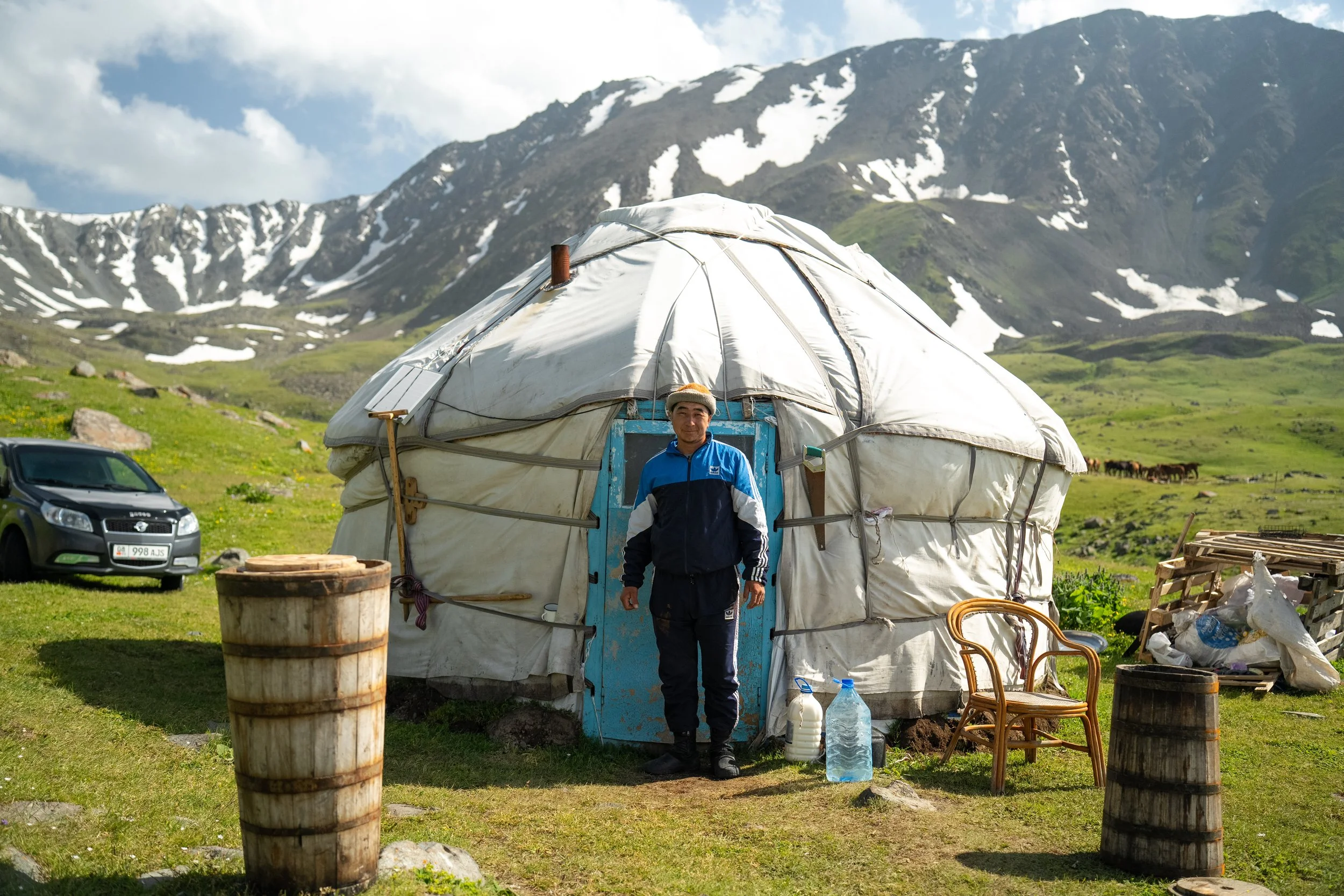
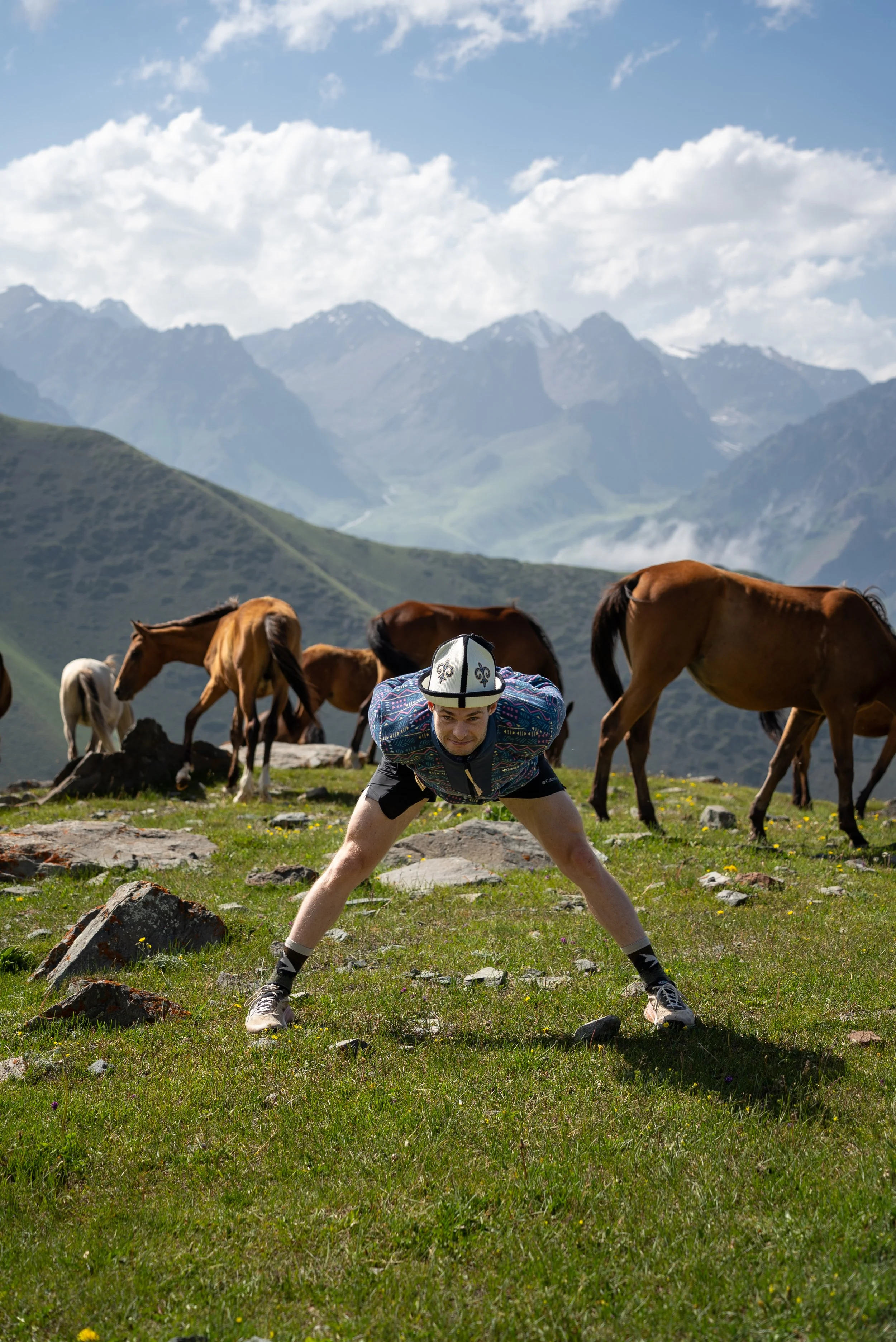
One tip I'd recommend is buying yourself a traditional Kalpak. Not only is it a fantastic souvenir, but I found locals immediately smiled, laughed and struck up conversations whenever I wore mine.
As with travelling anywhere, use common sense in larger towns and cities, but overall I found Kyrgyzstan to be one of the friendliest countries I've ever visited.
-
For a road trip like this, I'd recommend travelling between June and September.
This is when the high mountain passes are generally open, Song-Kul is accessible and the nomadic yurt camps are operating.
We visited in early July and had fantastic conditions. Expect very warm days in the valleys, much cooler temperatures at altitude and the occasional afternoon thunderstorm rolling through the mountains.
If hiking is your priority, I'd personally choose late June through to early September.
-
I'd recommend at least 10 days.
That gives you enough time to experience many of the country's highlights without feeling as though you're constantly rushing from one place to the next.
That said, I still felt like I'd only scratched the surface. If I returned, I'd probably spend at least two weeks, possibly three, exploring more remote areas and tackling some of the country's incredible multi-day hikes.
-
Many nationalities, including UK passport holders, can currently enter Kyrgyzstan visa-free for tourism.
Visa requirements can change, so I'd always recommend checking the latest government travel advice before booking your trip.
-
I'd definitely recommend hiring one.
While many of the main roads are surfaced, several of the best viewpoints, mountain passes and yurt camps require driving on rough gravel roads. Although I did see plenty of standard cars using these roads, I don't think it would be the most enjoyable experience. It could also create issues with your rental agreement or insurance if the vehicle isn't intended to be driven on unsealed roads.
We travelled in a Subaru Forester provided by Kyrgyzstan Nomads, and it handled everything comfortably. I did pick up a puncture after clipping a rock on a rough access road, but that's one of the risks that comes with exploring more remote areas.
If you really want to venture into some of Kyrgyzstan's most isolated locations, then a more serious off-road vehicle with high ground clearance and all-terrain tyres would certainly be beneficial. Personally though, I think that's overkill for most visitors.
Many of the harder-to-reach places can be accessed using local 4x4 taxis or on horseback, allowing you to experience the adventure without needing to hire a heavily modified vehicle yourself.
-
Fun, but wonderfully chaotic.
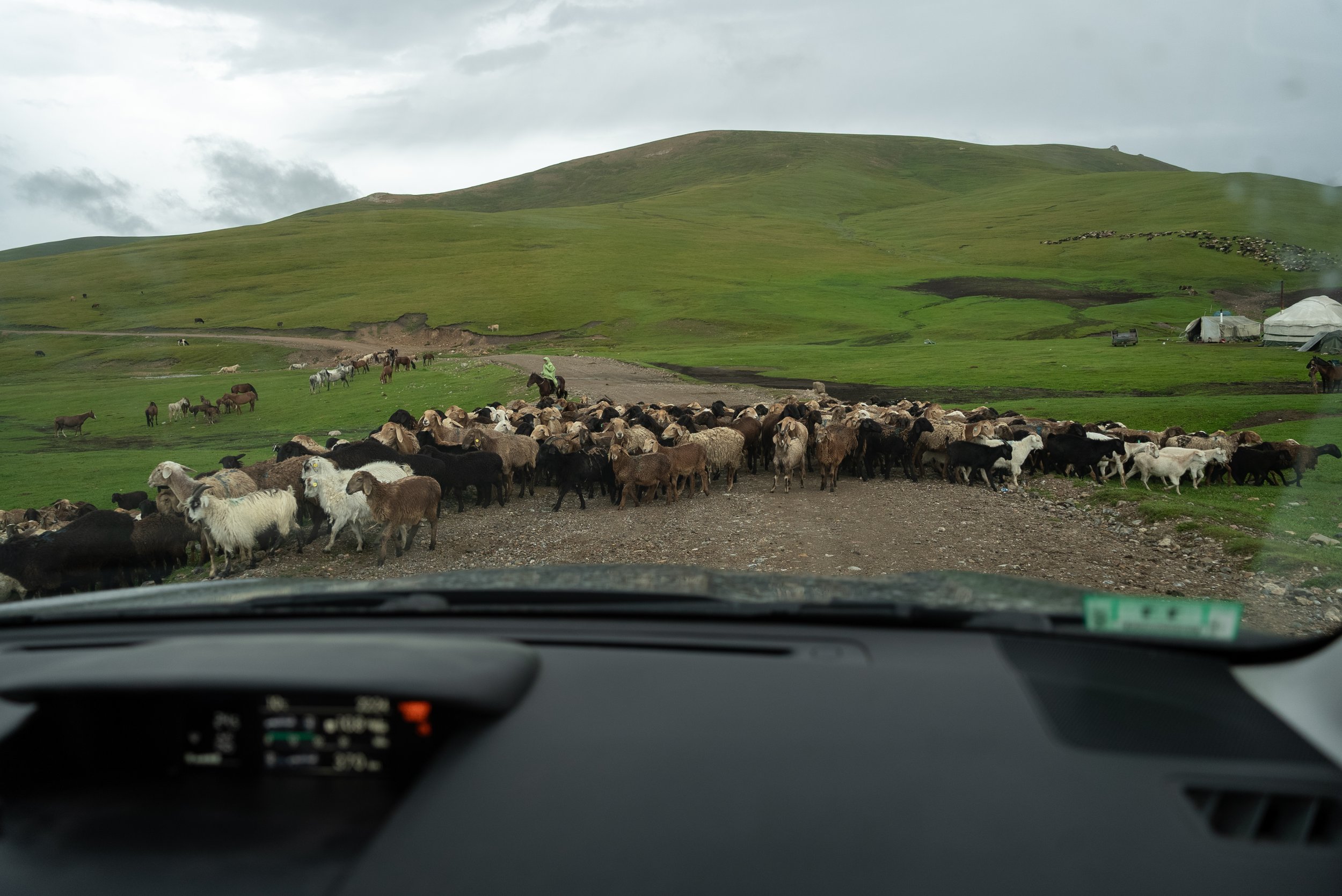
Outside of Bishkek, the roads are generally quiet and incredibly enjoyable to drive. However, you do need to stay alert. Livestock regularly wander onto the road, road conditions can change quickly, signage is often limited and local drivers sometimes have a fairly relaxed interpretation of road markings.
One thing you'll quickly notice is that many drivers simply take the path of least resistance. If one side of the road has fewer potholes or a smoother surface, don't be surprised if someone appears to be driving straight towards you on your side of the road.
Then there's what Harry and I nicknamed the "third lane."
On wide gravel roads, an unofficial lane often forms down the middle. It effectively becomes an overtaking lane for traffic travelling in both directions. There are no rules, no right of way and certainly no Highway Code. It's basically first come, first served, with the more confident driver usually getting priority. It sounds chaotic, and to be honest, it is, but after a couple of days you quickly get used to it.
I'd also avoid driving after dark wherever possible, particularly where roadworks are taking place. There are very few street lights, dust can significantly reduce visibility and you never quite know what might be around the next corner, whether that's a herd of horses, roadworks or another vehicle overtaking.
Fuel stations were easy to find in towns and along the main roads, and we never came close to running out of fuel.
That said, if you're heading into more remote parts of the country, it's always worth topping up whenever you have the opportunity.
I'd also recommend prioritising Bishkek Petroleum fuel stations wherever possible. They accepted card payments, whereas several smaller stations only accepted cash or QR code payments, which aren't particularly useful if you don't have a local bank account.
One final piece of advice, try to keep your eyes on the road. That sounds obvious, but it's surprisingly difficult when you're constantly surrounded by some of the most spectacular scenery imaginable.
Overall, I'd say you're far more likely to have an issue caused by another driver's unpredictability than by the roads themselves, so drive defensively, especially when approaching blind bends.
-
The road network is surprisingly varied.
Many of the main roads are in excellent condition. However, once you head into the mountains you'll encounter plenty of gravel roads, washboard tracks and sections that are currently being rebuilt.
I'd compare many of the mountain roads to rough A and B roads in the UK, just on a much bigger scale.
Having a 4x4 makes them considerably more comfortable to drive, but regardless of what you're driving, the key is simply to take your time. Road conditions can change quickly, potholes can appear without warning and it's not unusual to find livestock wandering around the next corner.
Personally, I loved driving in Kyrgyzstan. Some of my favourite memories from the trip came from simply driving through the mountains, with every pass revealing another incredible landscape waiting around the next bend.
-
Compared to most European destinations, I found Kyrgyzstan to be very affordable.
Accommodation, food and fuel are all reasonably priced, and even eating out in restaurants was noticeably cheaper than back home in the UK.
If you're travelling independently, your biggest expense is likely to be hiring a suitable 4x4. Before I travelled with Kyrgyzstan Nomads, I looked into organising the trip myself and found that hiring a capable 4x4 for nine days was almost the same price as the entire road trip package.
Overall, I thought Kyrgyzstan offered excellent value for money, especially considering the quality of the scenery and experiences on offer.
I'd also recommend prioritising Bishkek Petroleum fuel stations wherever possible. They accepted card payments, whereas several smaller stations only accepted cash or QR code payments, which aren't particularly useful if you don't have a local bank account.
-
Yes, I'd definitely recommend carrying cash.
While supermarkets, larger hotels and some restaurants accepted card payments, many cafés, roadside stalls, homestays and smaller businesses only accepted cash.
I withdrew Kyrgyz Som from ATMs using both my Starling and Monzo cards and had no issues throughout the trip.
It's worth carrying enough cash to cover a couple of days, particularly if you're heading into more remote areas where ATMs are few and far between.
-
I'd highly recommend getting one.
As soon as we landed in Bishkek, I bought an unlimited Beeline eSIM from one of the kiosks in the arrivals hall.
It cost around $12 USD, and a member of staff installed and activated it for me while I was waiting for my luggage, making the whole process incredibly straightforward.
Coverage was surprisingly good throughout the trip. I had signal in almost every town and village we visited, and across much of the route.
The only places I really lost signal were in the more remote mountain regions, such as around Song-Kul, parts of the Kokomeren Valley and on my hike to Ala-Köl.
There simply isn't any mobile coverage in many of these areas, regardless of which network you're using.
Before you travel, I'd also recommend downloading Maps.me. It's an offline mapping app that I've used all over the world for both hiking and road trips. It shows hiking trails, viewpoints, supermarkets, restaurants, accommodation and countless other points of interest, all without needing an internet connection.
You can also save your own pins, making it perfect for planning your route or marking places you want to revisit. The free version includes ten downloadable regions, and the whole of Kyrgyzstan counts as just one.
Finally, if you're planning on hiking or exploring Kyrgyzstan's more remote regions, I'd strongly recommend taking a satellite messaging device, such as a Garmin inReach messanger plus.
I carried mine throughout the trip, allowing me to send messages, photos and voice notes back home, even when I was completely off-grid. More importantly, it provided peace of mind knowing I could contact the emergency services if something went wrong. Hopefully you'll never need it, but when you're travelling through such remote landscapes, it's one of those bits of kit that's far better to have and not need than need and not have.
-
If you're a meat lover, you're in for a treat. If you're vegetarian or vegan, and don’t like eggs, you are going to be limited by choice , especially in th more remote locations
Traditional Kyrgyz cuisine is heavily influenced by the country's nomadic heritage and centres around meat, bread and dairy. Lamb, beef and horse meat all feature regularly, while eggs are a staple at breakfast. Expect plenty of homemade bread, soups, rice dishes, noodles, salads and endless cups of tea. Fresh fruit and vegetables are common during the summer months, but meat is very much the star of the show.
One of the biggest surprises of the trip was just how good the food was.
Throughout the road trip we were treated to huge home-cooked meals, particularly in the family homestays and yurts. Portions were incredibly generous and almost everything tasted fresh and homemade.
I'd definitely recommend trying Shashlik, grilled meat skewers that quickly became one of my favourite meals, along with Lagman, a hearty noodle dish that's popular throughout Central Asia.
If you want to try Kyrgyzstan's national dish, order Beshbarmak, which traditionally consists of boiled meat served over homemade noodles.
If you're invited into a family home or yurt, don't be surprised if you're offered tea, homemade bread, jams and far more food than you could ever hope to eat. Hospitality is deeply ingrained in Kyrgyz culture and one of the things I came to appreciate most during the trip.
I genuinely don't think I had a bad meal the entire time I was there. The food was simple, hearty and incredibly satisfying after a long day of driving or hiking, and sharing those home-cooked meals with local families became one of the highlights of the trip
-
At the time of my visit, yes.
In fact, I'd go as far as saying Kyrgyzstan is one of the best countries I've ever visited for drone photography.
The combination of dramatic mountain scenery, winding roads, turquoise lakes and huge open landscapes means there are incredible opportunities almost everywhere you go.
As always, make sure you check the latest regulations before travelling, avoid flying near airports, military sites and towns, and always be respectful of wildlife and other visitors.
I also found that asking local people before flying near their homes or livestock was always appreciated.
-
It certainly can.
Kyrgyzstan has an average elevation of around 2,750 metres above sea level, making it one of the highest countries in the world. During this itinerary, you'll regularly find yourself above 3,000 metres, particularly at Song-Kul, the high mountain passes and on many of the hikes.
I never experienced any symptoms of altitude sickness, but I definitely noticed the thinner air. Even walking to viewpoints left me more out of breath than I'd normally expect, and my hike to Ala-Köl at over 3,500 metres felt considerably harder than the distance and elevation alone would suggest.
I'd recommend staying well hydrated, taking your time during your first couple of days and listening to your body. I'd also pack electrolyte tablets or sachets. Between the altitude, dry mountain air and long days outdoors, I found they made a noticeable difference in helping me stay hydrated and recover after long hikes and drives.
-
That's an incredibly difficult question because there wasn't just one thing.
The scenery is undoubtedly world class, but what really blew me away was just how diverse it was. Every valley revealed something completely different. One moment we'd be driving through alpine scenery that reminded me of Switzerland, a couple of hours later we'd be exploring red rock canyons more reminiscent of Utah before finishing the day beside an enormous alpine lake.
Just as memorable were the people.
Everywhere we went we were welcomed with genuine warmth and hospitality that I don't think Kyrgyzstan gets anywhere near enough credit for.
If I had to sum the country up in one sentence, I'd say it's one of the few places I've visited that consistently exceeded my expectations every single day.
-
That obviously depends on how long you're visiting for, but these were my personal highlights:
Song-Kul Lake
Kokomeren Gorge
Kel-Suu (next time!)
Ala-Köl
Ak-Sai Canyon
Skazka Canyon
Kel-Tor Lake
Chon-Kemin Valley
Pereval Teskey Torpo Pass
The Kok-Jar and Too-Ashuu mountain passes
One thing I quickly realised is that the famous landmarks are only part of the experience. Some of my favourite moments came while simply driving between destinations, discovering viewpoints and landscapes that I'd never even heard of before arriving in Kyrgyzstan.
-
Without hesitation.
The route was exceptionally well thought out, the accommodation was excellent, the Subaru Forester was brilliant and the app genuinely made the whole experience so much easier.
As someone who usually enjoys planning my own adventures, I was surprised by how much I appreciated having the logistics taken care of. It allowed me to spend my time enjoying the country instead of worrying about where to stay, where to fuel up or whether I'd missed an incredible viewpoint.
The trip also struck a really nice balance between independence and the social side of travel. Harry and I still had the freedom to explore at our own pace each day, but we also got to spend our evenings with a fantastic group of like-minded people. By the end of the trip, what had started as a group of strangers genuinely felt like a group of friends.
Could I organise a similar trip myself? Probably.
Would I choose to? Honestly, probably not.
For me, the combination of the expertly planned route, the excellent app, the quality of the vehicle and the friendships we made along the way made it well worth it.
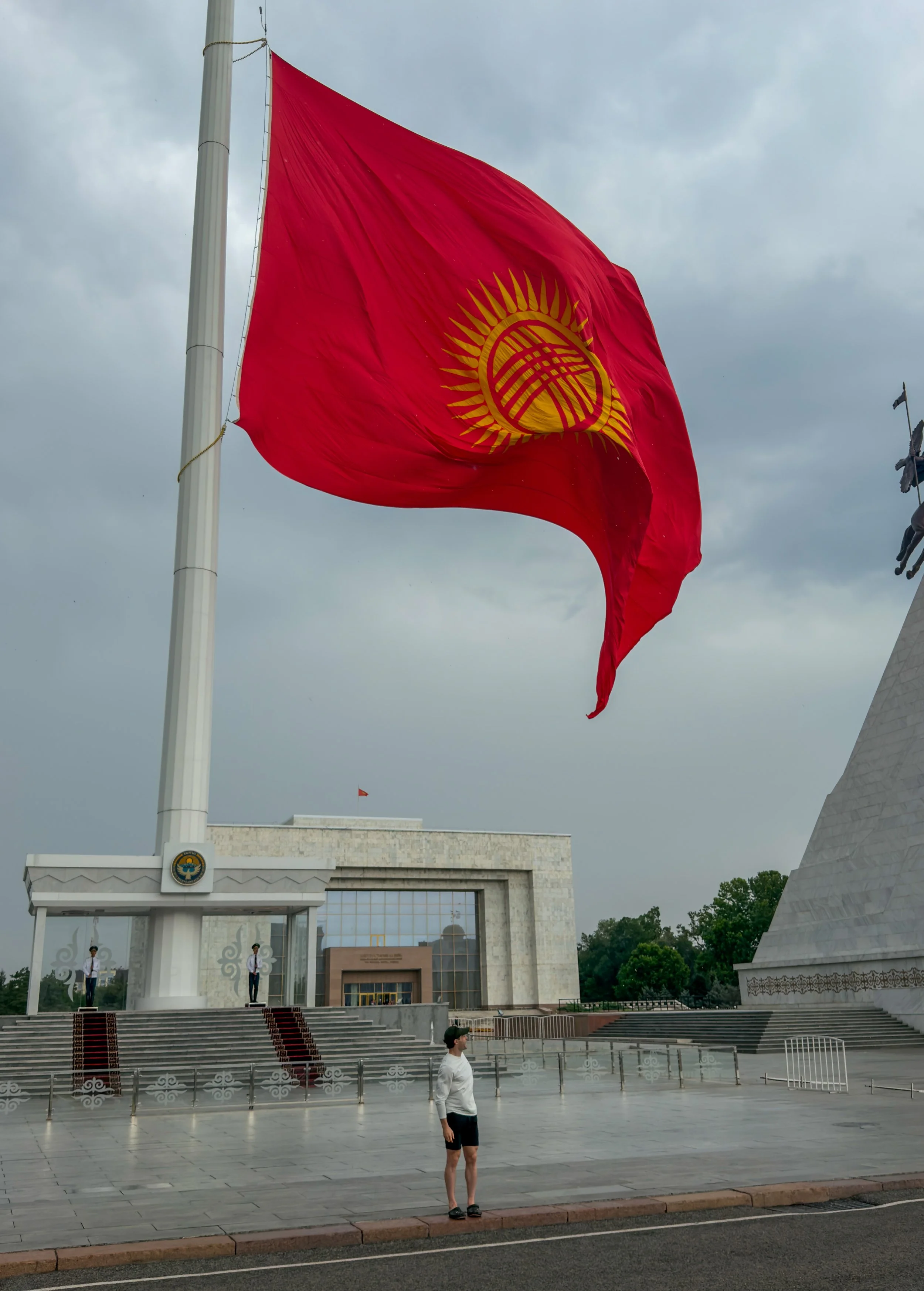
Day 1: Bishkek
After a long journey involving a bus and two overnight flights, we finally arrived in Bishkek Airport at around 9am.
Running on very little sleep, it would have been easy to spend the day recovering in the hotel. Instead we dropped our bags off and headed straight out to explore.
The first things that struck me was not only how warm and chaotic Bishkek was, but also the sheer amount of construction taking place.
Kyrgyzstan capital feels like a city in transition. As tourism continues to grow, the capital is expanding rapidly to keep pace. Roads are being resurfaced, new buildings seem to be appearing everywhere and the result is. a whole lot of constriction and carnage on the roads.
With the city being so spread out and traffic getting nowhere, we hired a pair of Yandex scooters and spent the afternoon weaving between parks, monuments, and wide Soviet-era boulevards.
Although Bishkek lacks the dramatic scenery the country is famous for, it's a fascinating introduction to Kyrgyzstan. We visited Ala-Too Square, Victory Square, and Harry sought out an old Soviet-era thrift shop, where he immediately disappeared down a rabbit hole of Olympic memorabilia.
After lunch we head over to embrace the sights and smells of the infamous Osh Bazaar, do do a spot of shopping for our upcoming adventure.
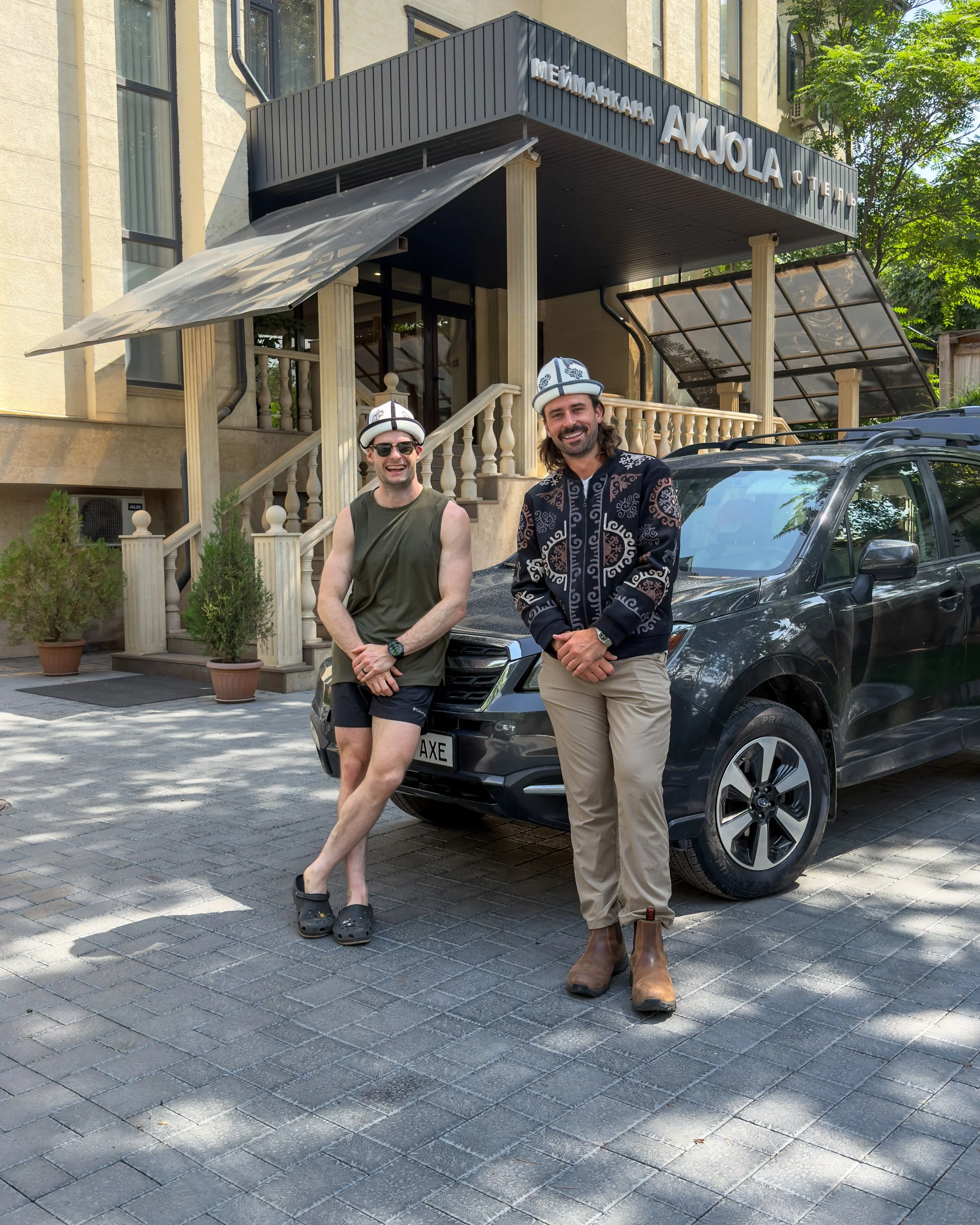
We da ew huge number of vendors selling traditional Kalpaks, which are the iconic white felt hats worn by Kyrgyz men.
More than just a souvenir, the kalpak is one of the country's national symbols, representing the mountains, heritage and nomadic culture of Kyrgyzstan.
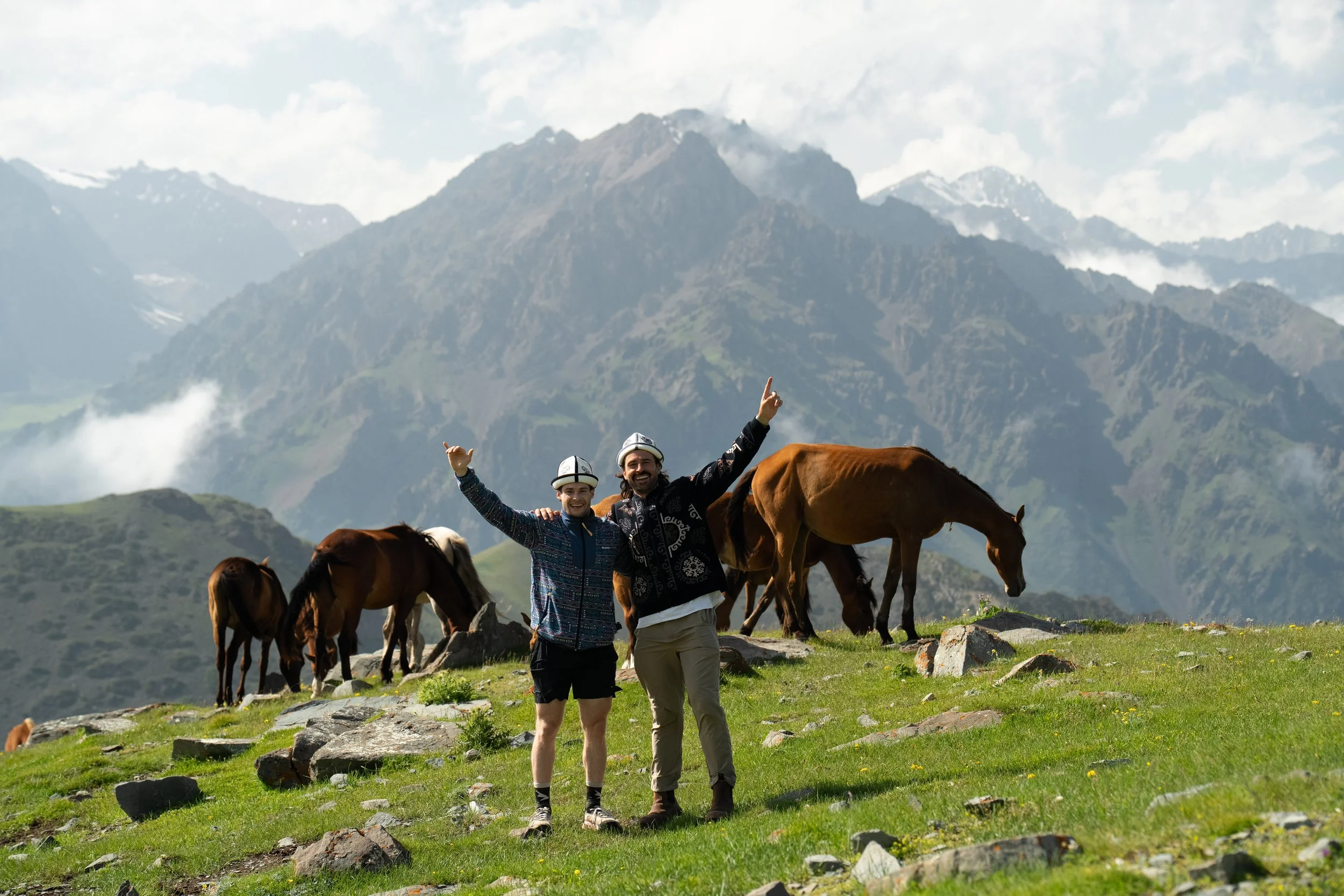
Wanting to fully embrace the trip, Harry and I both bought one and it immediately proved to be an elite purchase
On the walk back to the hotel we received countless thumbs up, smiles, and cheers from locals walking and driving past. Whether they appreciated two tourists making the effort to embrace their culture, or simply found us amusing, we'll never know.
We rounded off the day with a traditional Kyrgyz meal at a local restaurant where nobody spoke a word of English. Between pointing at the menu, Google Translate and a healthy amount of guesswork, we somehow managed to order a fantastic meal.
After almost 36 hours of travelling, we headed back to the hotel for an early night, ready to collect our 4x4 and begin the road trip properly the following morning.
Day 2: Bishkek to Kyzyl-Oi
After a much-needed night's sleep, we tucked into a hearty buffet breakfast before meeting the rest of the group for our trip briefing.
There were five vehicles taking part in the road trip, which were made up of an eclectic mix of ages and countries Alongside Harry and me were
Fellow content creators Rico and Mia form Germany
A young couple from Australia and New Zealnd
A mother and son from Switzerland
A French family, who live in Dubai ho were travelling with their three children
It was a varied group, but everyone had one thing in common. We'd all travelled to Kyrgyzstan in search of adventure.
Waiting for us outside was our home for the next nine days, an automatic 4x4 Subaru Forester.
It proved to be an excellent choice for the trip. Spacious, comfortable, and very well equipped, it came with everything we needed, including air conditioning, Apple CarPlay, a phone holder & usb charger, a sunroof and plenty of room for all of our luggage and camera gear.
After being shown around the vehicle and talked through the dos and don'ts of driving in Kyrgyzstan, as well as the route for the day, we were handed the keys and left to our own devices.
The adventure had officially begun.
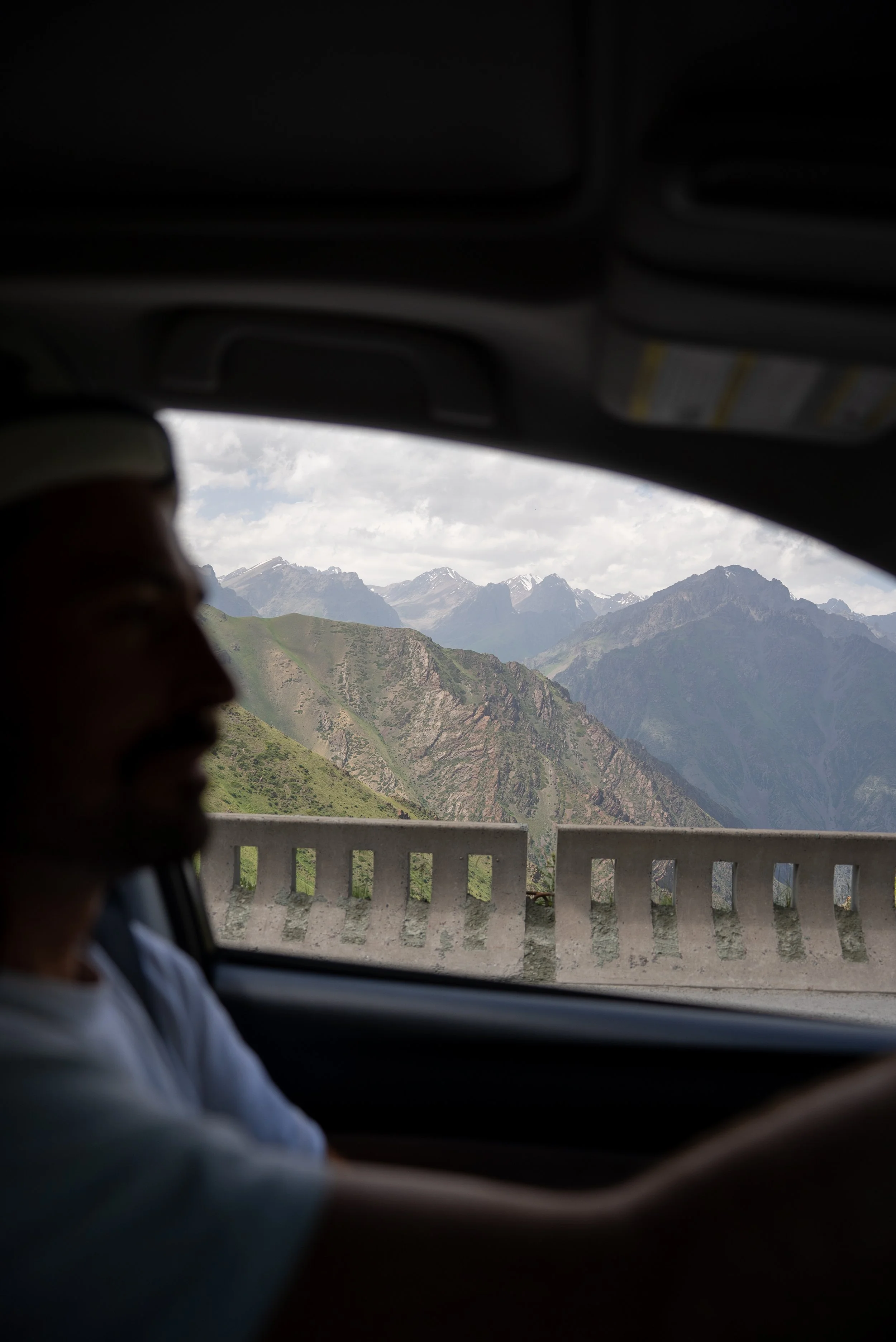
Leaving Bishkek behind, the roads gradually became quieter as the busyness slowly disappeared into the distance. Within an hour it felt like we'd entered a completely different country. We were enveloped by steep sided mountains and climbing steadily up through a stunning gorge.
The hairpin road climbed up over 3,000 metres above sea level, as we weaved our way up to the Too-Ashuu Pass. Towering Jagged mountains surrounded us, patches of snow still clung to the highest peaks, and the temperature had dropped noticeably. It was a incredible first introduction of just how wild Kyrgyzstan is.
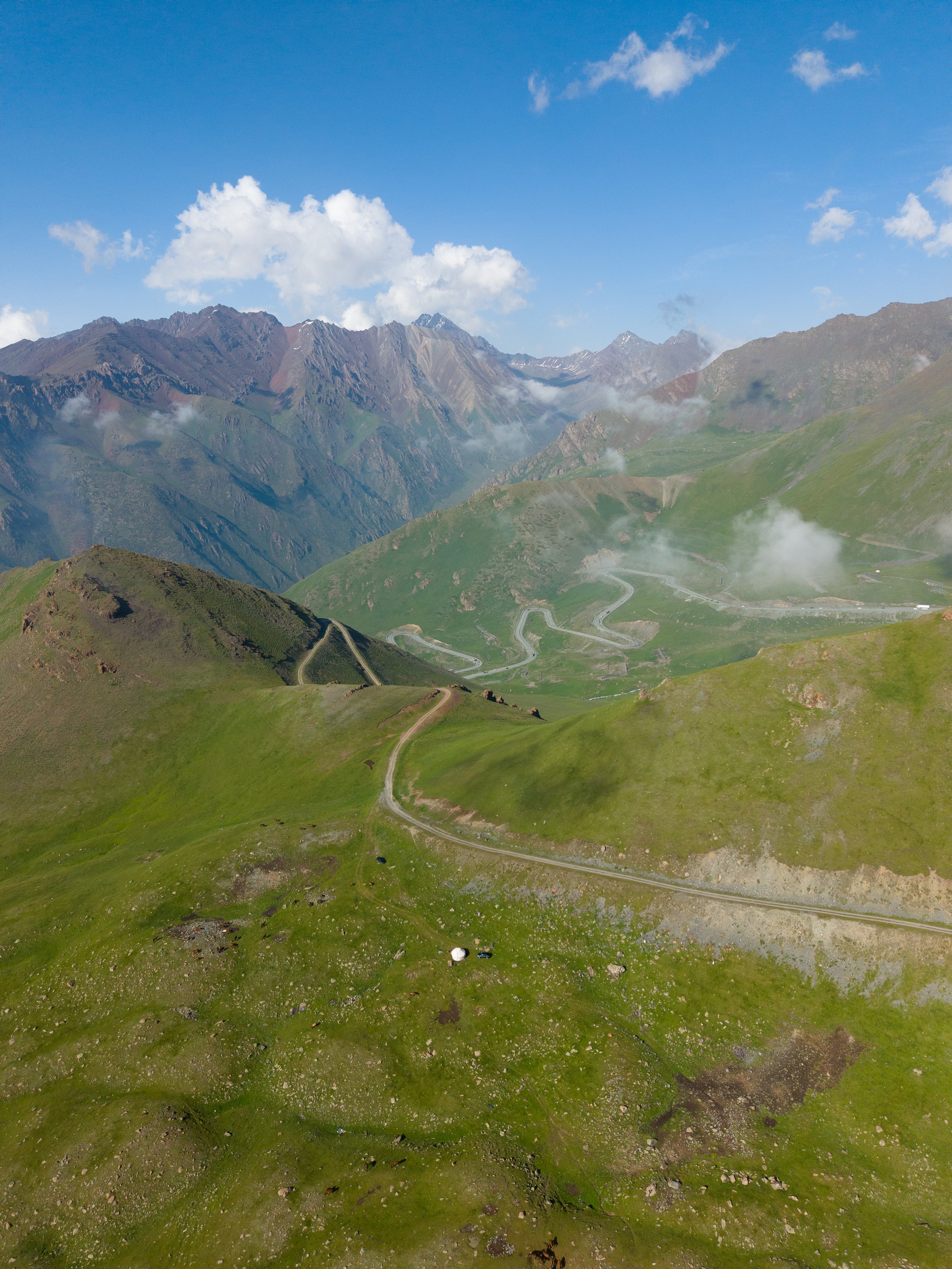
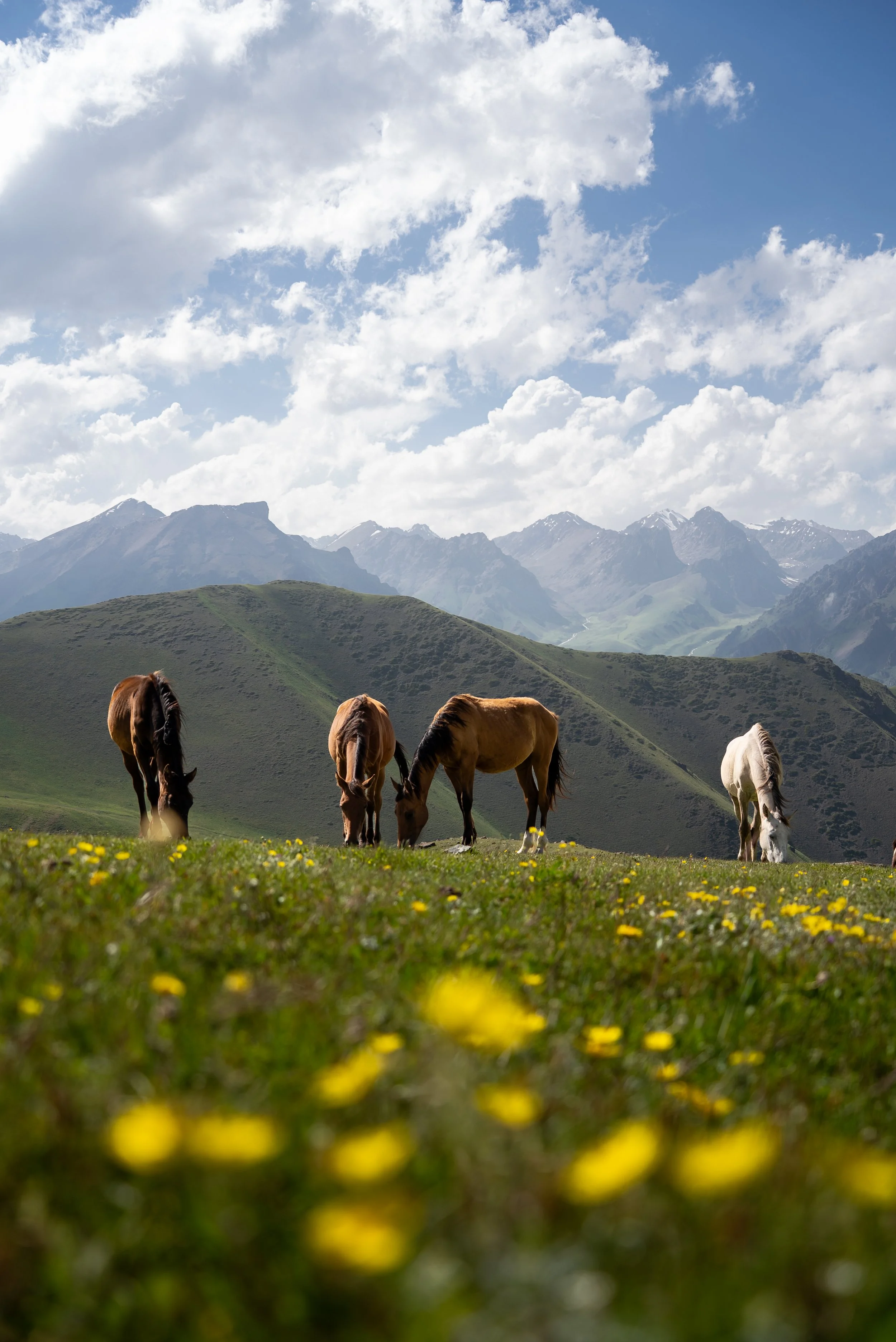
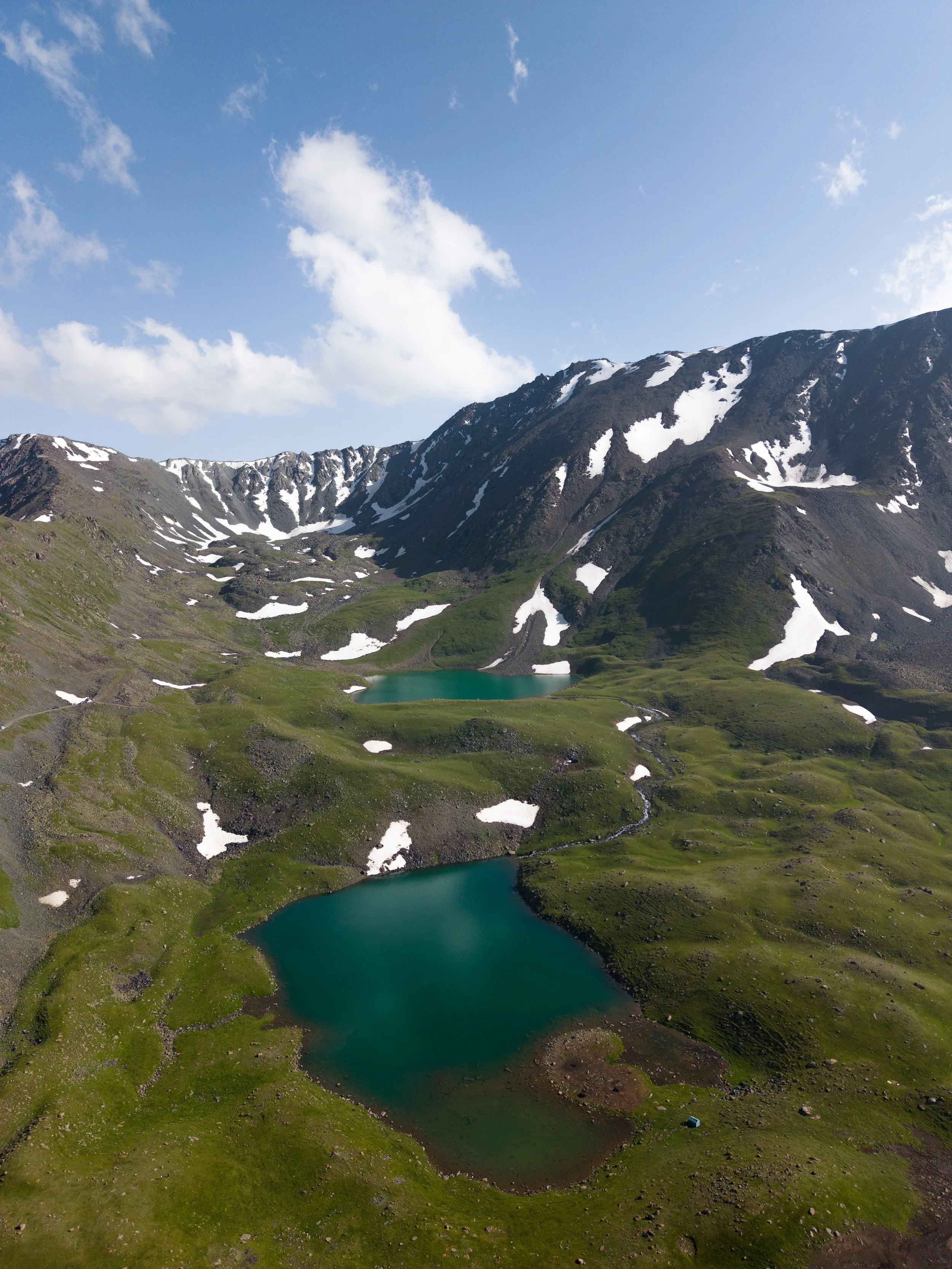
A short of road detour brought us to Sulutor Lakes, two turquoise glacial lakes sitting beneath a snow-capped mountain cirque at around 3,500 metres above sea level.
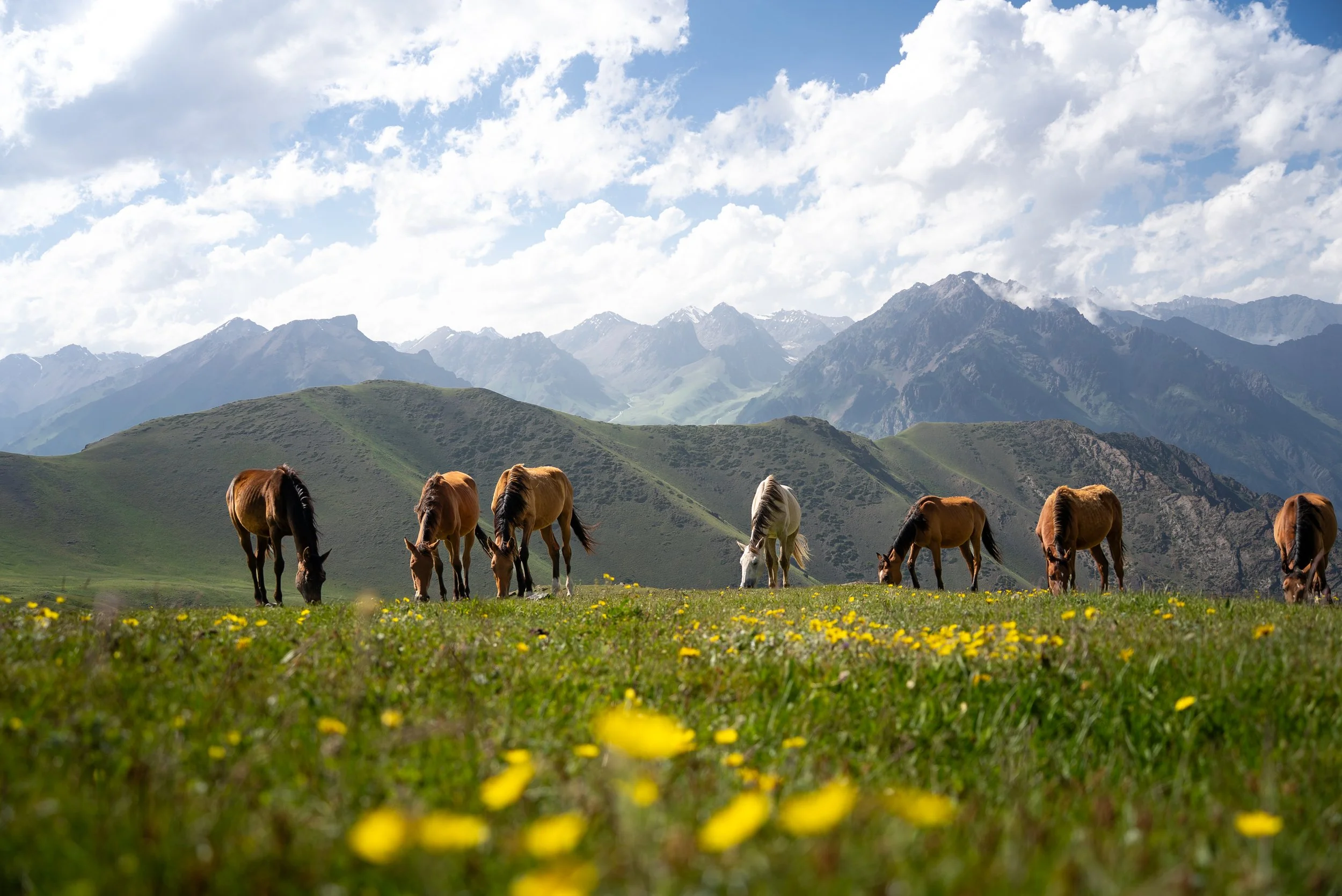
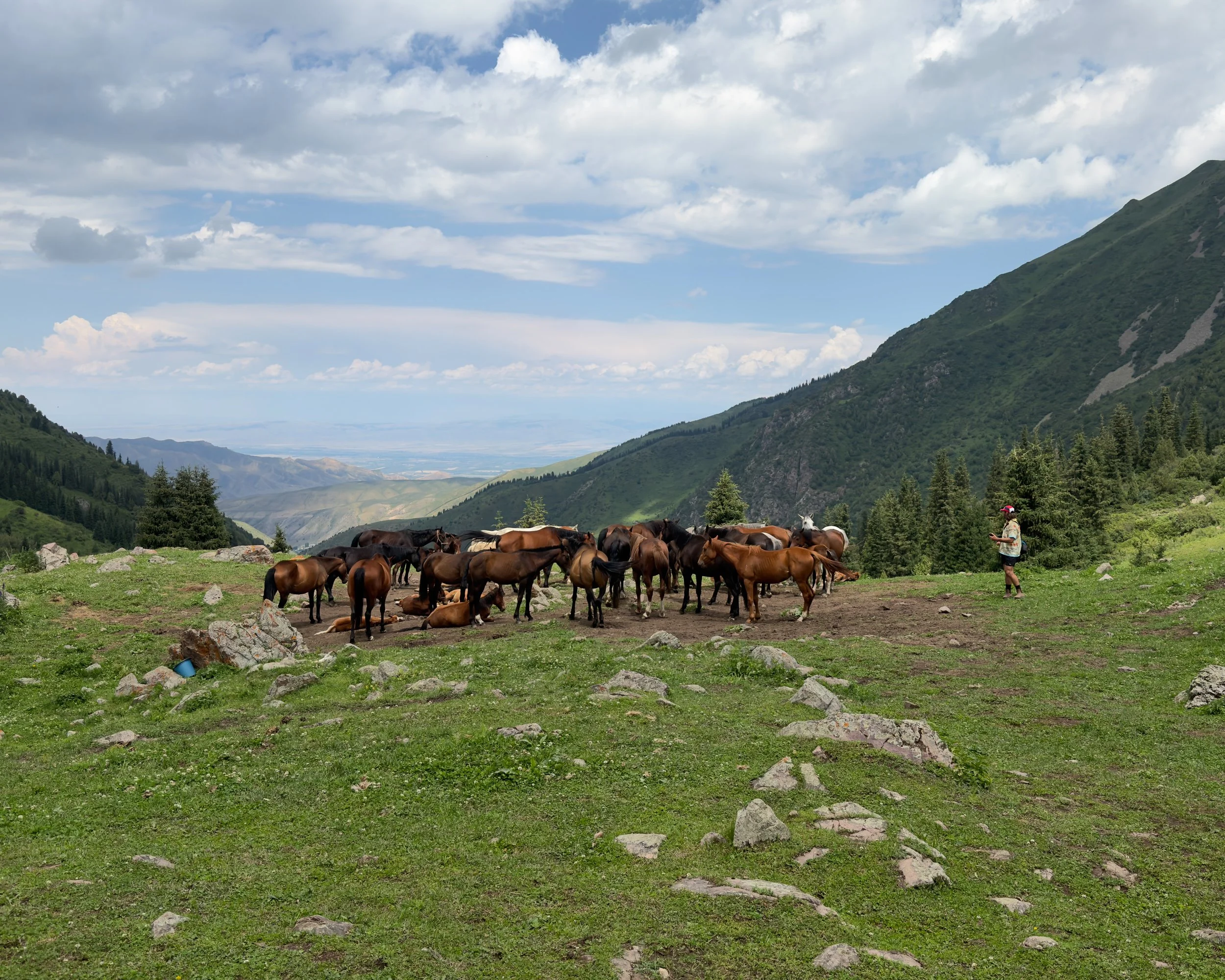
The lakes were beautiful, but what really made the stop special was the band of wild horses grazing the lush green pastures below.
Watching them roam freely beneath the mountains felt like the perfect introduction to Kyrgyzstan. It was exactly the sort of scene I'd imagined before arriving and seeing it unfold naturally made it even more memorable.
We spent nearly two hours soaking it all in, constantly jogging back and forth to the car to swap batteries and lenses. Those short trips left us noticeably out of breath, and was humble reminder that we were travelling through one of the highest countries on Earth.
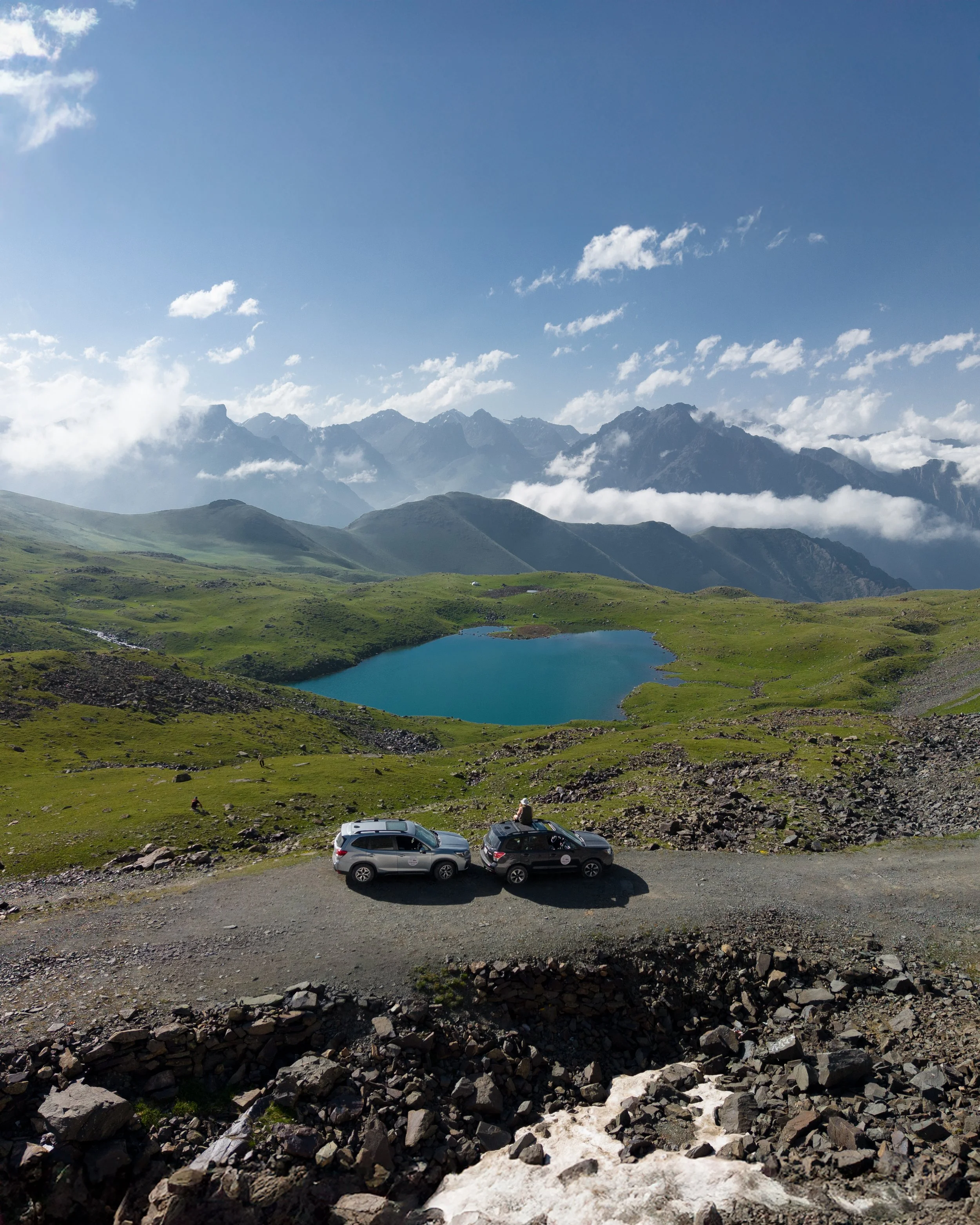
After lunch, we continued our journey through the Too-Ashuu Tunnel. Stretching for more than 2.5 kilometres and sitting at over 3,000 metres above sea level, it's one of the highest road tunnels in Central Asia and is a one of the main access points across the Tian Shan Mountains.
Emerging from the other side, the landscape opened up into the vast Suusamyr Valley.
Endless grasslands stretched towards snow-capped mountains that dominated the horizon, and every few miles we found ourselves pulling over once again to admire another ridiculous view.
Just when we thought we'd found the highlight of the day, another mountain range or winding road appeared around the next bend.
As the afternoon drifted into evening, we realised we'd spent rather too long stopping for photos and needed to make up some time if we were going to reach our accommodation for dinner.
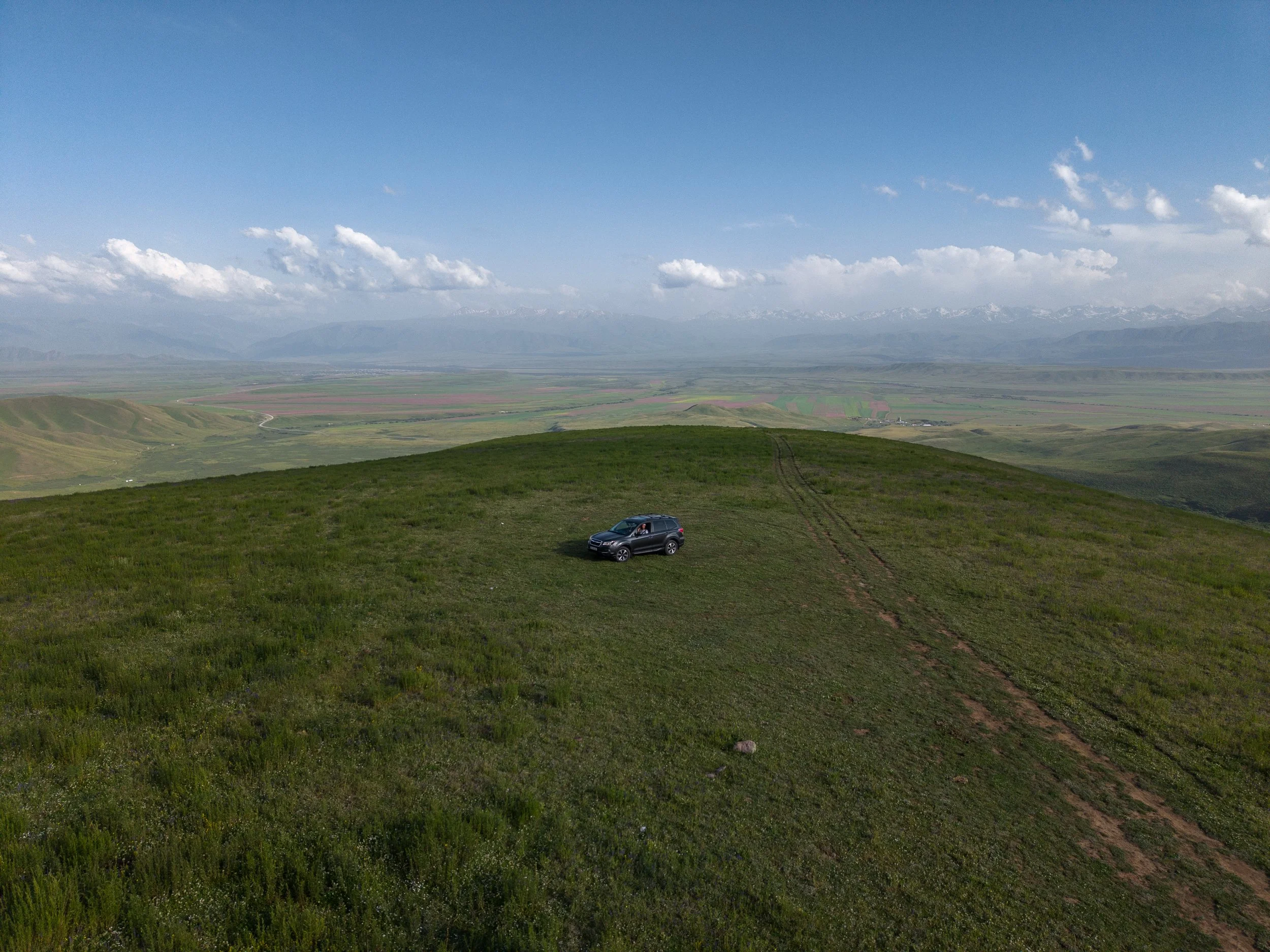
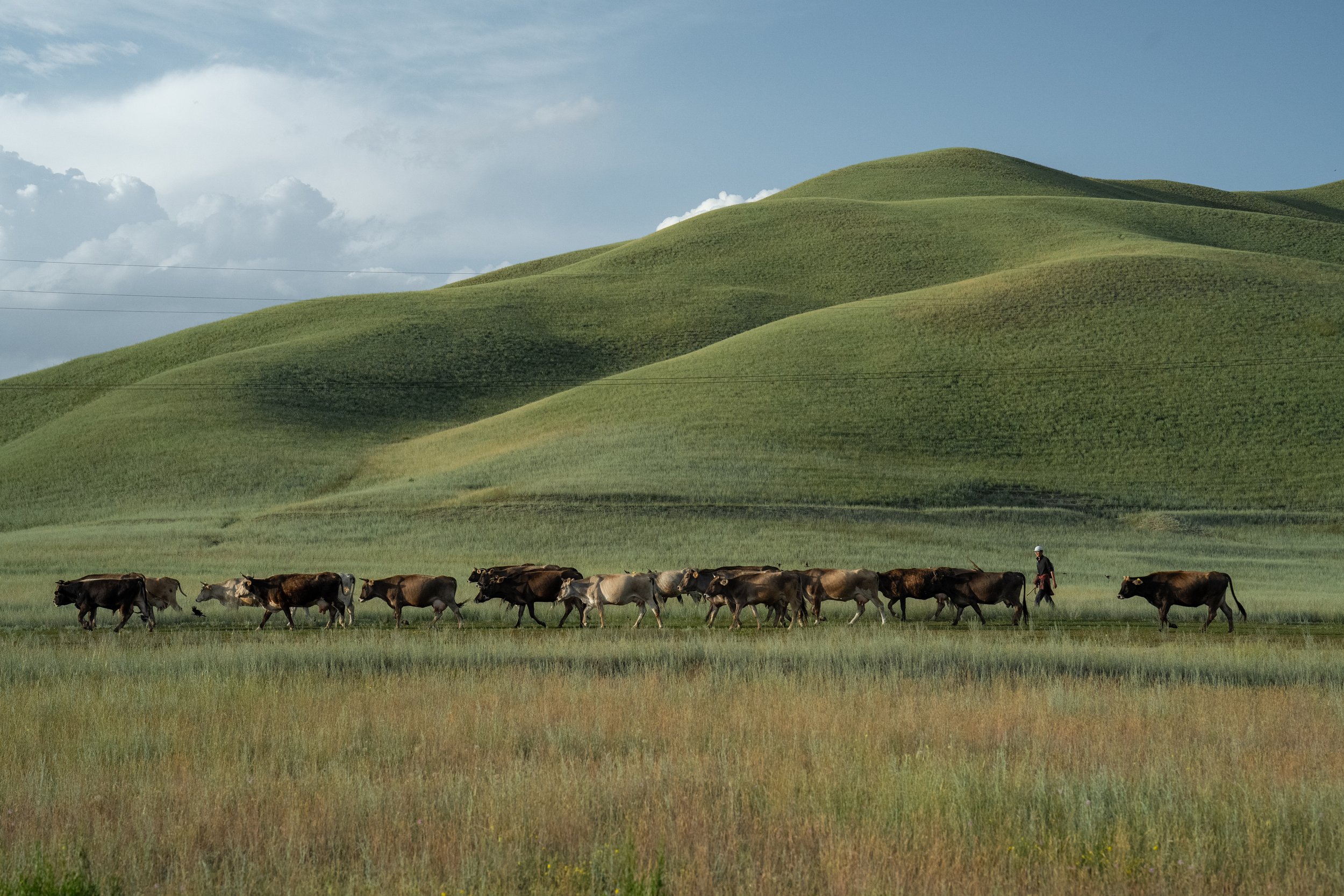
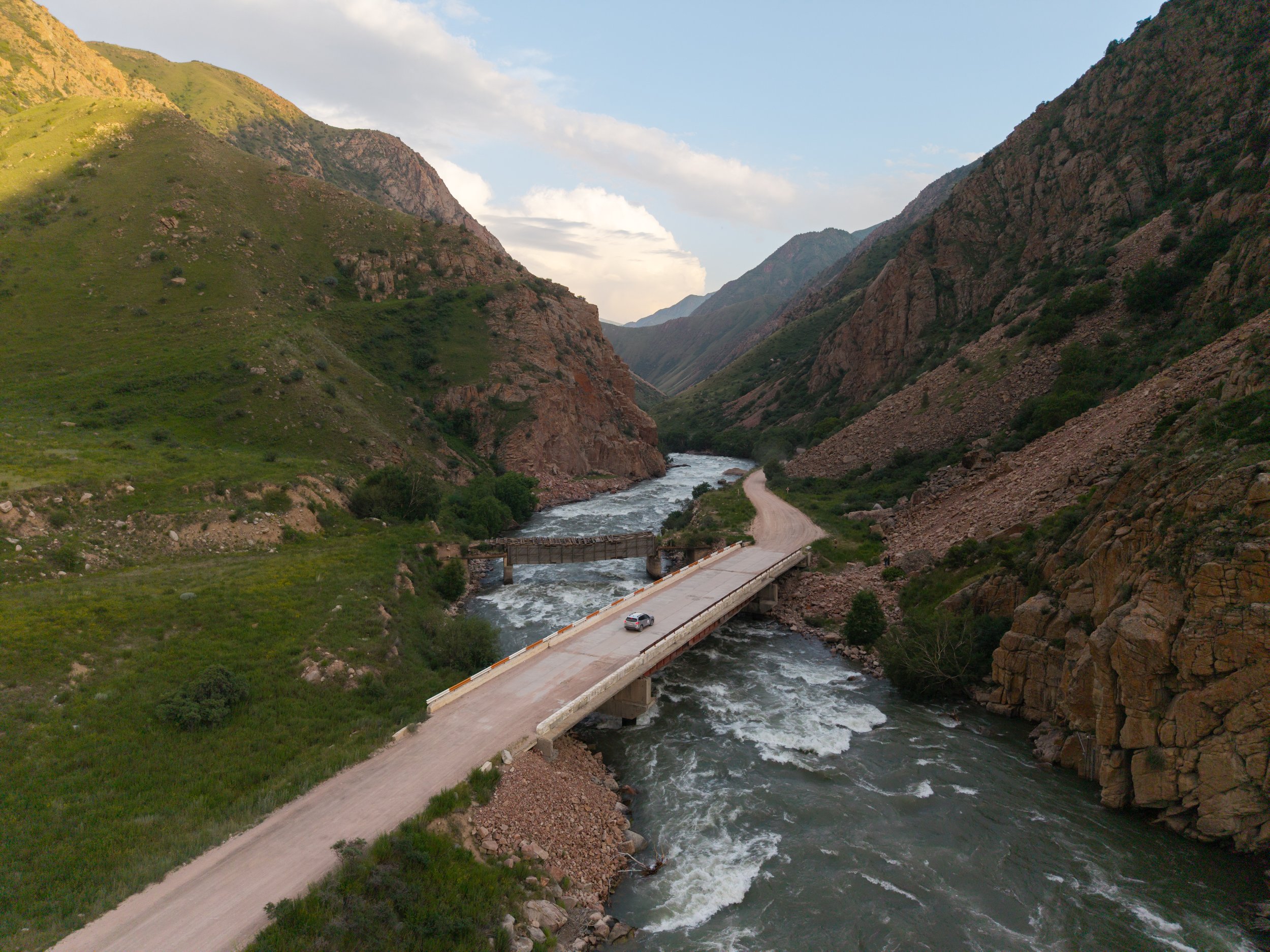
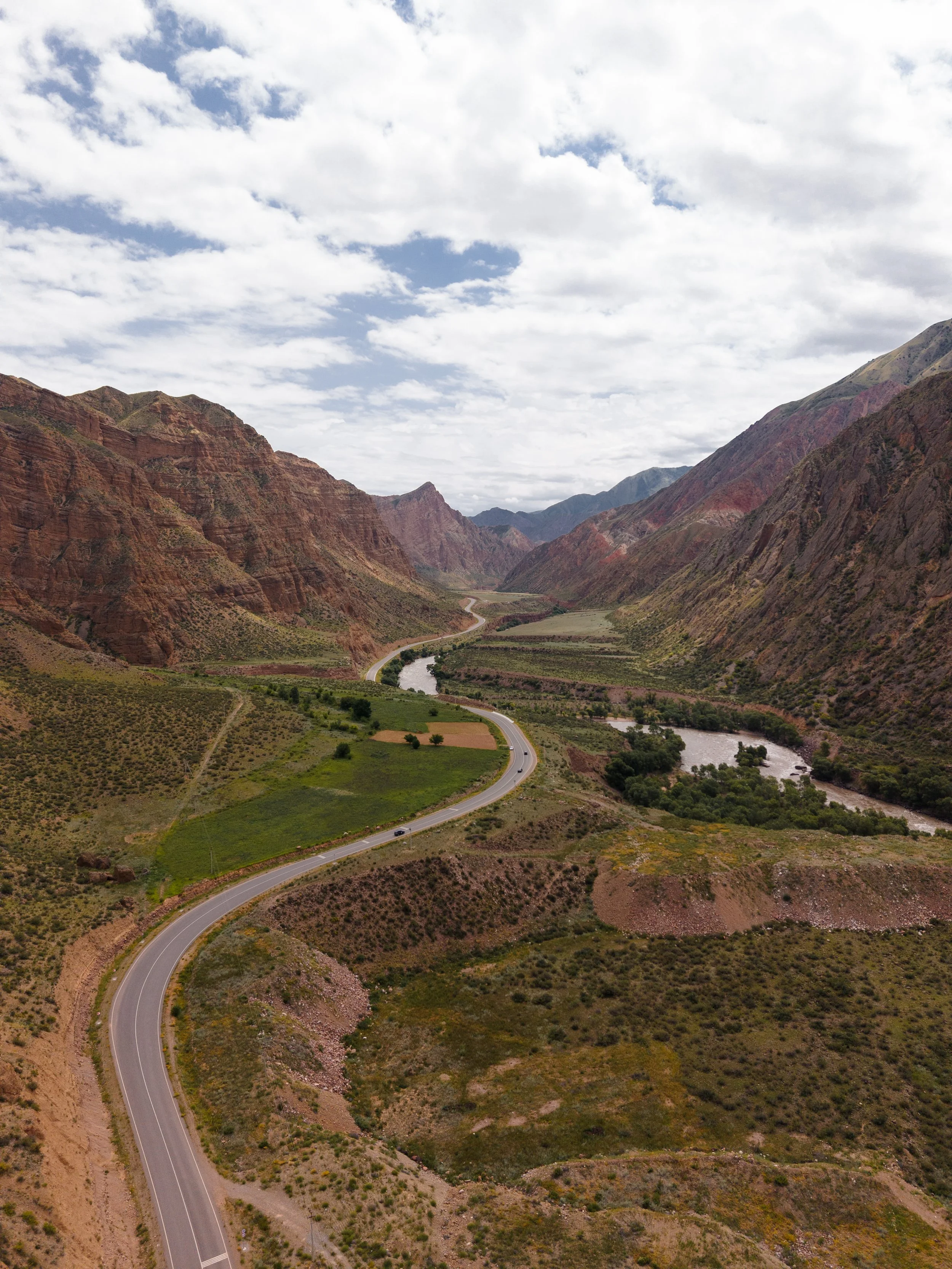
The final stretch followed the Kokomeren River through one of the most impressive gorges of the trip. Towering cliffs closed in around us as the river carved its way through the valley, creating yet another landscape that looked completely different from anything we'd driven through earlier that day.
That constant change quickly became one of the defining features of Kyrgyzstan. No two hours on the road ever looked the same.
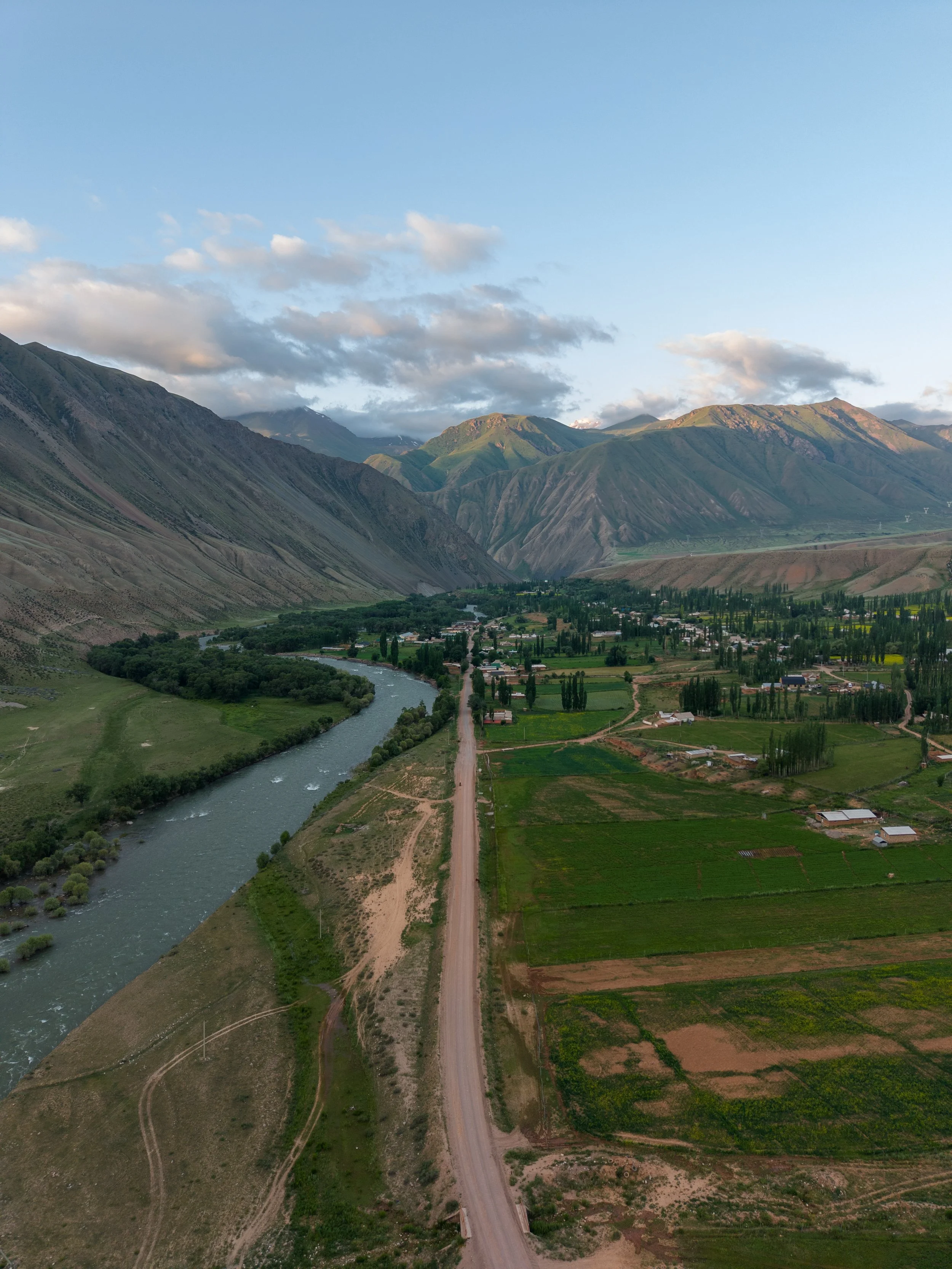
Shortly before sunset, we rolled into the tiny village of Kyzyl-Oi.
Nestled beneath rust-red mountains, it immediately felt a world away from the capital. There were no large hotels or tourist attractions, just simple homes, grazing animals, and a wonderfully quiet pace of life.
Our accommodation for the night was a traditional homestay where we were welcomed with another enormous home-cooked meal. It had only been our first day on the road, but Kyrgyzstan had already completely blown us away.
Day 3: Kyzyl-Oi to Song-Kul Lake
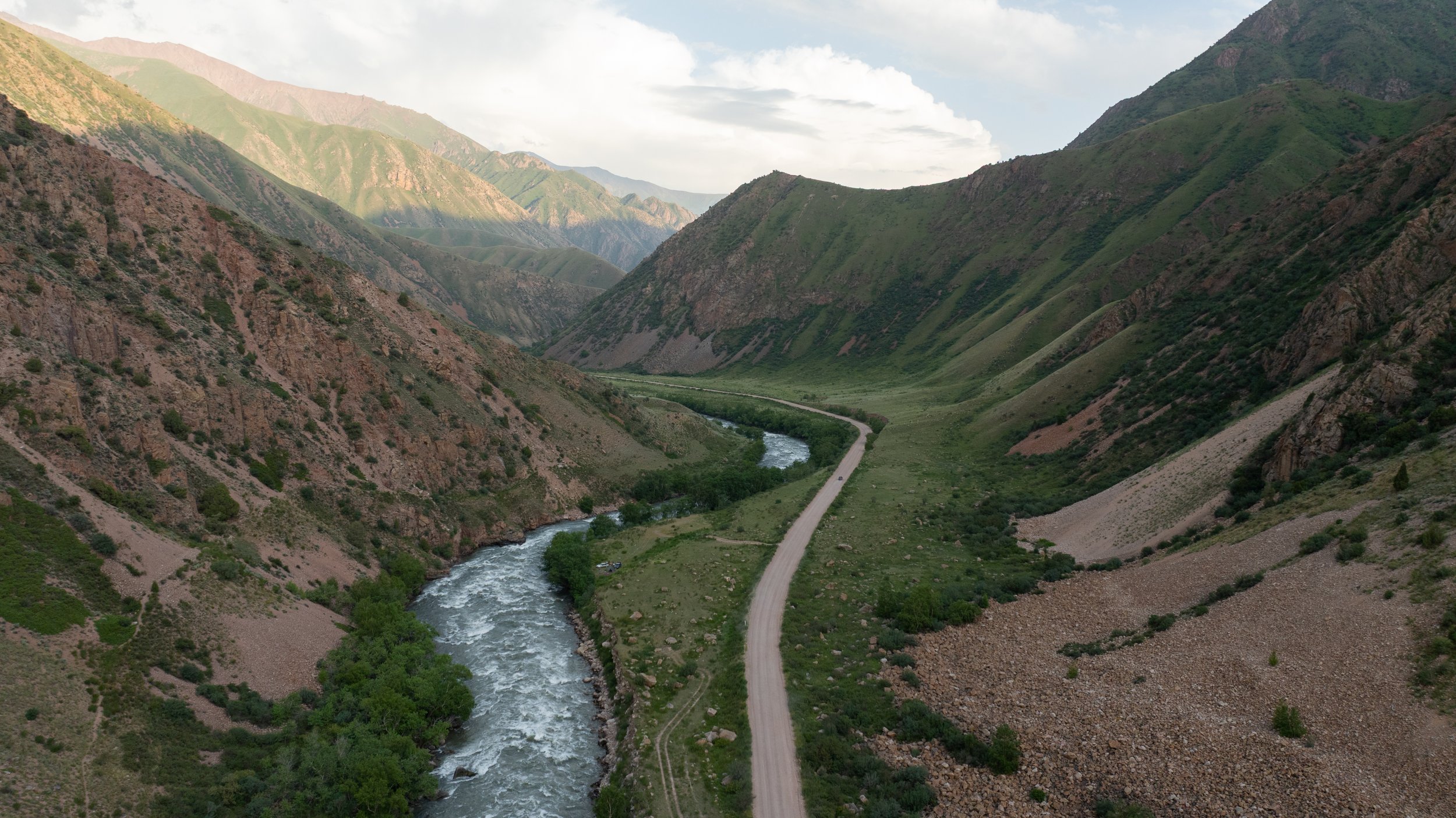
The morning began by following the Kokomeren River further downstream, winding our way through the spectacular Kokomeren Gorge.
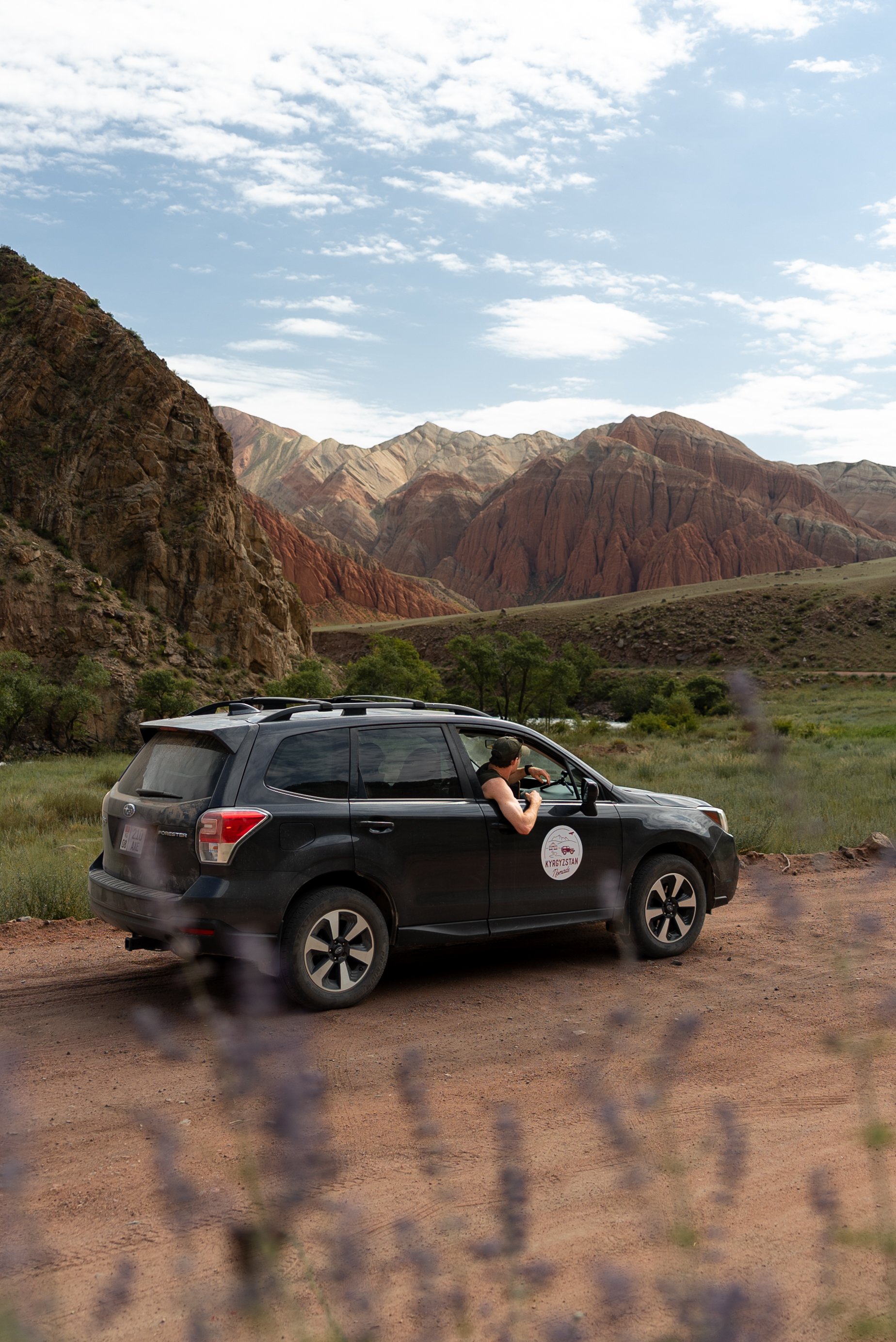
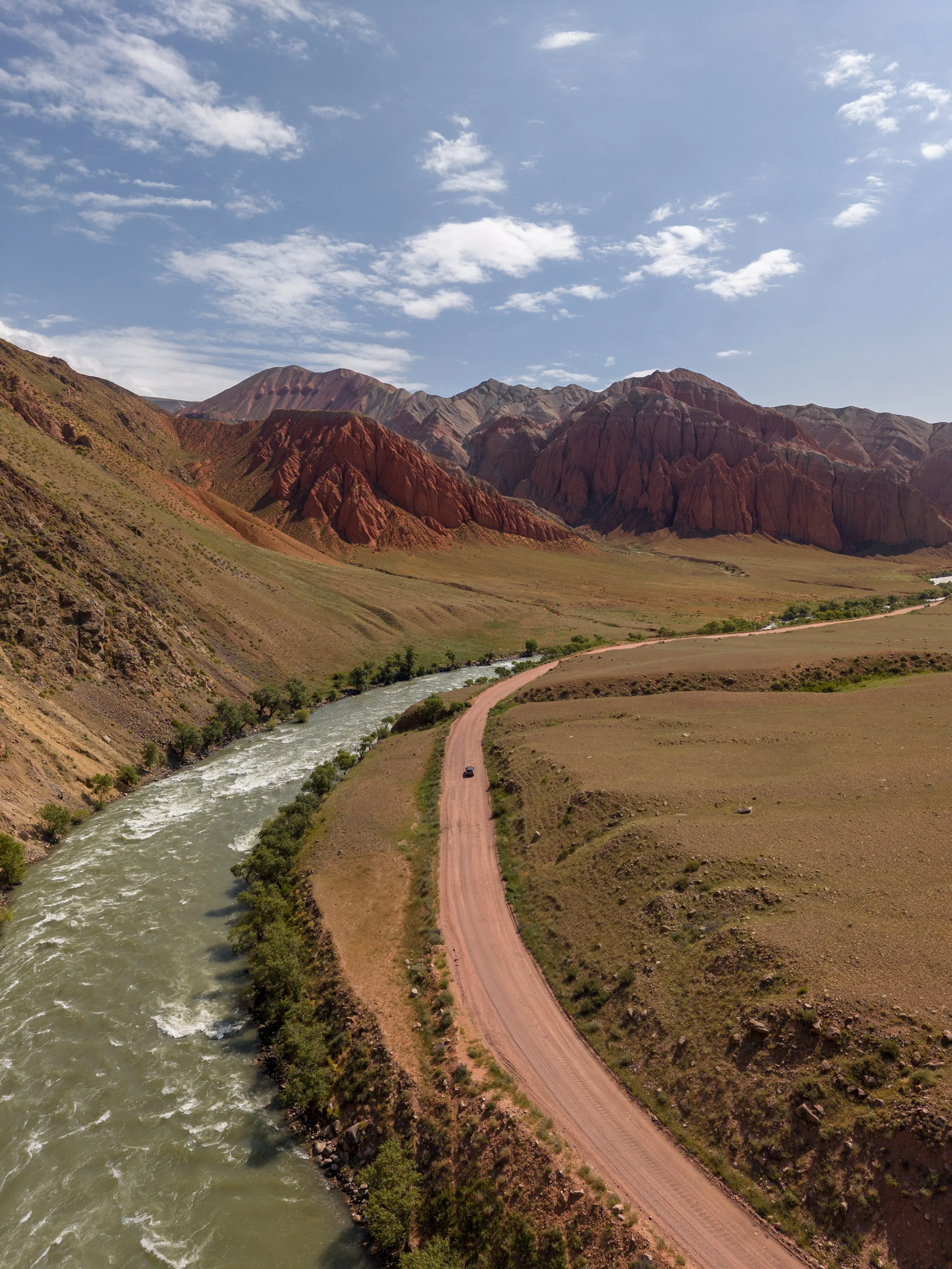
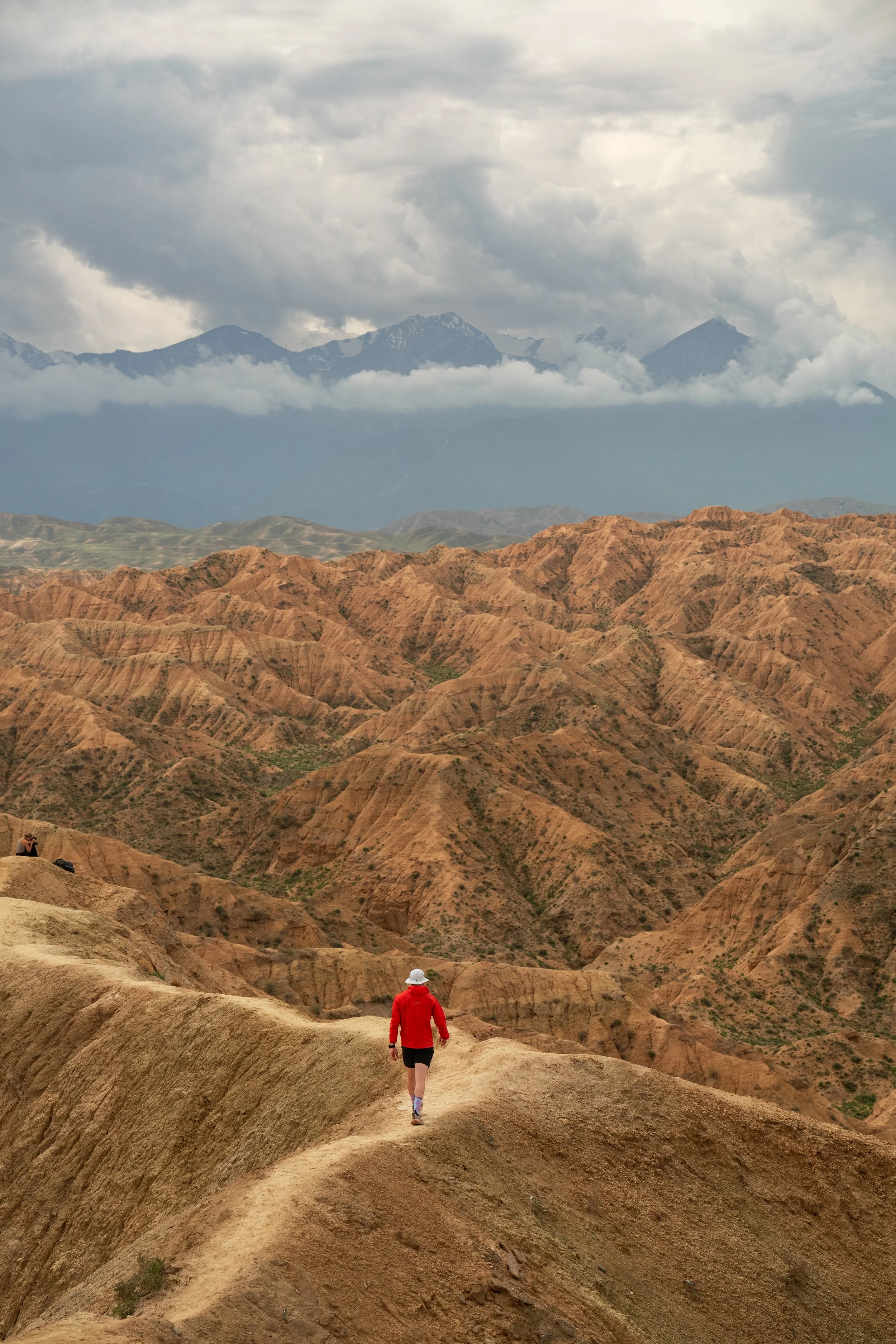
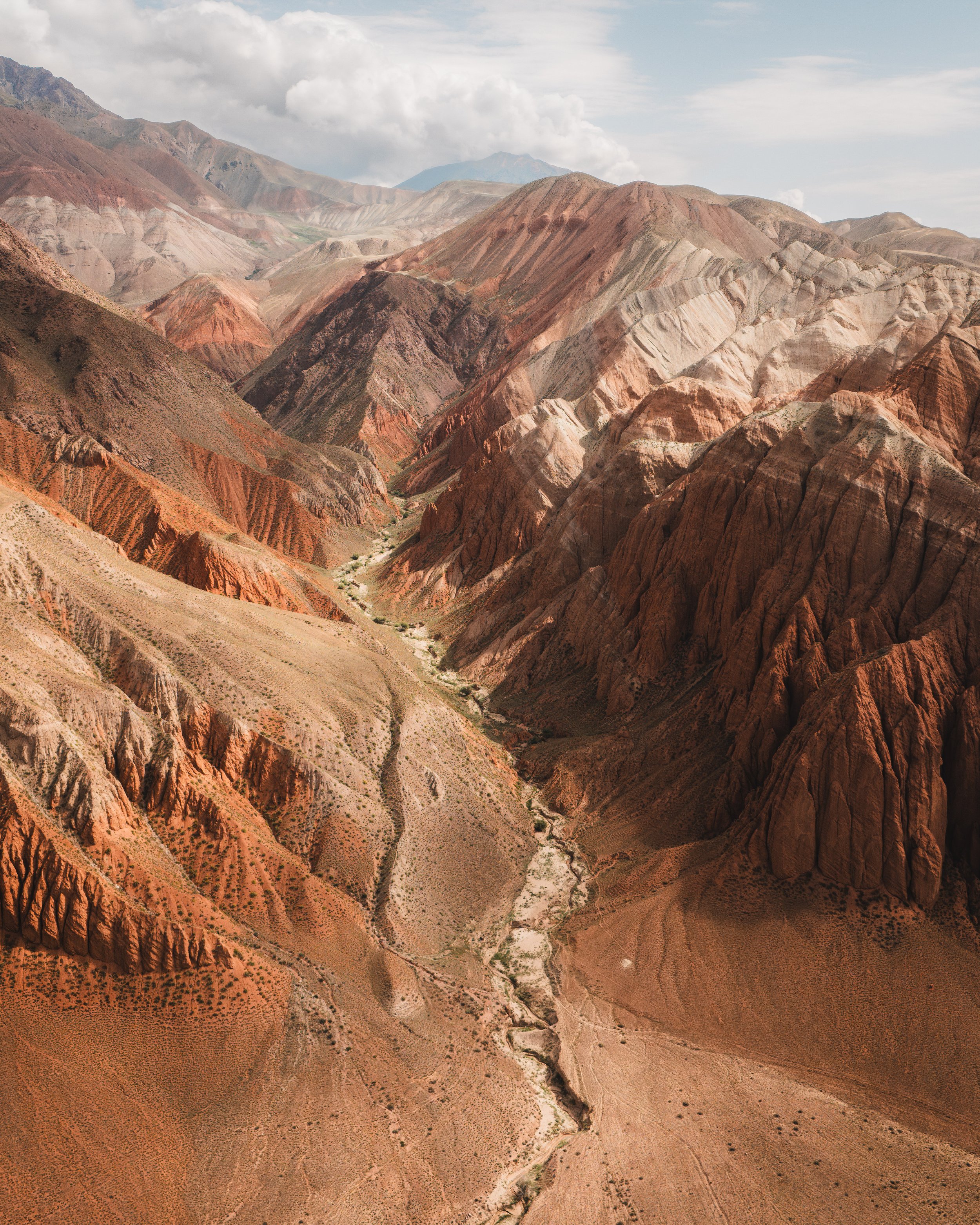
Eventually, we emerged from the gorge and were greeted by a scene that wouldn't have looked out of place in the deserts of Utah or Arizona. Towering above us was Kokomeren Canyon, a vast monolith of deep red rock that rose dramatically from the valley floor.
It wasn't an official stop on the itinerary, but there was absolutely no chance we were driving past without taking a lot of images.
Alongside Rico and Mia, we spent the best part of an hour driving back and forth, flying the drones, capturing photos and soaking it all in. We'd barely been on the road for an hour and we had already filled half a memory card.
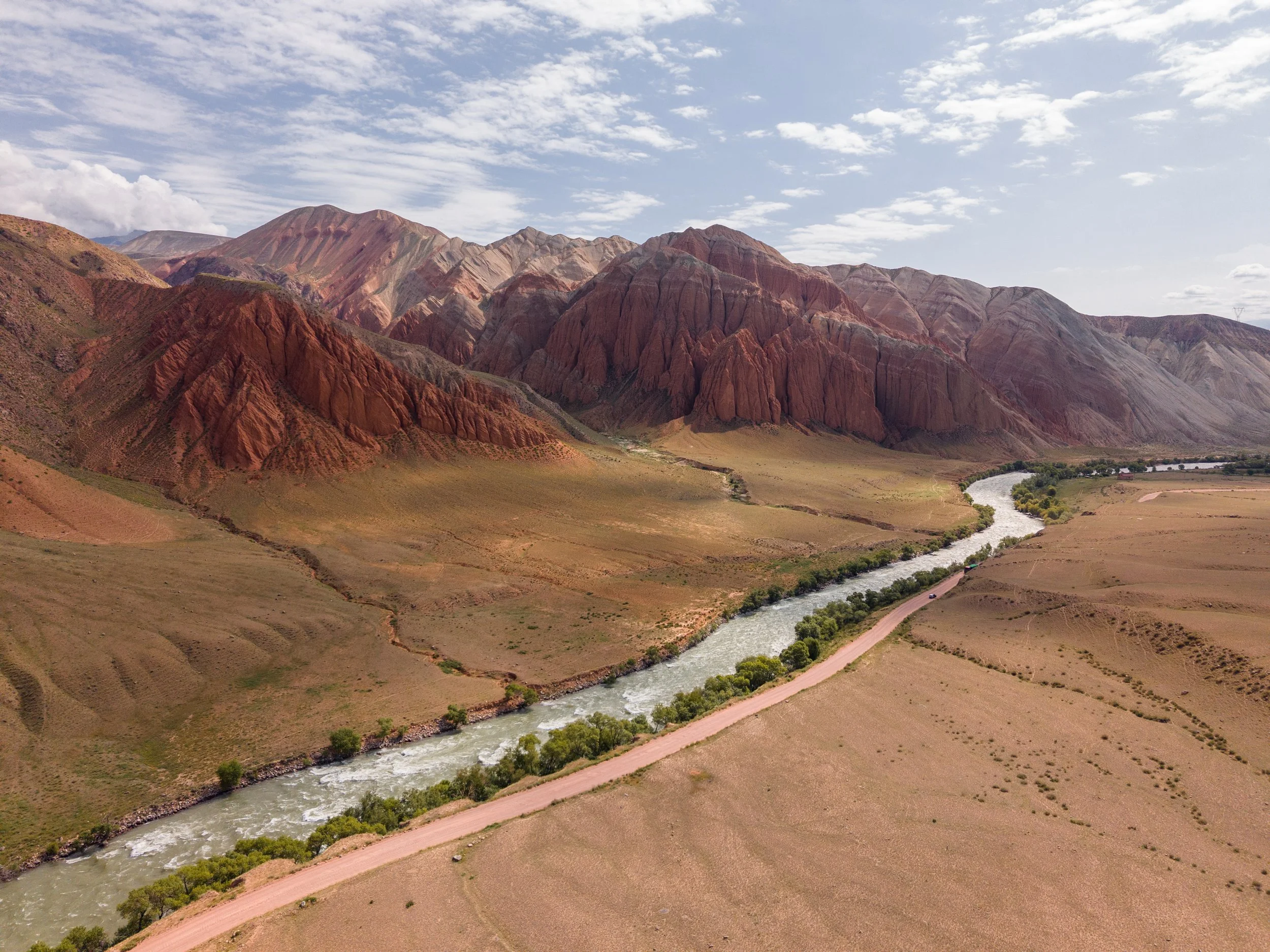
Back on the road, we continued deeper into the gorge and were yet again blown away by the sheer variety of the landscape.
The landscape transitioned between steep sided gorges, colourful hills, and jagged peaks. It felt like the Andes, the south western USA, and the Alps had been smashed together to create a smorgasbord of sensational scenery for our eyes to feast on.
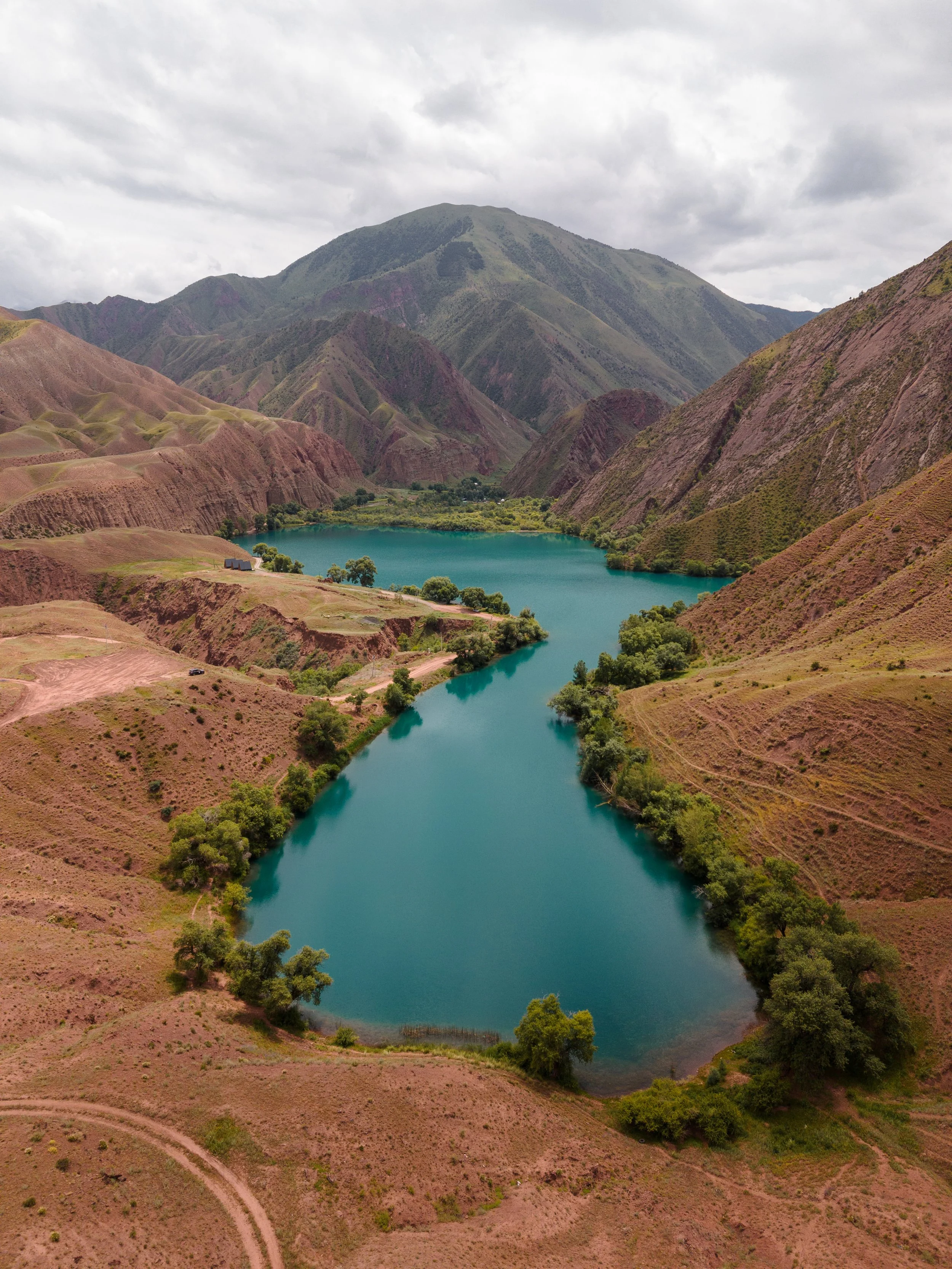
That afternoon we made a stop at the beautiful Ak-Köl Lake. Surrounded by dramatic and colourful mineral-rich hills, the mountain lake looked far too inviting not to swim in, so naturally Harry and I duely obliged
There can't be many better places to enjoy your first wild swim in Kyrgyzstan, than a Turquoise mountain lake, situated 2,500m above sea level and surrounded by some of most vibrant mountains I had ever seen.
Before I had even had chance to climb back out of the water, a local family who were having a barbecue on the shorline wandered over carrying freshly cooked chicken shashlik. It was one of the first moments that really highlighted the warmth and generosity of the Kyrgyz people.
A belly full of barbecued mystery meat, we dried ourself off and began the long drive towards Song-Kul Lake.
The road climbed steadily through another dramatic canyon before passing the Kara-Keche coal mine, which, as a proud Welshman, immediately piqued my interest.
From there, it continued climbing via series of steep switchbacks towards the Kara-Keche Pass at almost 3,400 metres above sea level.
By this point the weather had turned grey, but it did little to take away from the scenery.
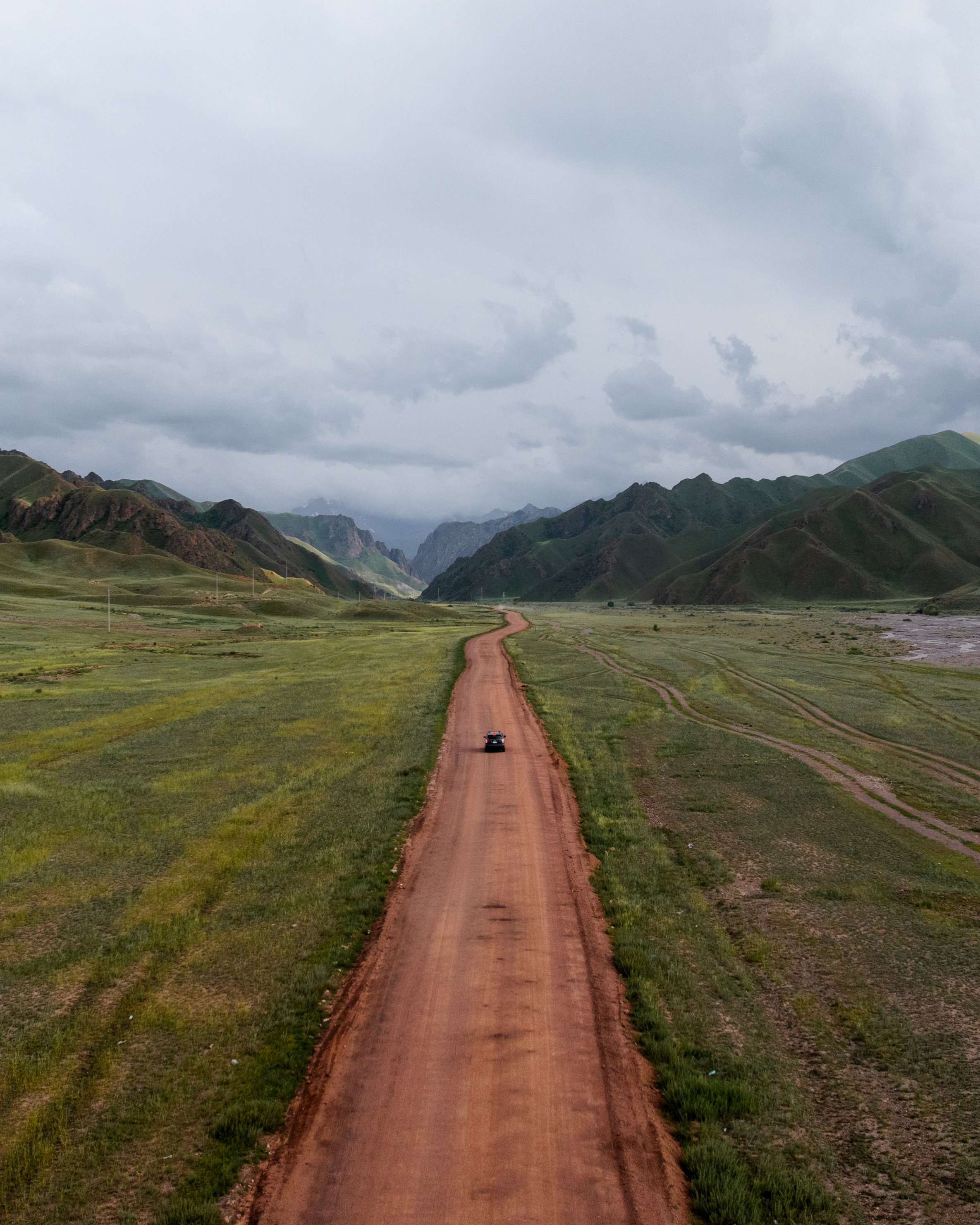
Rolling green hills stretched for miles in every direction, reminding Harry and me of the Icelandic Highlands. Horses, sheep, and cattle wandered freely across the open plains, while traditional white yurts were scattered across the hillside.
As was quickly becoming the theme of the trip, we'd spent far too long enjoying ourselves at the earlier stops and were once again trying to make up time before dinner.
Thankfully the weather wasn't at its best, otherwise we'd probably have stopped another dozen times.
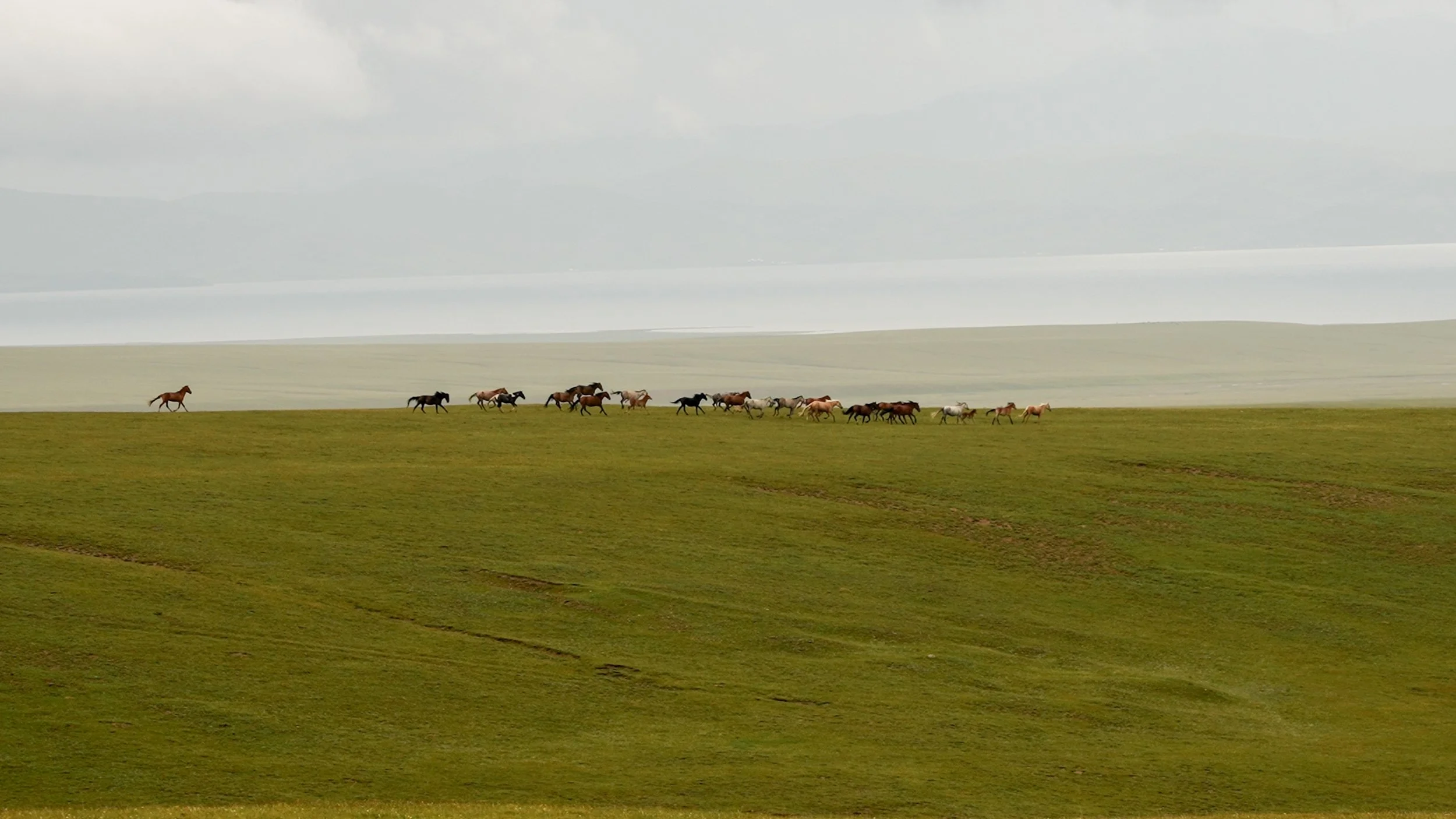
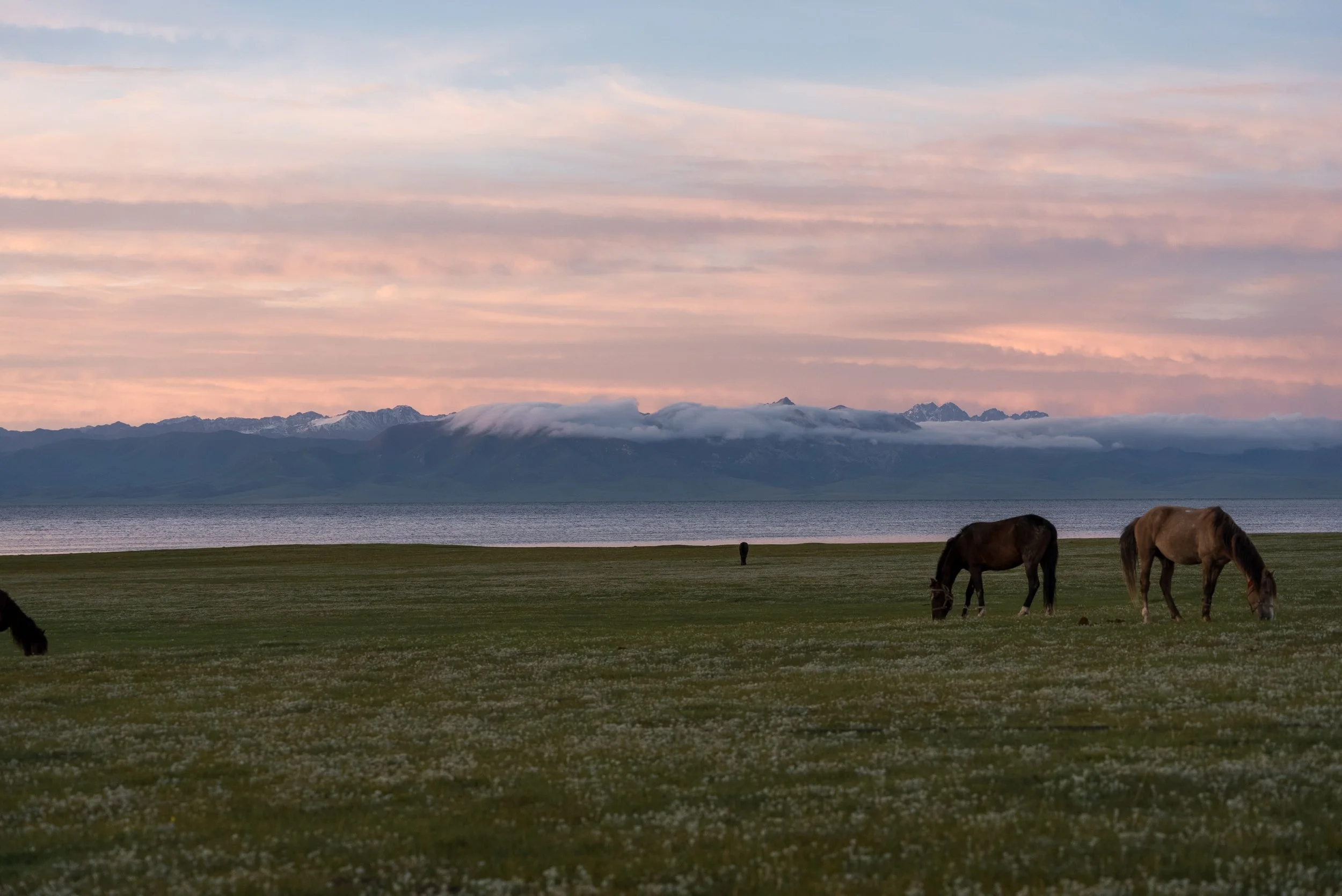
Just before reaching Song-Kul, we spotted a large band of horses galloping across the plateau. Despite being late, we simply had to stop the car and soak it all in. It was like a Lloyds TSB Advert unfolding in real life.
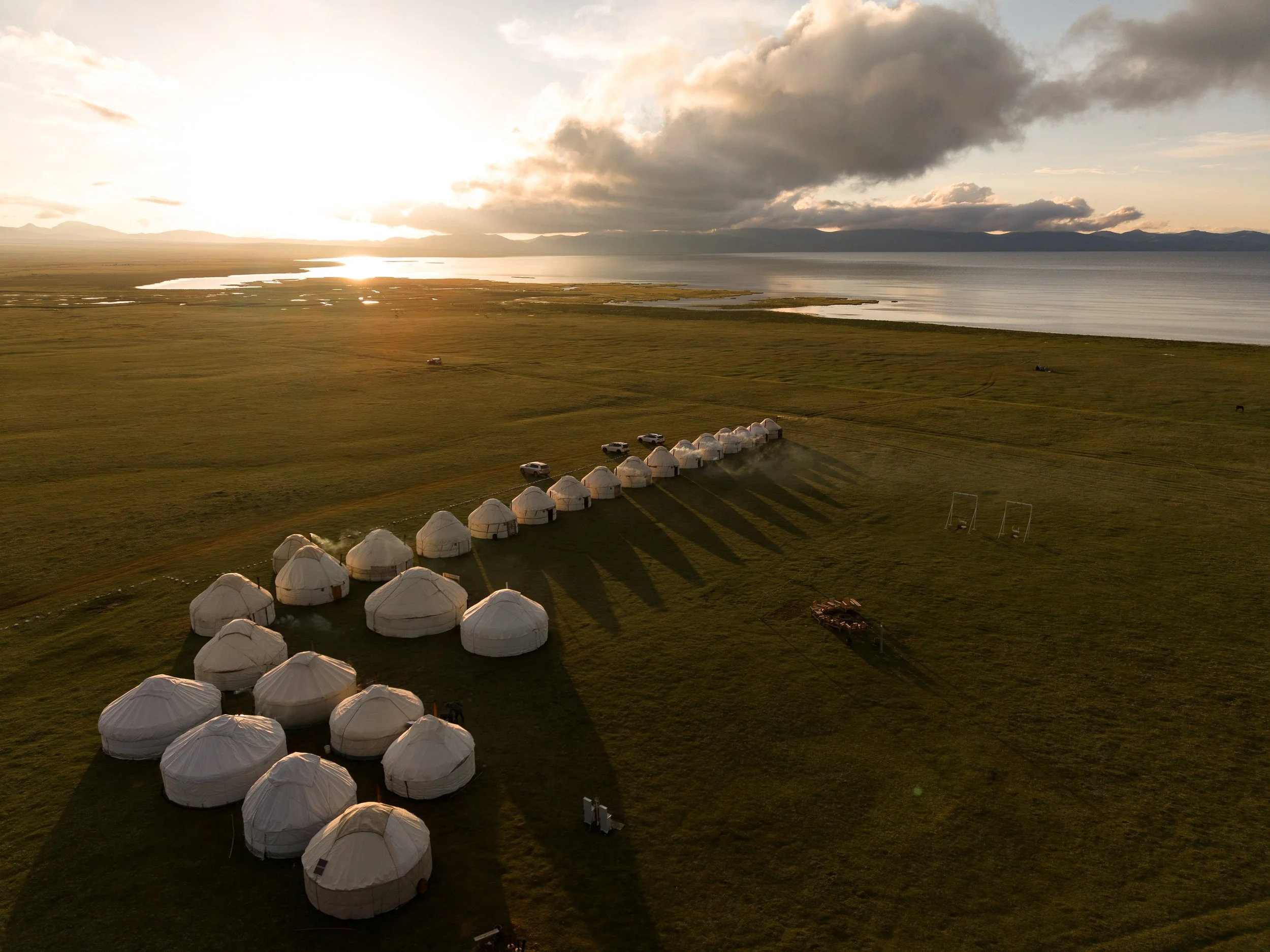
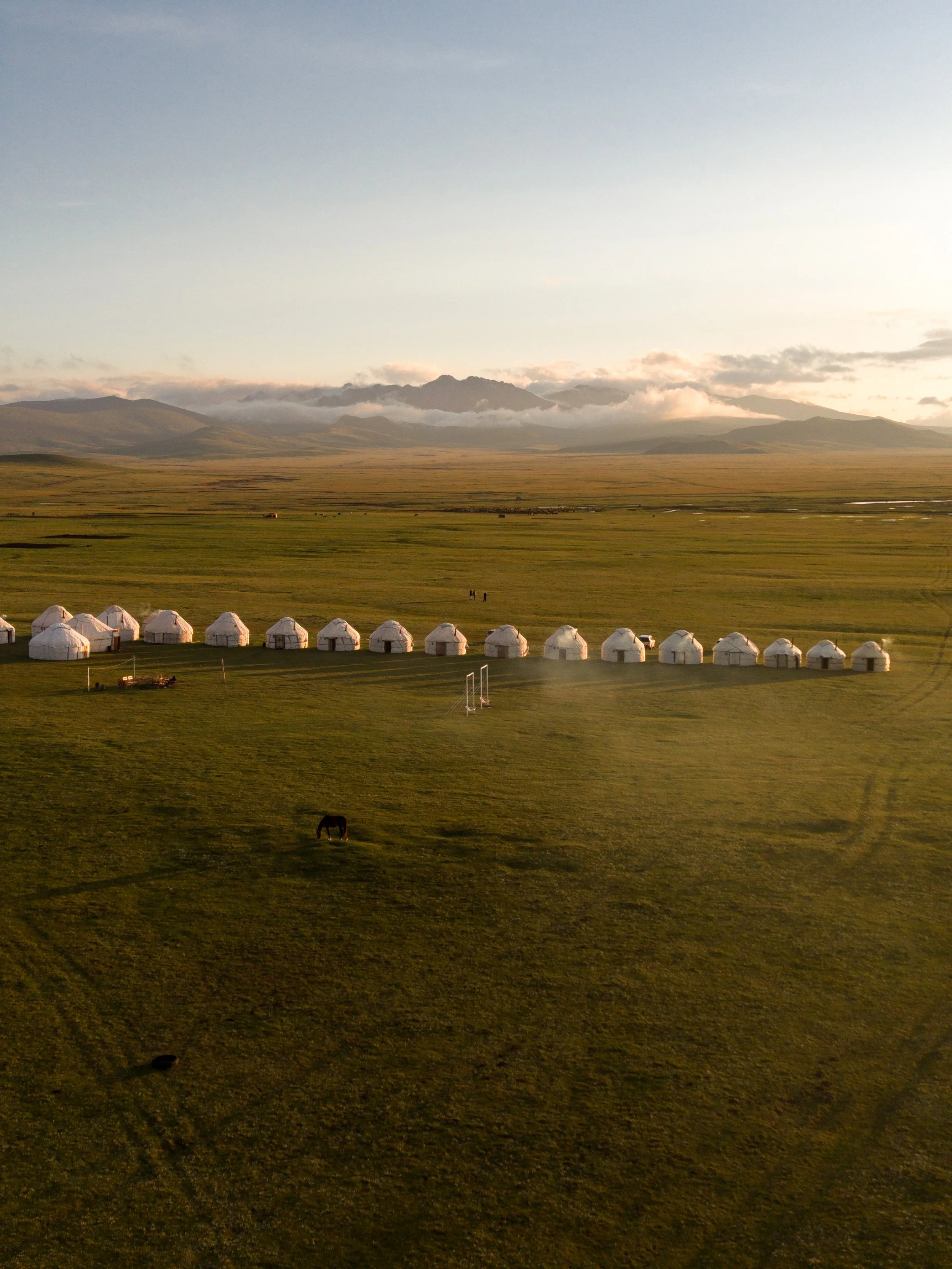
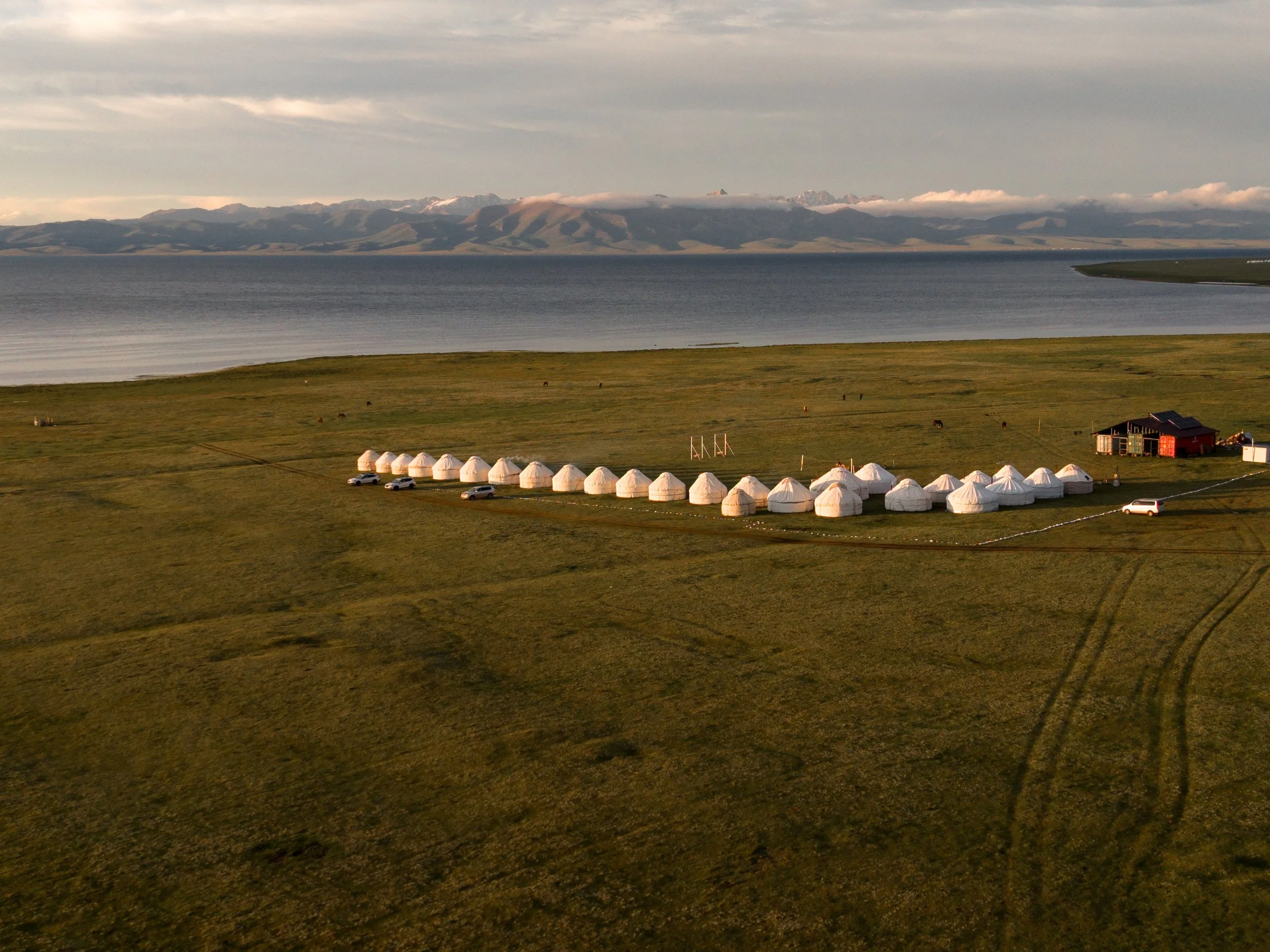
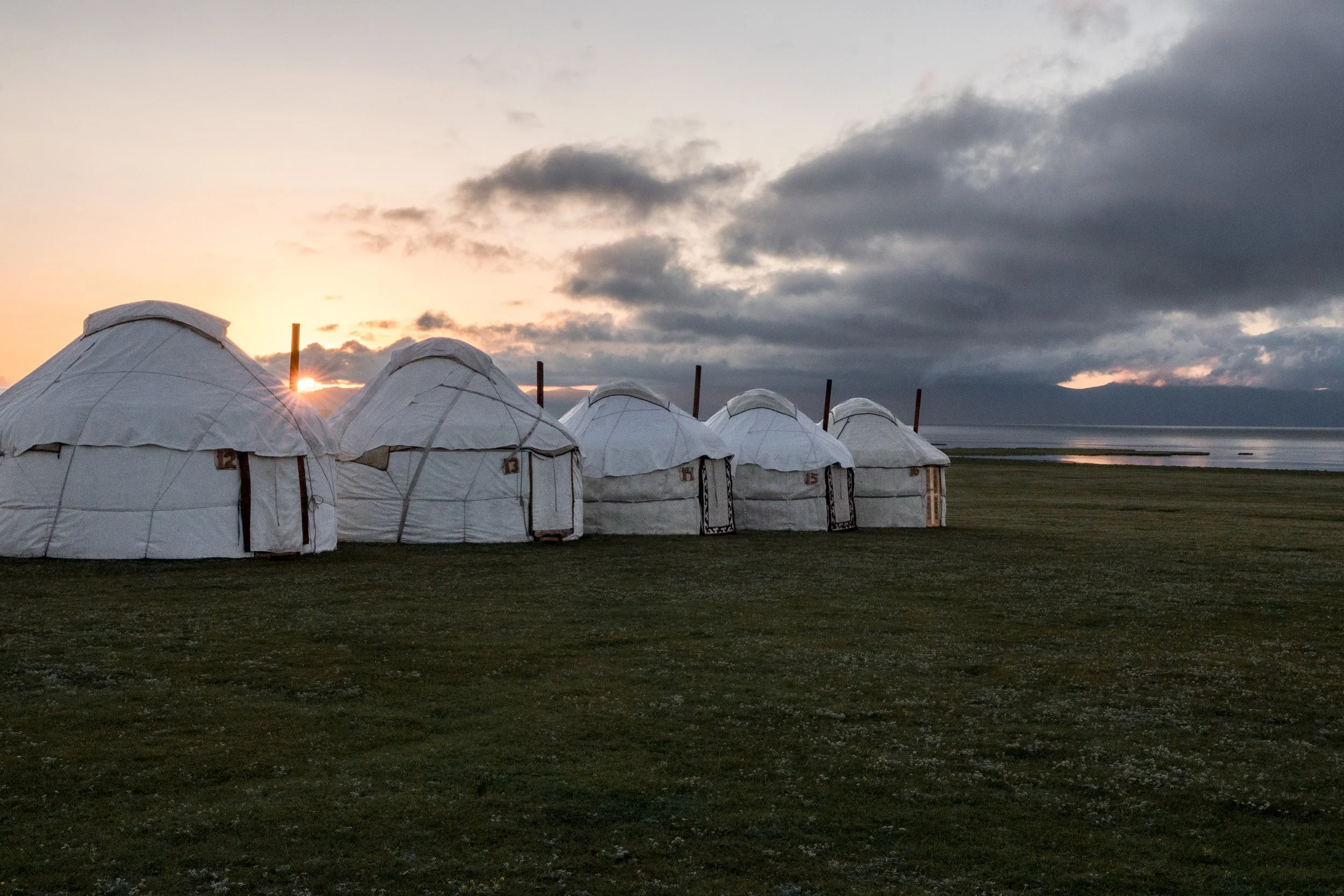
Shortly before 8pm, we finally rolled into our yurt camp on the shores of Song-Kul Lake.
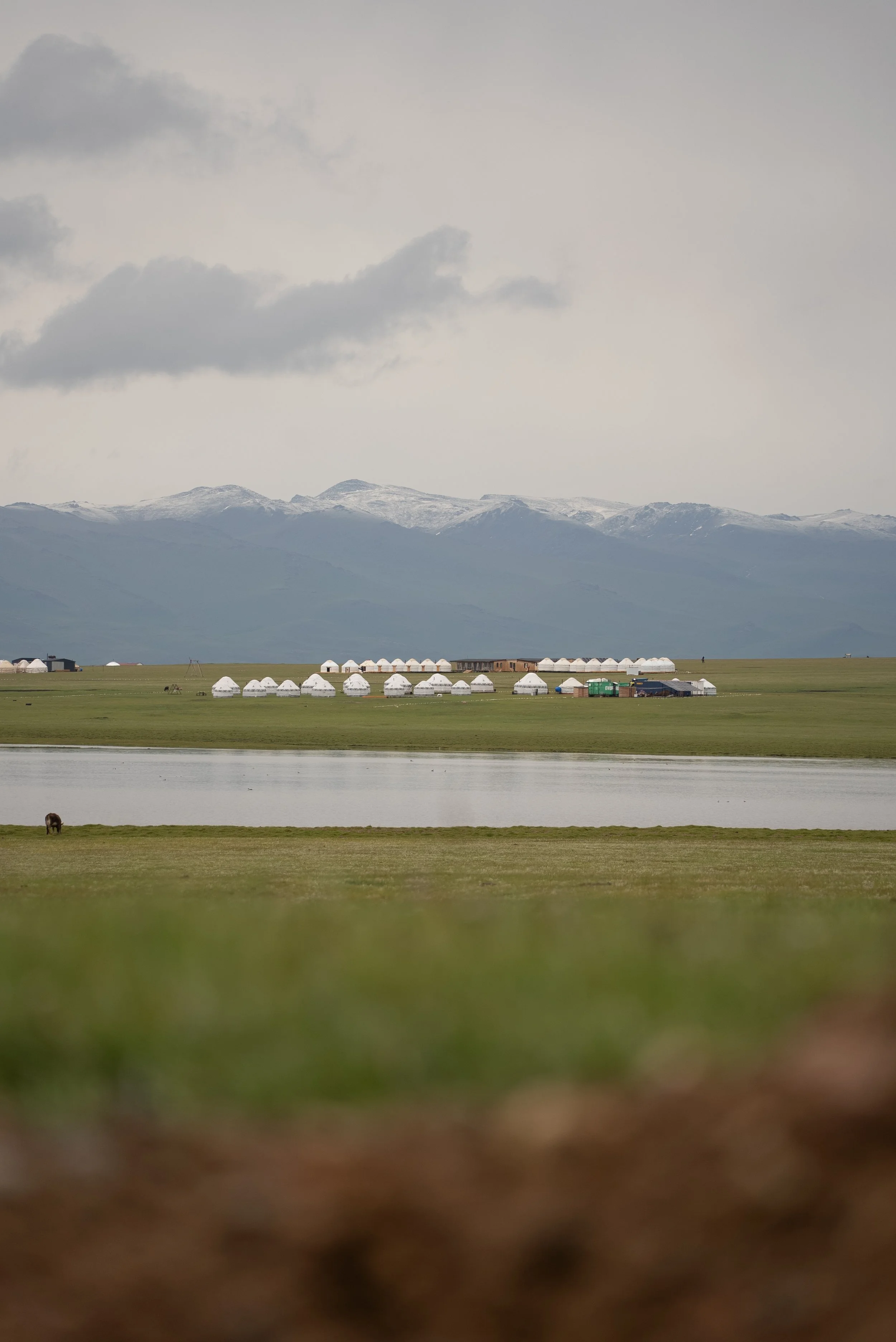
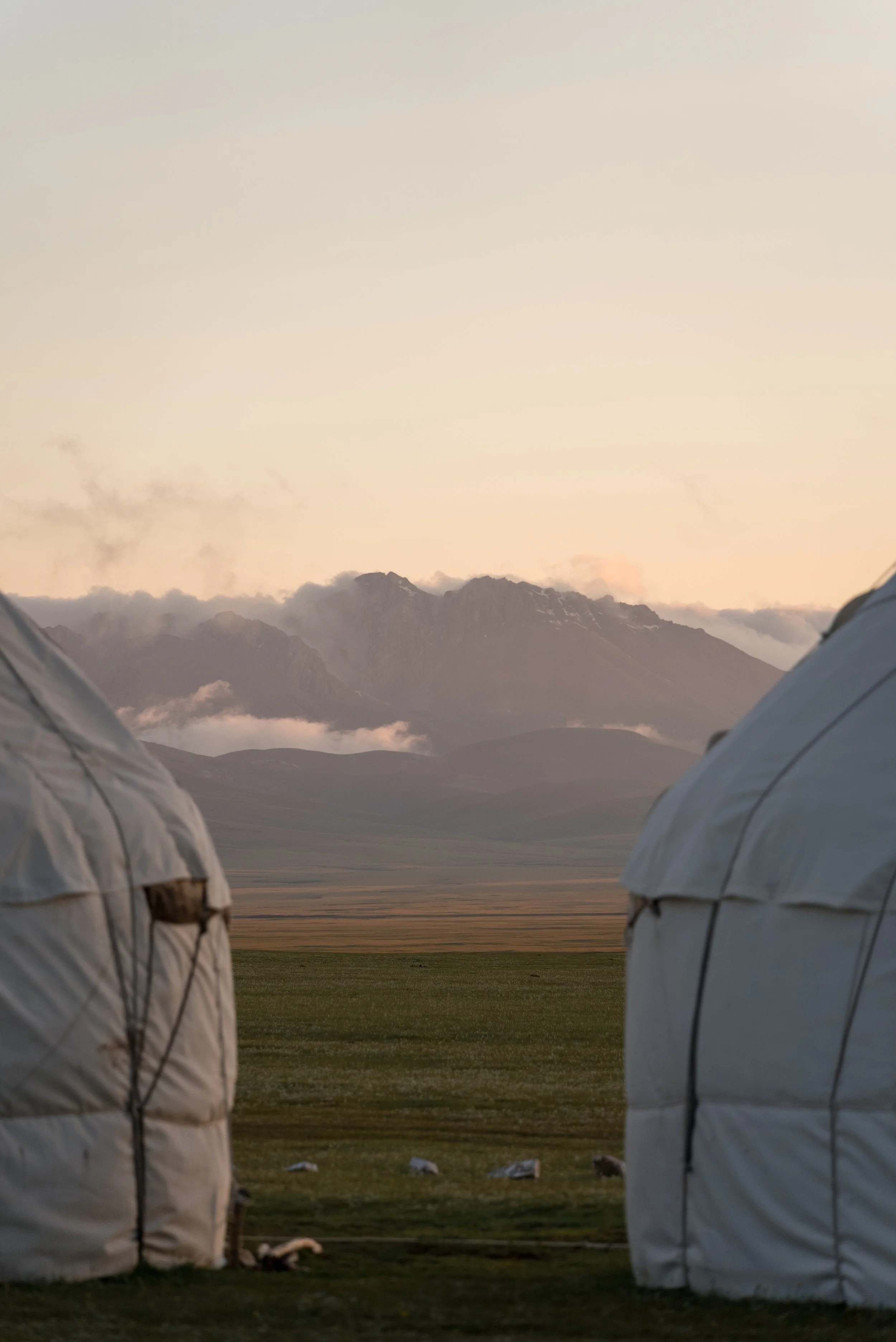
Sitting at just over 3,000 metres above sea level, Song-Kul is one of Kyrgyzstan's most iconic landscapes. The vast alpine lake stretches for almost 30 kilometres and is surrounded by rolling grasslands and snow capped mountains.
There are no permanent settlements or trees, and its only inhabited in the warmer months, where Nomadic shepherds bring their livestock up to these high pastures to graze.
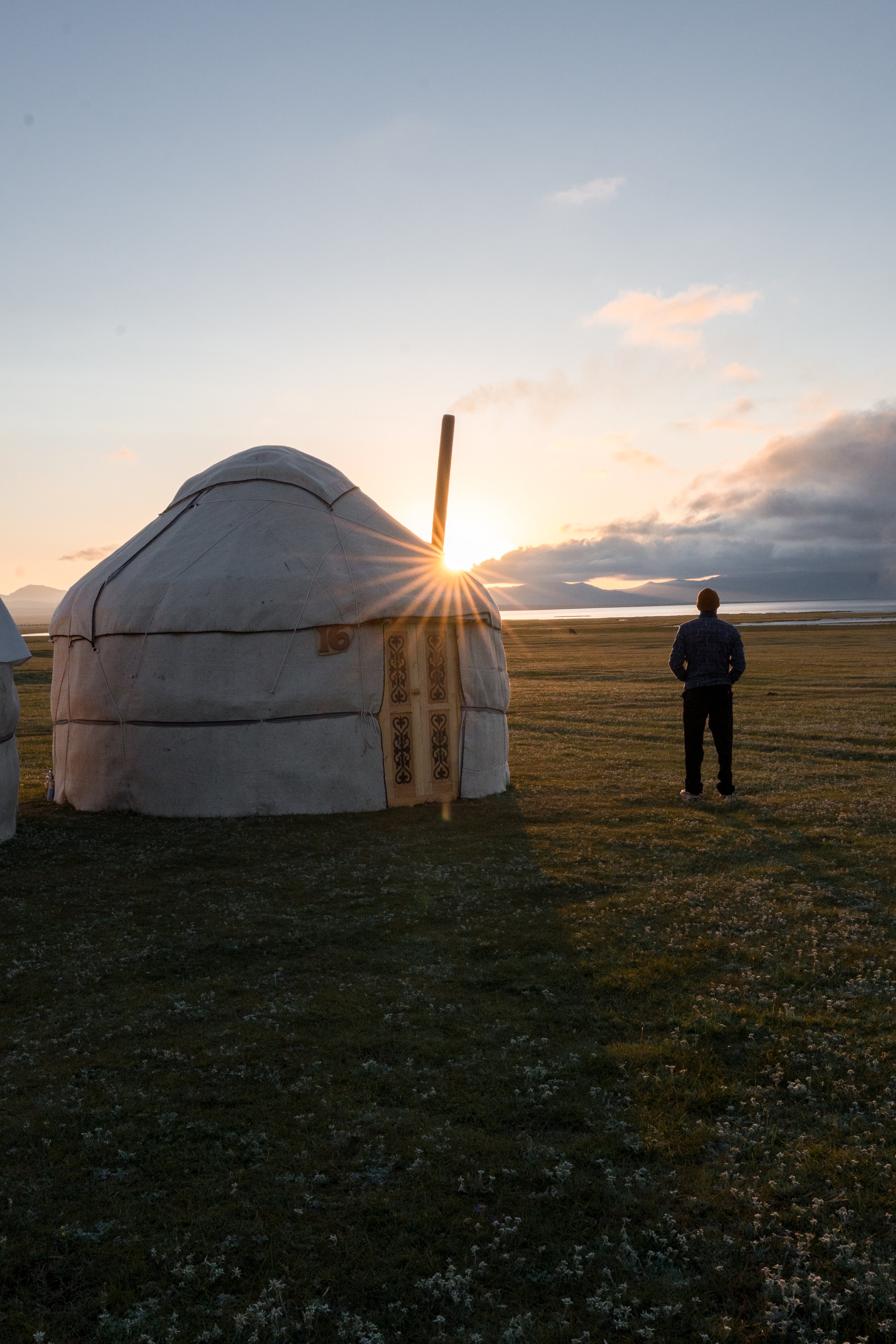
After settling into our yurt, which quickly turned into a sauna once the log burner had been lit, we tucked into another huge home-cooked dinner before bedding down for the night.
Day 4: Song-Kul Lake
I woke to the sound of rain pattering against the roof of the yurt, accompanied by what felt like half of Old MacDonalds Farm wandering around outside.
Looking out of the yurt door I was greeted by horses, cows, donkeys, and several dogs happily grazing around the camp. Despite the abrupt early alarm clock from the donkeys, it was a delight to see animals roaming with such freedom
Although the rain continued well into the early afternoon, it did little to spoil the experience.
The camp itself was in such a spectacular location that simply sitting inside watching the weather roll across the lake was a joy in itself. Harry and I used the slower morning to catch up on editing, organise some footage, and appreciate having a rare opportunity to stop moving and filming for a few hours.
Eventually the rain eased, and not wanting to pass up on the chance to wild dip at 3000m, we headed to the shoreline of Song-Kul. The lake was much shallower and squelchier than expected. We waded around 30m into the lake and still only found ourselved kneed deep, so we cut our loses and took part in what turned out to be a more of baptising than a swim
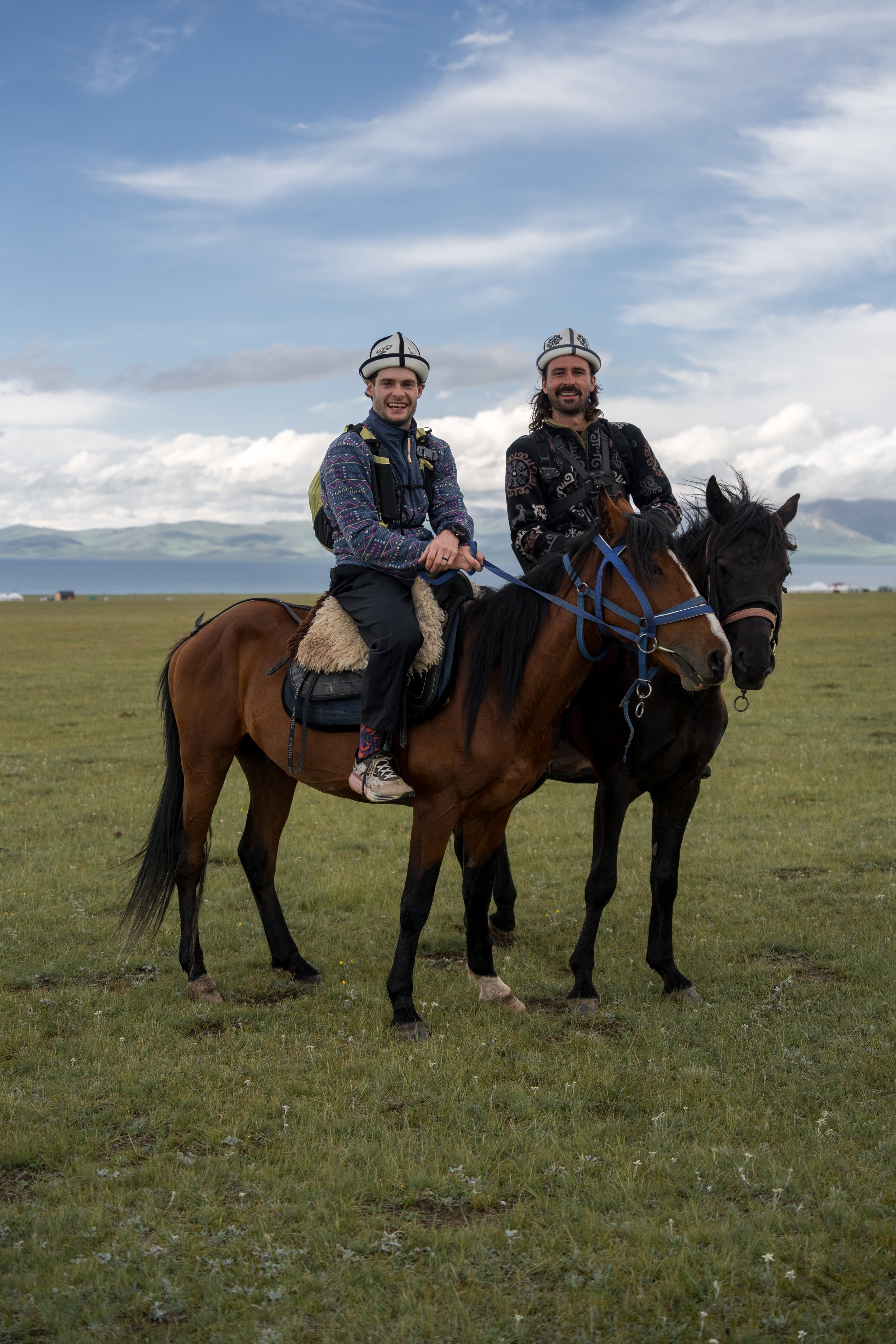
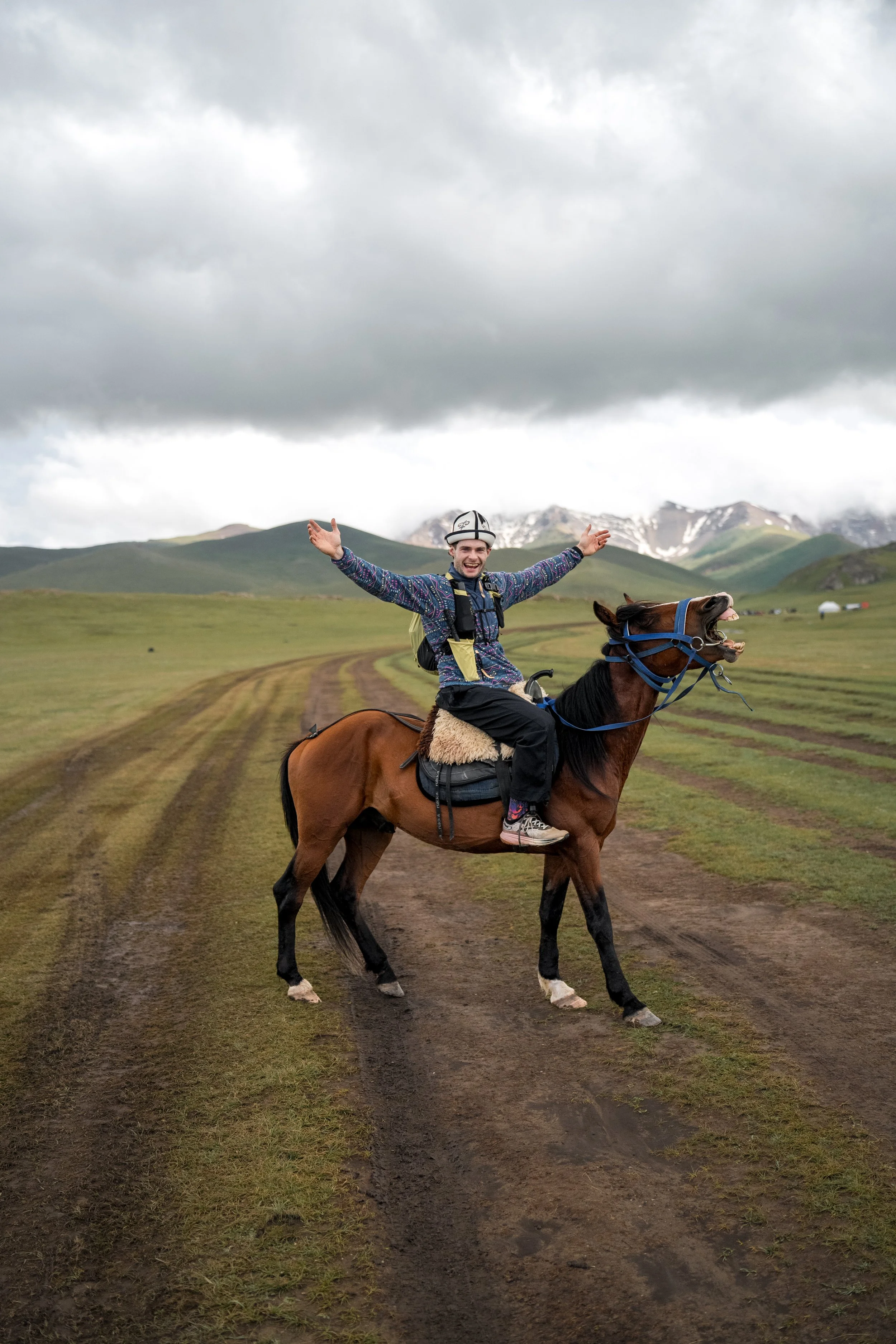
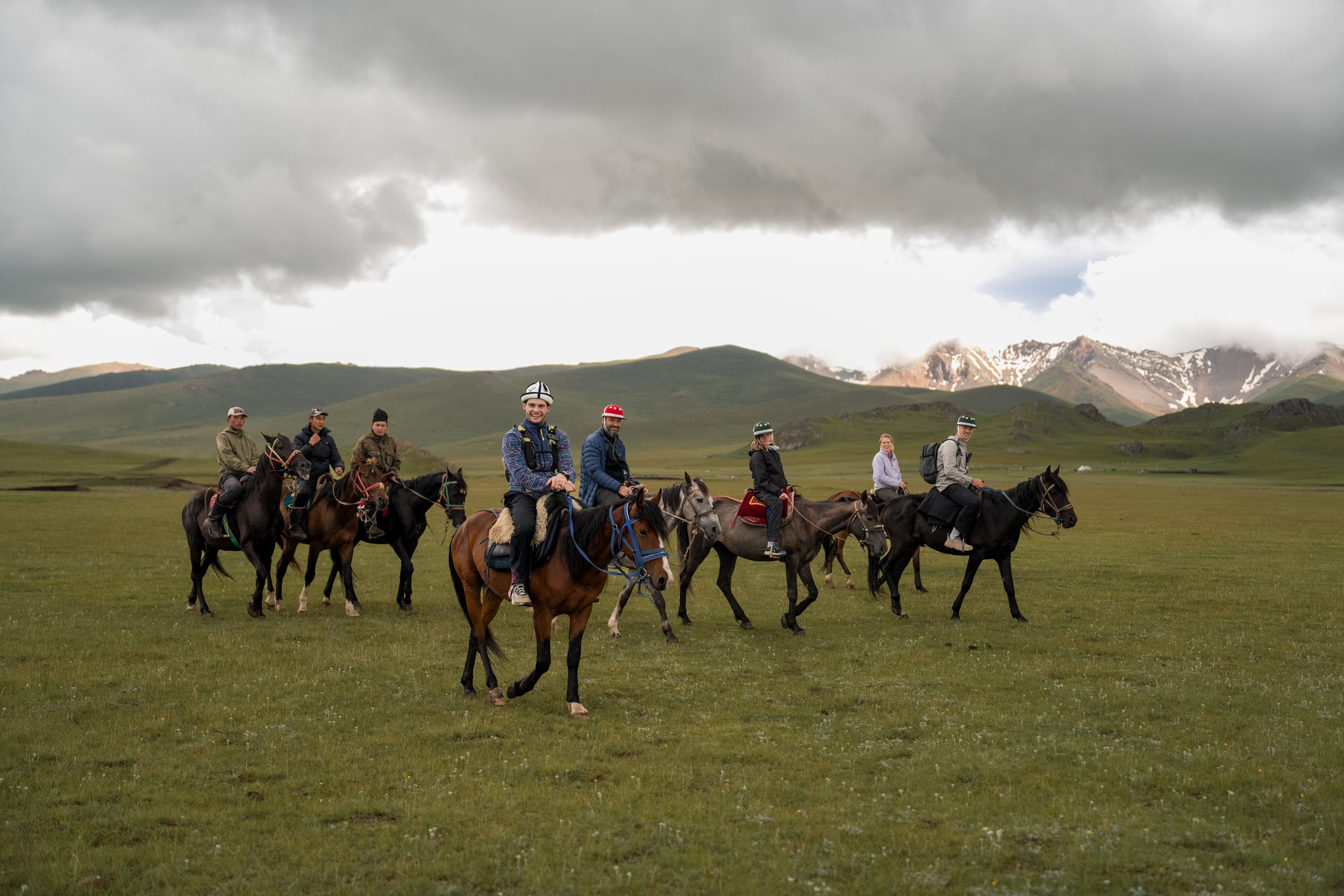
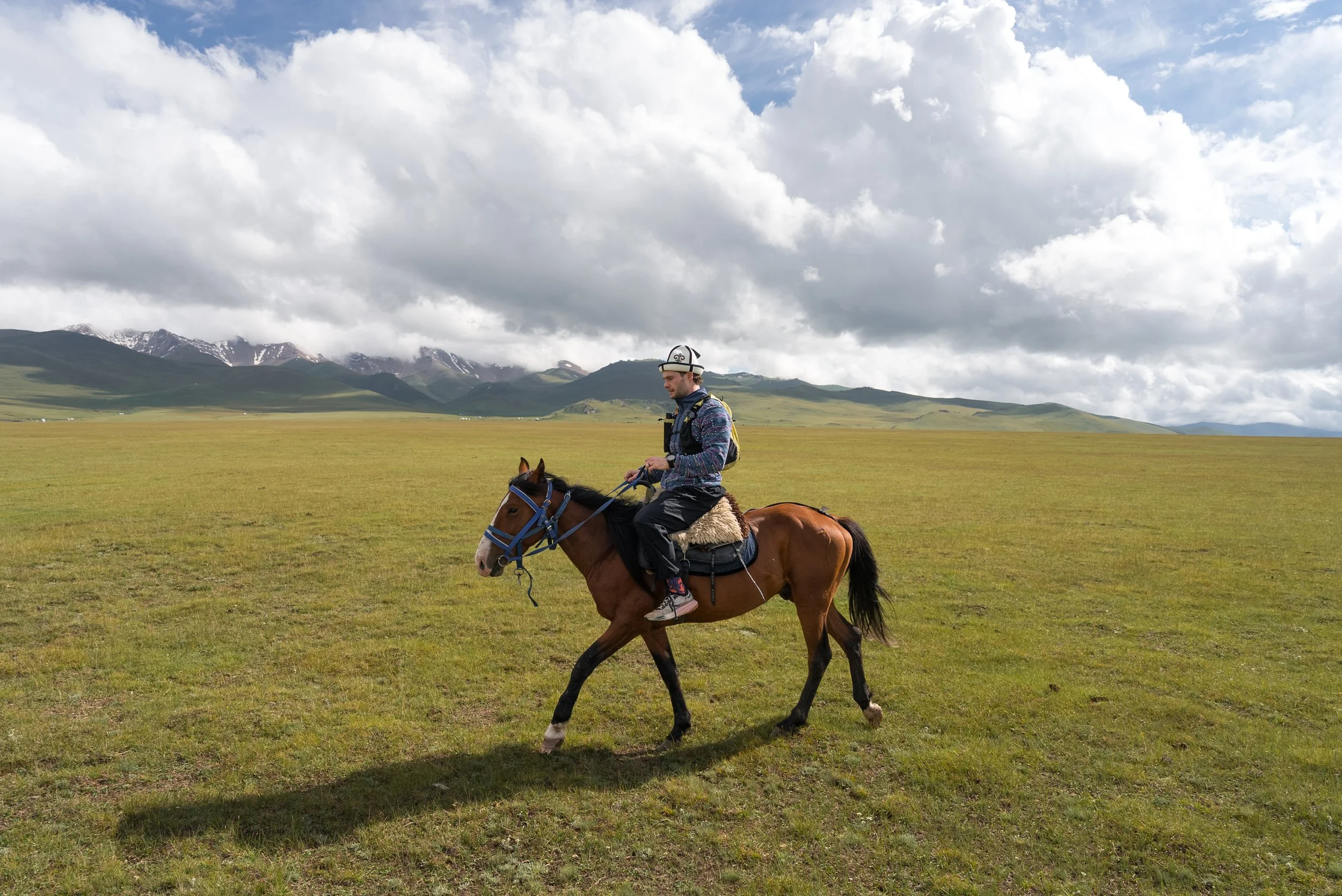
After lunch, Blue sky gradually replaced the cloud and it was time for the activity we'd both been looking forward to the most, horse riding across the Song-Kul steppe.
Over the next two hours we covered around 15 kilometres, weaving across rolling grasslands, splashing through shallow rivers, and admiring the incredible scenery from of top of a horse
As it was my first time riding a horse, the opening few minutes were slightly tense, but thankfully the horse knew exactly what it was doing.
After a slow and nervy start, me and the horse were finally on the same wavelength and I found myself happily cantering across the plateau with one of the most spectacular backdrops imaginable.
It was certainly a highlight of the trip and is one of the most enjoyable and unique activities I've ever experienced.
With around an hour to spare before dinner, I decided to make the most of the improving weather by heading out for a quick power hike/trail run up to the hills overlooking the camp.
I was quickly humbled by the altitude.
Having spent two hours tensed up on a horse, my legs felt like concrete and, the altitude meant I was breathing like an asthmatic in a sawmill.
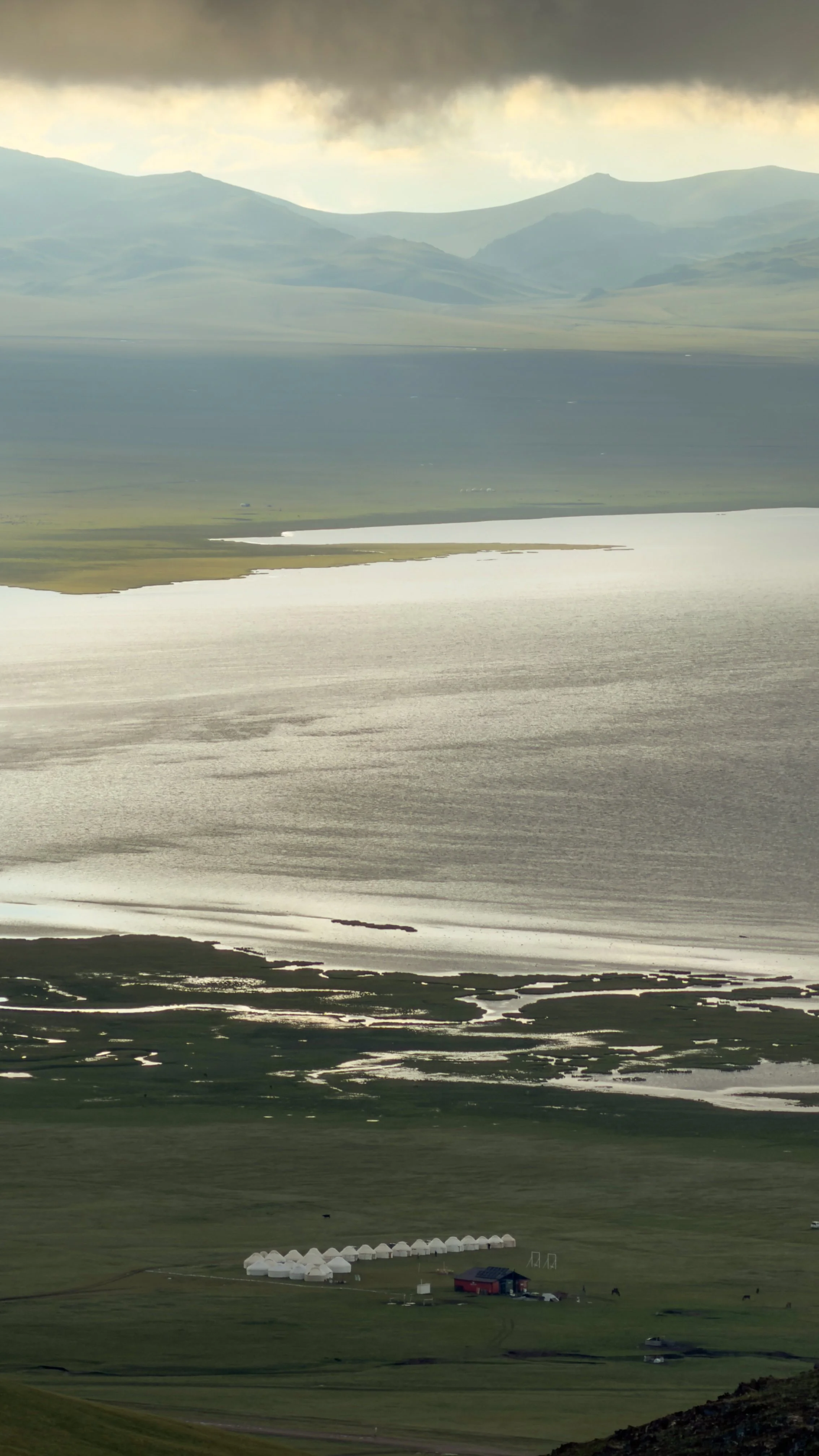
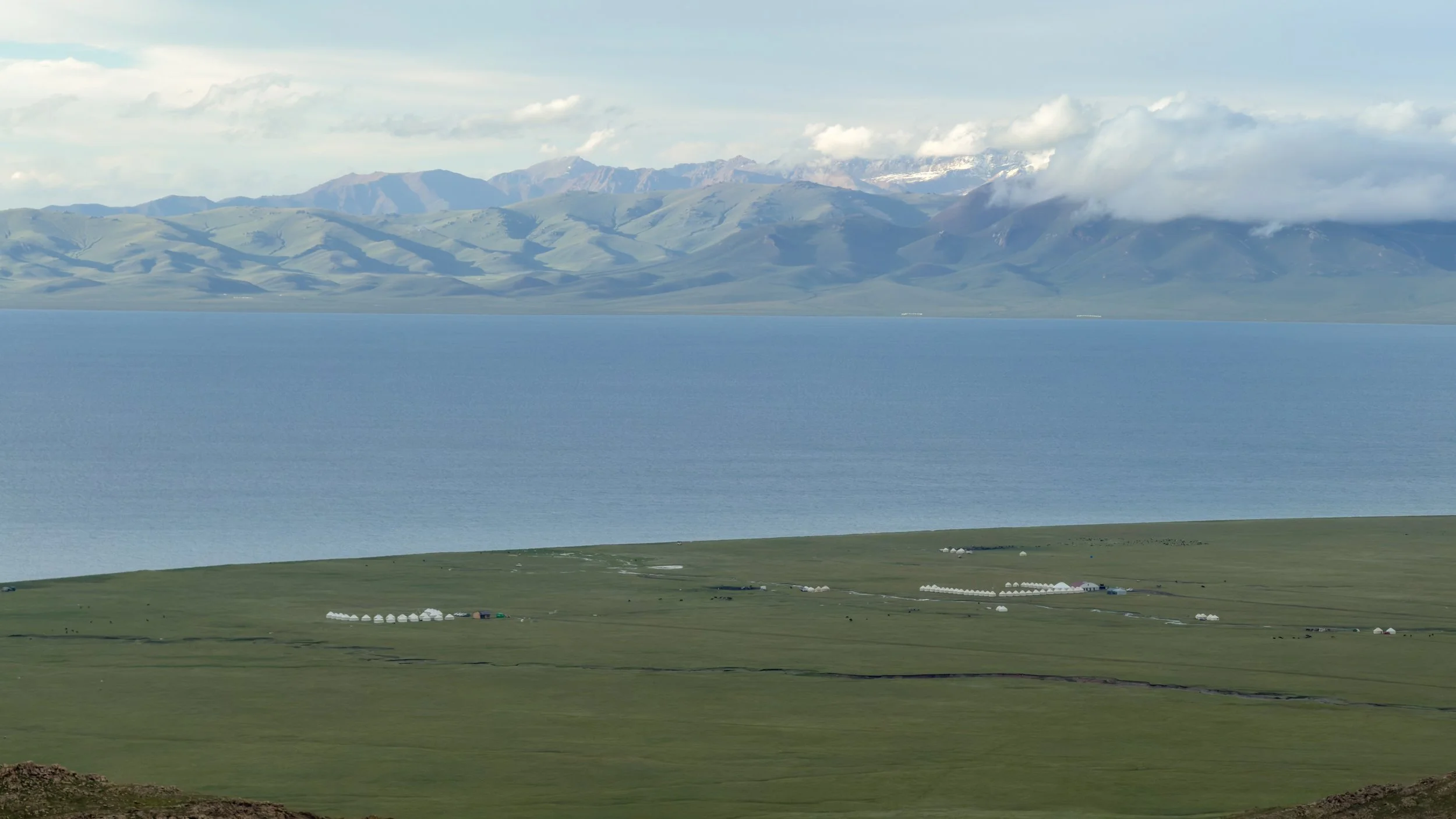
Moving with the speed of pensioner, I slowly worked my way up to around 3,400 metres, where my efforts were immediately rewarded.
Standing above the lake, I watched a band of horses grazing peacefully on the hillside while Song-Kul stretched towards the distant mountains beneath me. It was one of those views that almost feels too perfect to be real as was even more special that i got to experience it with no one around
After covering around 6.5 kilometres in just under 50 minutes, I made it back to camp in time for yet another incredible 3 course, home-cooked meal.
The evening then finished with one of the most spectacular sunsets I've ever witnessed.
The sky exploded into shades of orange, red, and pink while the surrounding mountains, white yurts, and grazing horses glowed under the final light of the day. I genuinely didn't know where to look, let alone where to point my camera.
It was the perfect ending to what was probably my favourite days of the trip.
Day 5: Song-Kul Lake to Cholpon-Ata
Harry and I decided to make the most of the weather and soak in the sumptuous scenery by having breakfast outside. We then reluctantly packed up the car and left behind what had become my favourite place in Kyrgyzstan.
It didn't take long before the country reminded us why it was so special.
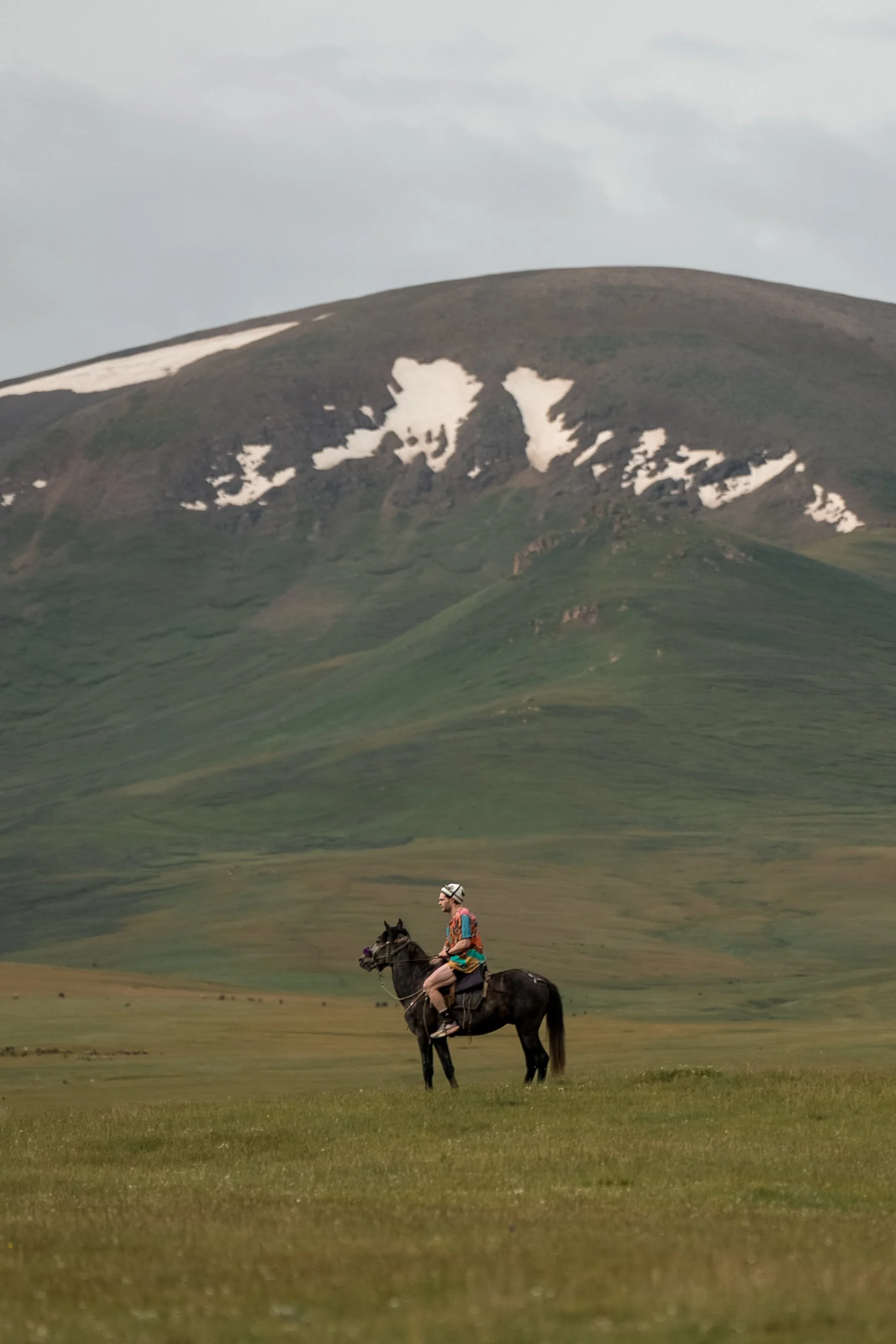
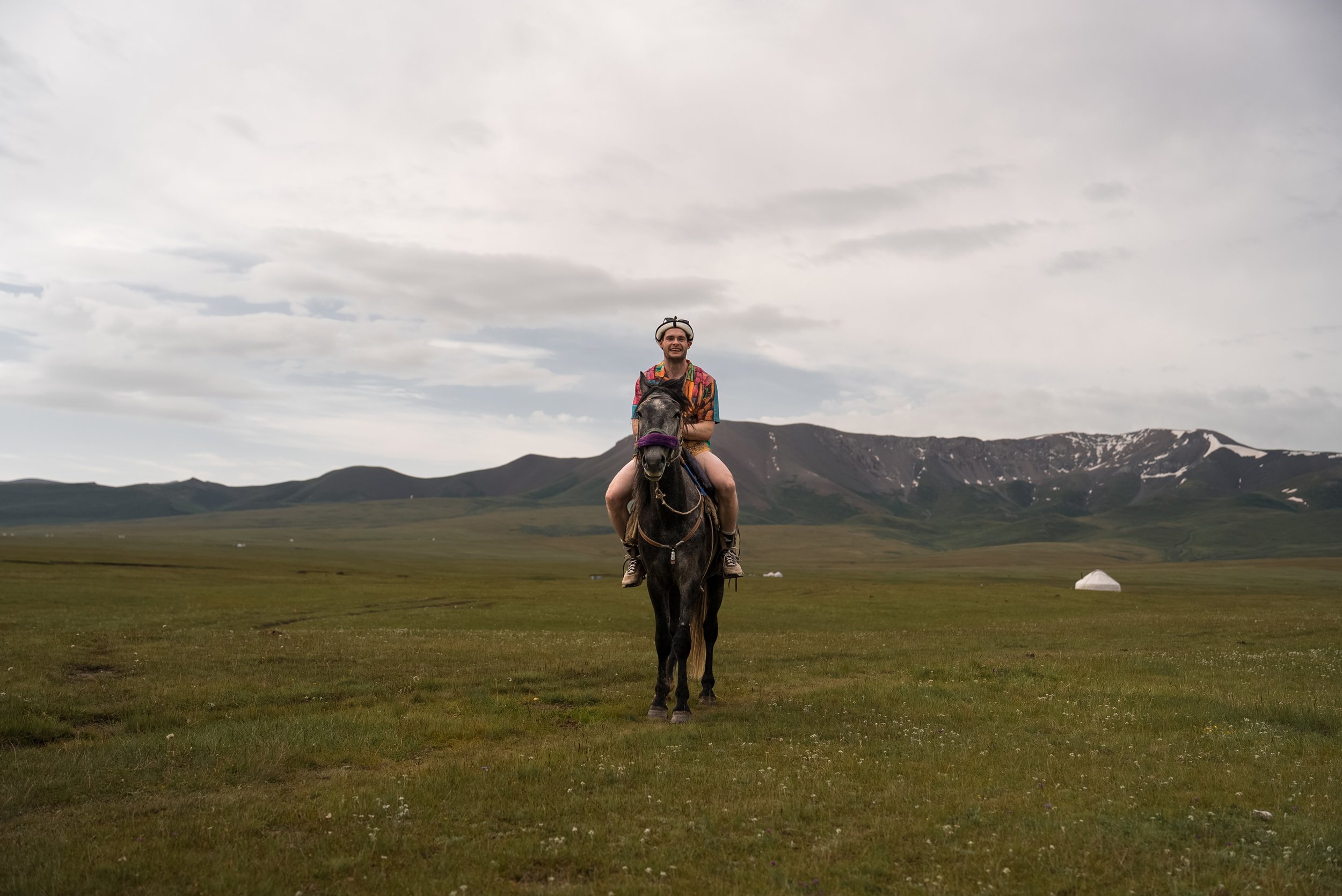
Around half an hour after leaving camp, we spotted a lone horse rider making his way across the open steppe beneath a backdrop of snow-capped mountains.
Naturally, we pulled over to take a few photos.
The rider noticed us and rather than carrying on with his day, he reared the horse onto its back legs before galloping across the grassland in our direction.
After exchanging a few smiles and asking if we could take a few more photos of him on his horse, he climbed down from the saddle and invited Harry and me to have a ride.
So there we were, at over 3,000 metres above sea level, wearing traditional kalpaks and rather questionable shirts, while taking turns riding a horse in the middle of the Kyrgyz steppe whilst being surrounded by snow-capped mountains.
It was completely surreal and one of those moments that summed up the trip perfectly.
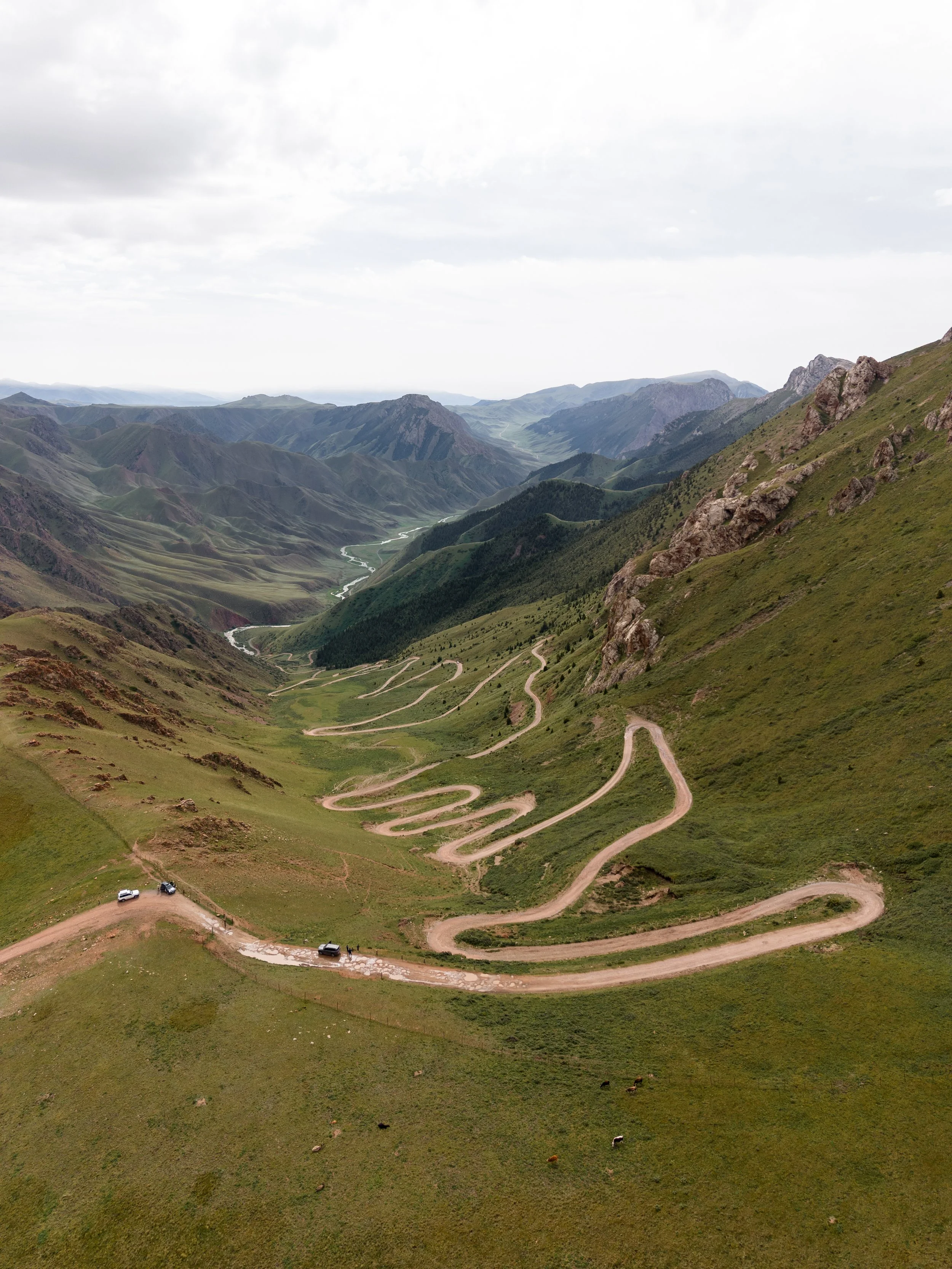
Back on the road, we climbed towards the Pereval Teskeytorpo Pass, which offered one of the best viewpoints of the entire road trip.
From the top, we looked down on a spectacular mountain road snaking its way through the valley below. Half a dozen tight hairpin bends carved their way down the mountainside before disappearing into the distance, creating a road that wouldn't have looked out of place in the Alps.
As impressive as the road was, the backdrop stole the show. Rolling green mountains stretched towards the horizon in every direction, creating a landscape that genuinely looked like a painting.
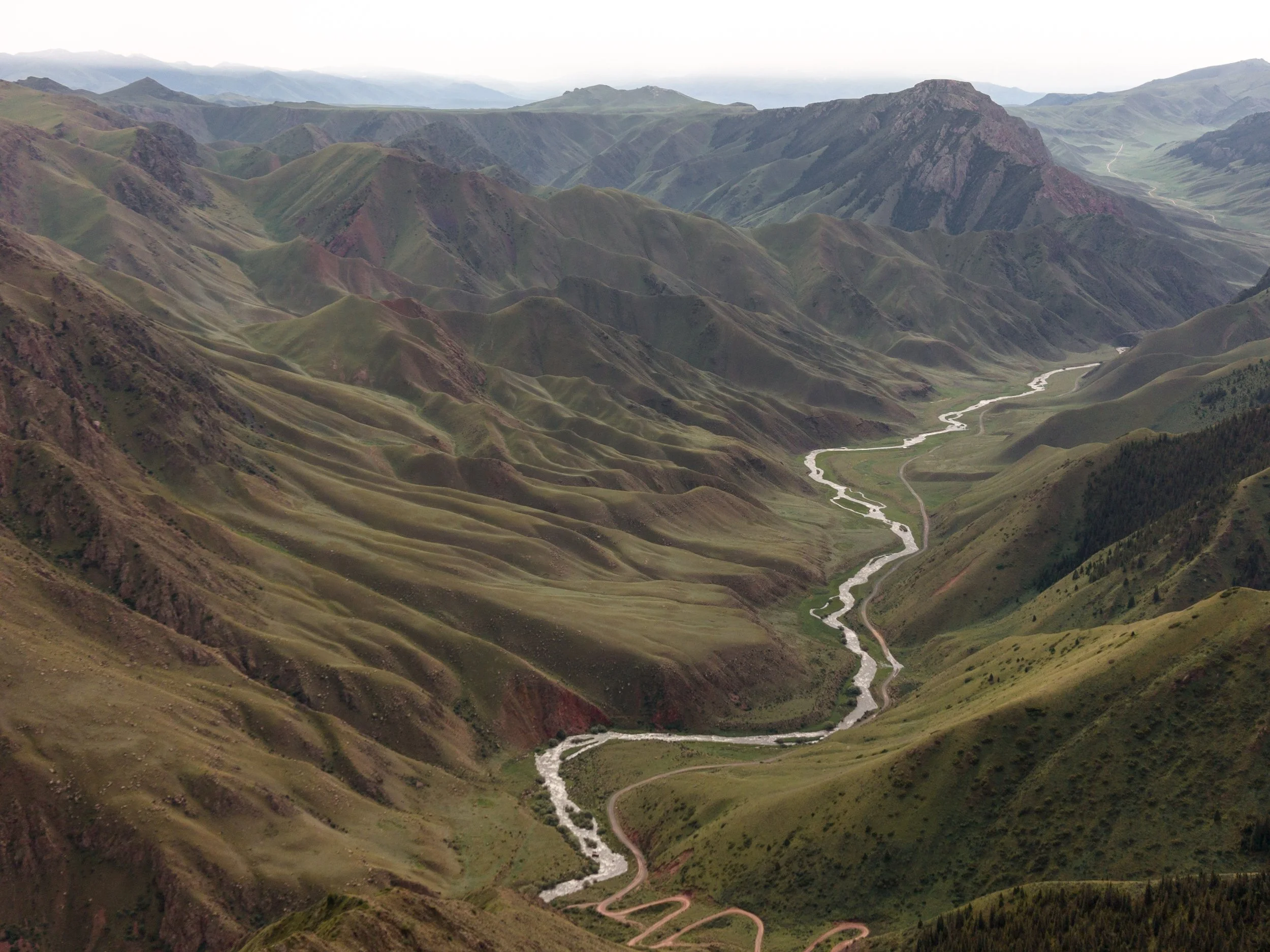
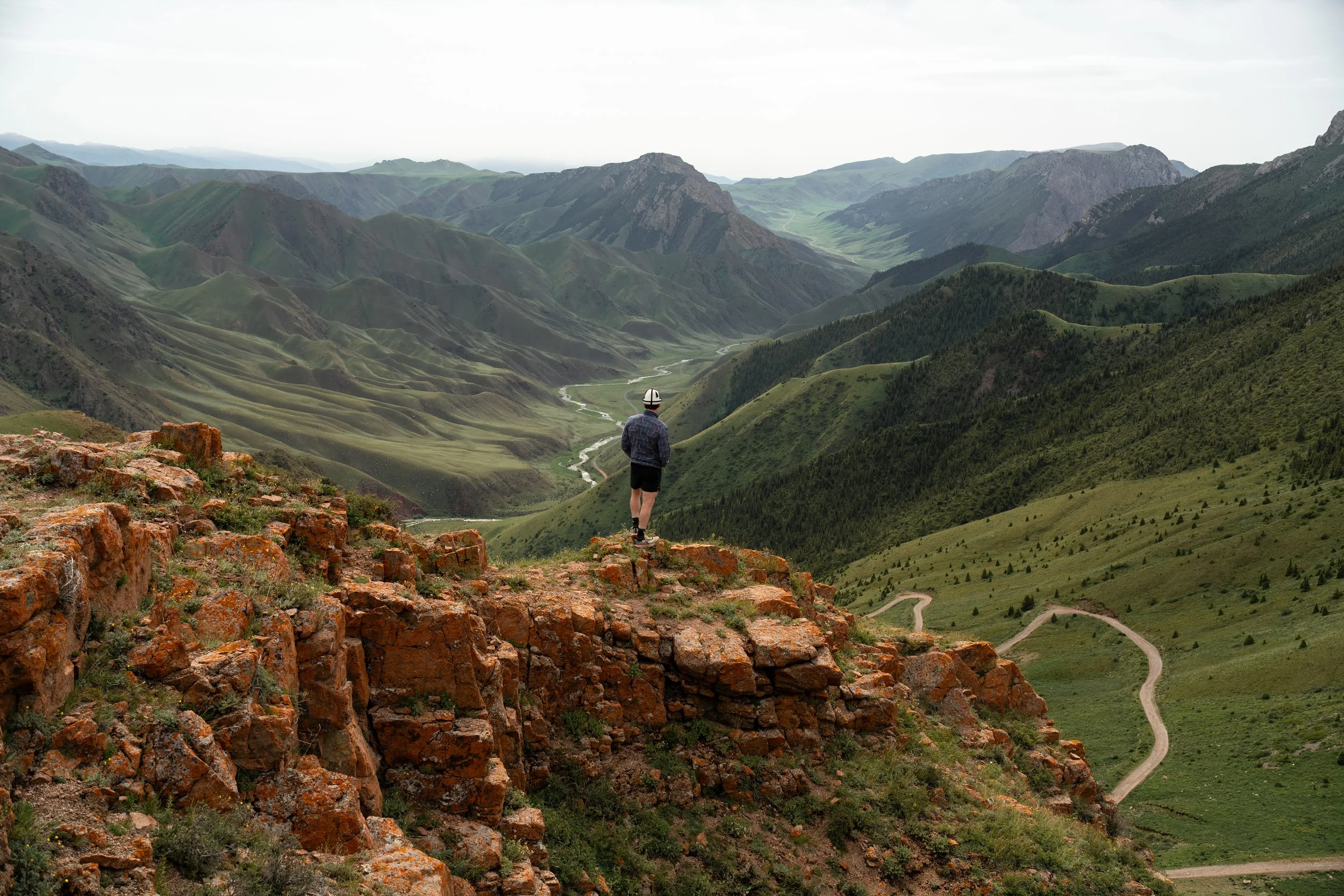
Instead of turning around at the bottom of the pass and retracing our steps, we decided to continue on, as the road eventually linked back up with the main route outlined by Kyrgyzstan Nomads.
It turned out to be a great decision.
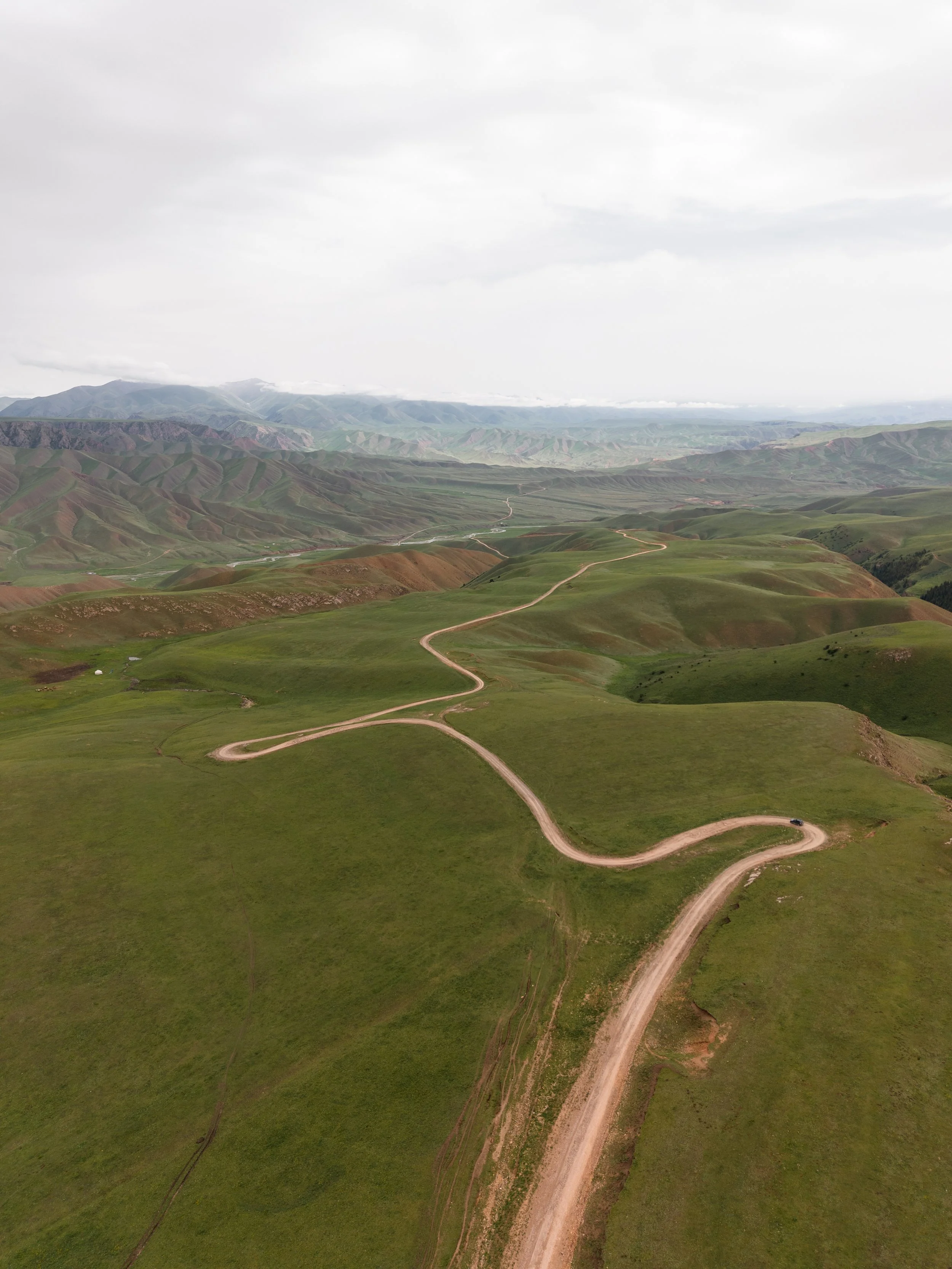
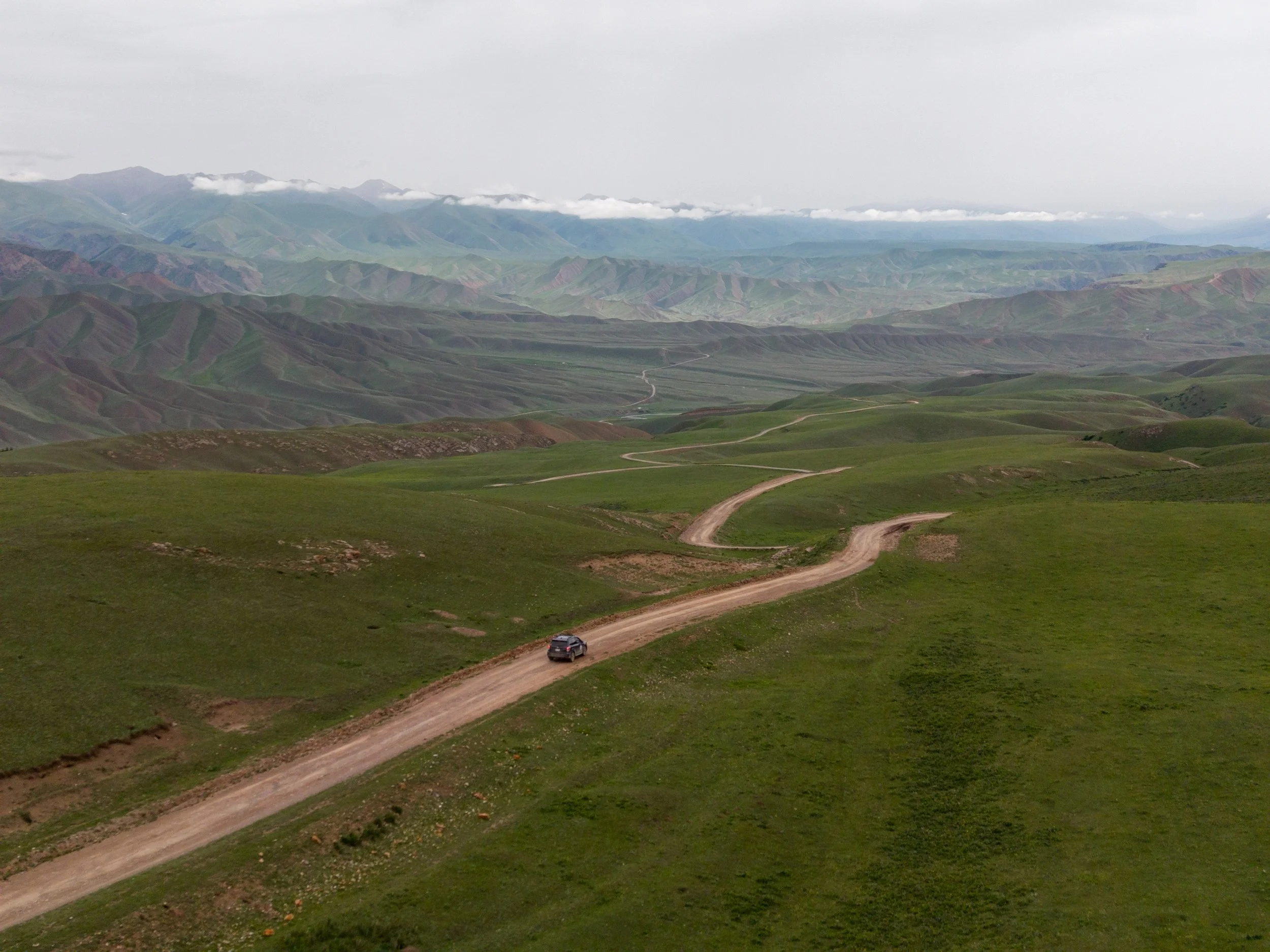
The road wound its way through the valley before climbing towards another mountain pass. Although the road wasn't quite as dramatic as the Pereval Teskeytorpo Pass, the scenery more than made up for it.
Layer upon layer of ribbon-like ridgelines stretched into the distance while the road twisted gently between them. Flying the drone felt like I was filming a car commercial.
After lunch in Kochkor, we continued north towards Issyk-Kul.
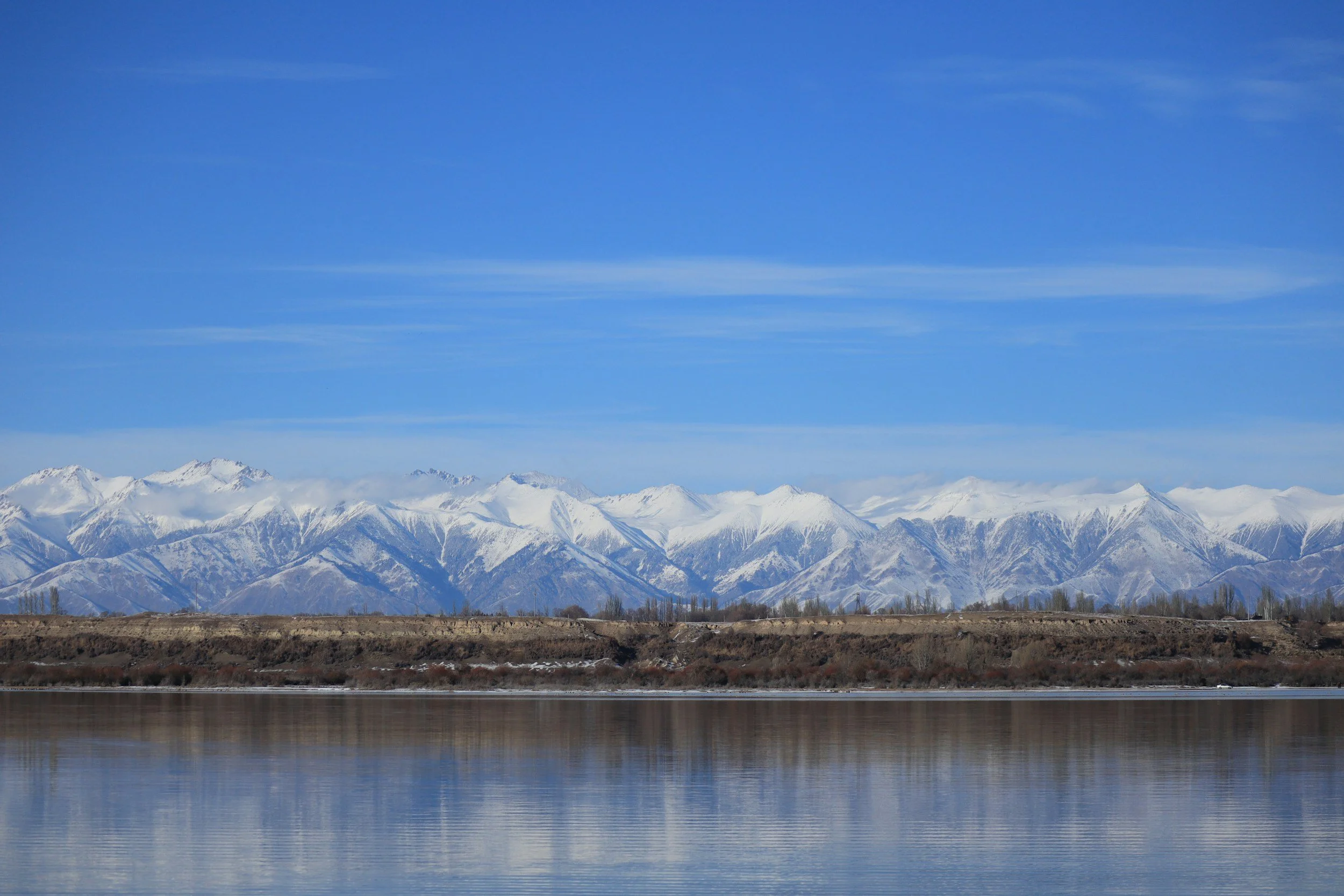
At over 180 kilometres long and almost 60 kilometres wide, Issyk-Kul is one of the largest alpine lakes in the world. Flanked on both its northern and southern shores by snow-capped mountains, it almost feels more like an inland sea than a lake.
If I'm being completely honest, the drive along the northern shoreline was probably my least favourite section of the road trip.
After the wild, rugged landscapes we'd experienced over the previous four days, the northern shore of Issyk-Kul felt noticeably more developed and very busy. There wasn't anything particularly wrong with it, it just lacked the sense of adventure that had made the rest of the journey feel so special.
Because of how busy it was, combined with the weather, we ended up skipping the suggested beach stops so we could head straight to our hotel in Cholpon-Ata.
After several nights in yurts and homestays, it felt very luxurious. Modern furnishing, a hot shower, a restaurant, a gym, and Wi-Fi suddenly felt like five-star treatment.
Day 6: Ala-Köl Side Quest
Today I decided to go completely off-script.
Although the Kyrgyzstan Nomads roadbook offers several options on the drive between Cholpon-Ata and Karakol, there was one place I'd wanted to visit long before I even booked the trip.
The flexibility of the itinerary meant I could choose exactly what I wanted to do with my day. For me, that's one of the biggest strengths of the Kyrgyzstan Nomads road trip. You have the structure of a planned itinerary, but enough freedom to make the trip your own.
With the weather forecast looking glorious, and with accommodation booked in Karakol, Lake Ala-Köl was too inviting to tune down,
If you've followed me for a while, you'll know I love hiking and mountains. Having recently completed my first ultra marathon, and with a possible 100 km hiking challenge on the horizon, the opportunity to squeeze in another big mountain day was too good to turn down.
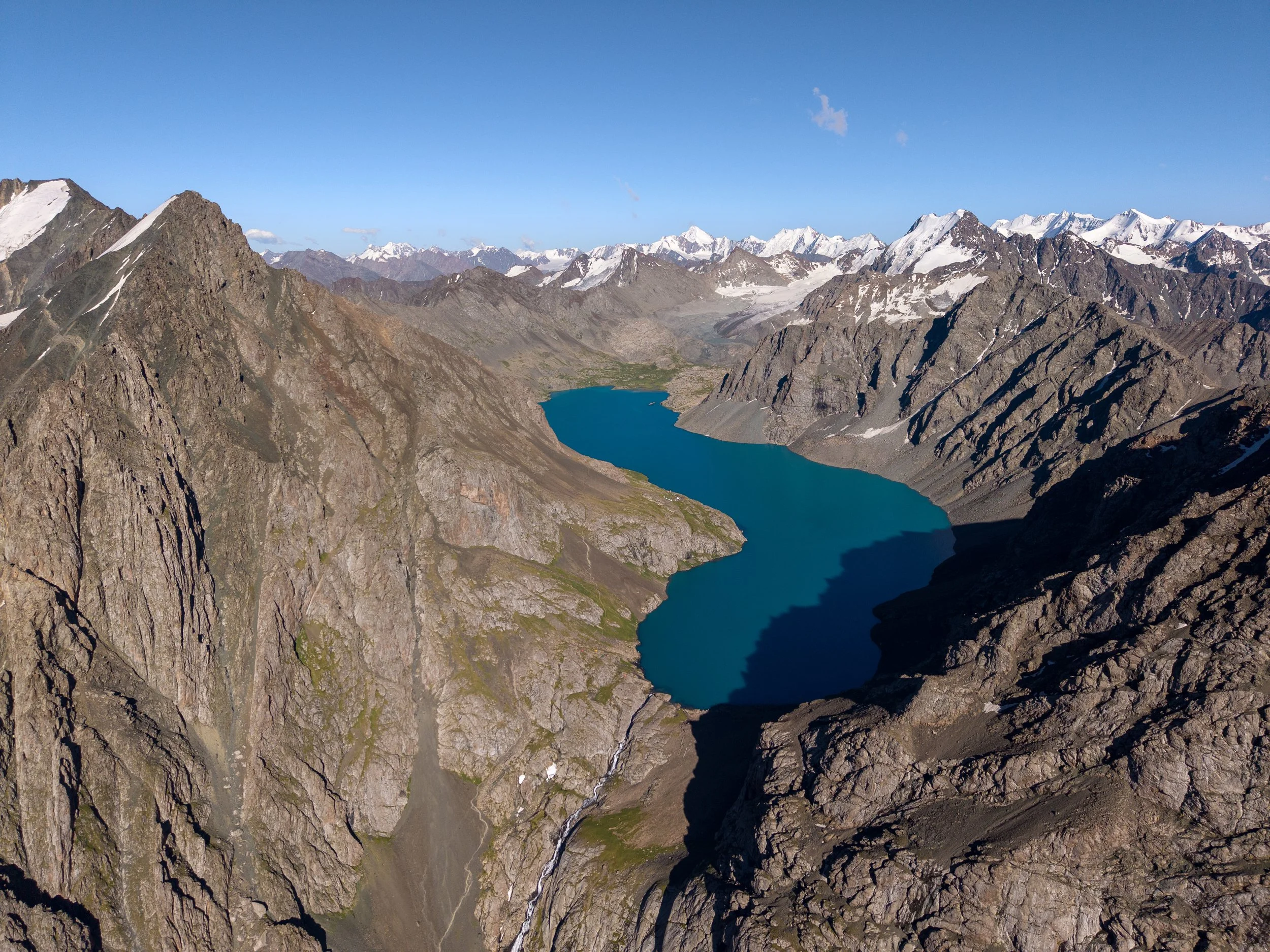
Sitting at 3,532 metres above sea level in the Terskey Ala-Too mountain range, the vivid turquoise waters of Ala-Köl are considered by many to be the most beautiful lake in Kyrgyzstan.
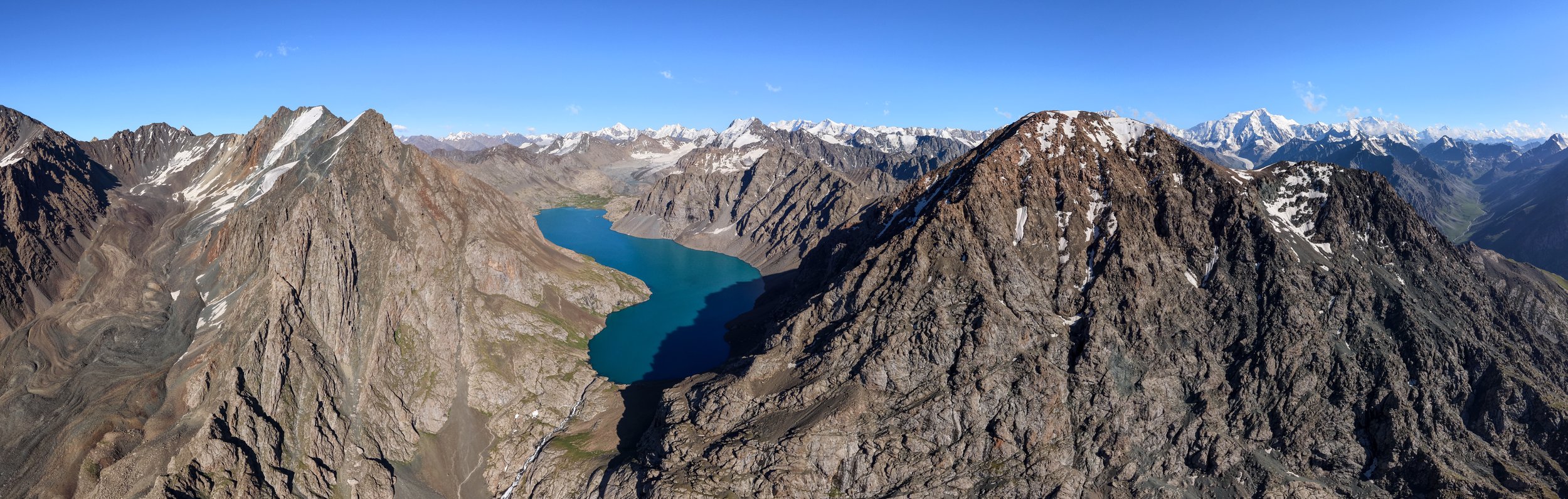
The catch is that it's usually visited as part of a two to four-day, 56-kilometre trek. With only one night in Karakol, that simply wasn't possible, so after plenty of research I decided to attempt it as a day hike instead.
I'd worked out where to park and was looking at a 34 km hike with around 1,600 metres of ascent, which is normally pretty achievable. Throw in the altitude however, and it becomes a very different challenge.
After demolishing the buffet breakfast, I set off on the two-and-a-half-hour drive, calling into Karakol to pick up lunch on the way.
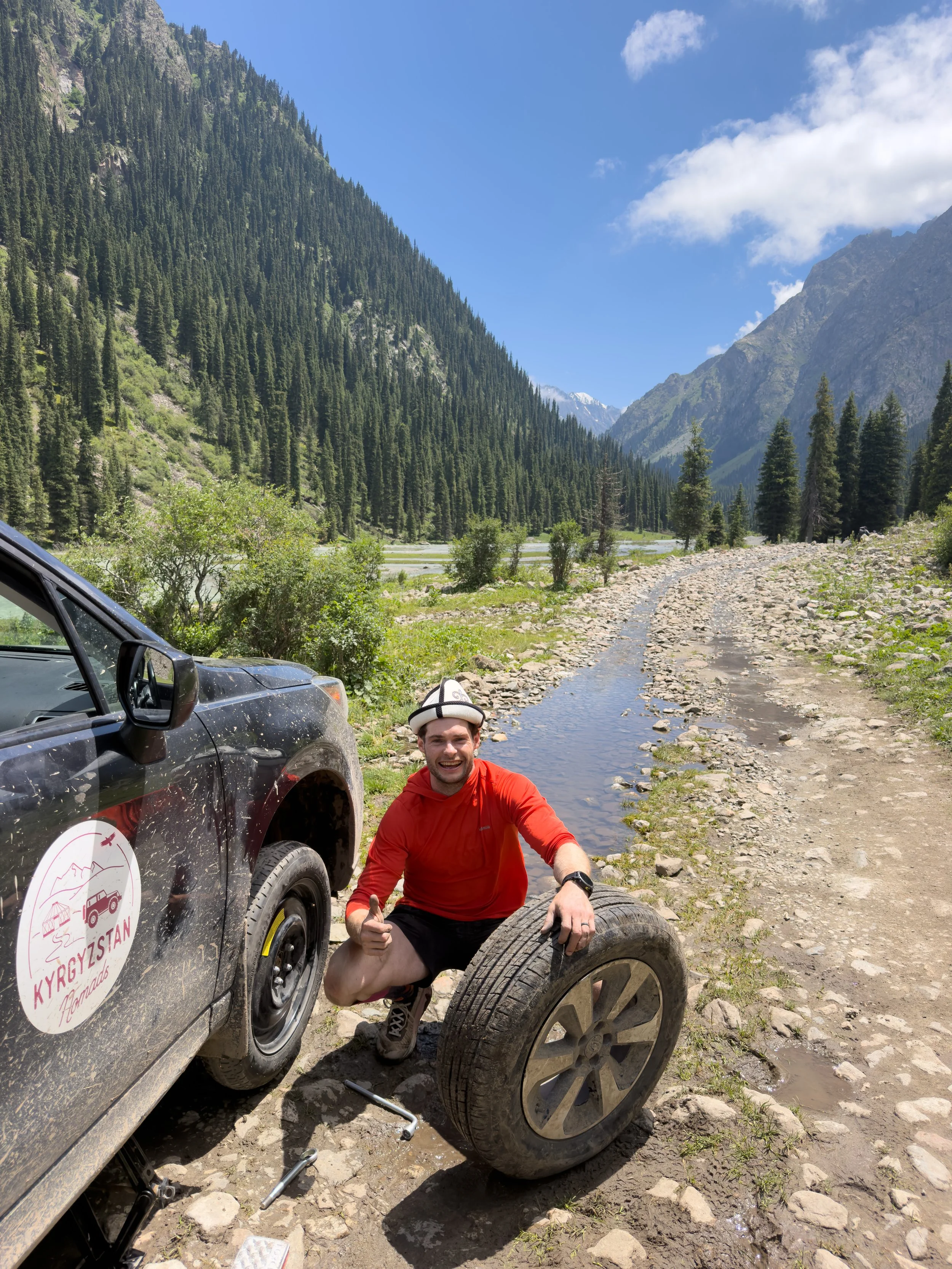
After passing through the park gate and paying the 500 KGS (£4) entrance fee, I unfortunately clipped a rock on the rough access road and picked up my first puncture of the trip.
After produdly changing my first tyre at 35 years old and at an altitude of 2,300m. I decided to park up and hitch a lift in one of the heavy-duty 4x4 shuttles heading towards Forest Gate. It saved me around 8 kilometres and several hours of one-way walking.
Do not attempt to drive the road unless you have a specialised heavy-duty 4x4. Its incredibly rough and you will probably end up getting stuck.
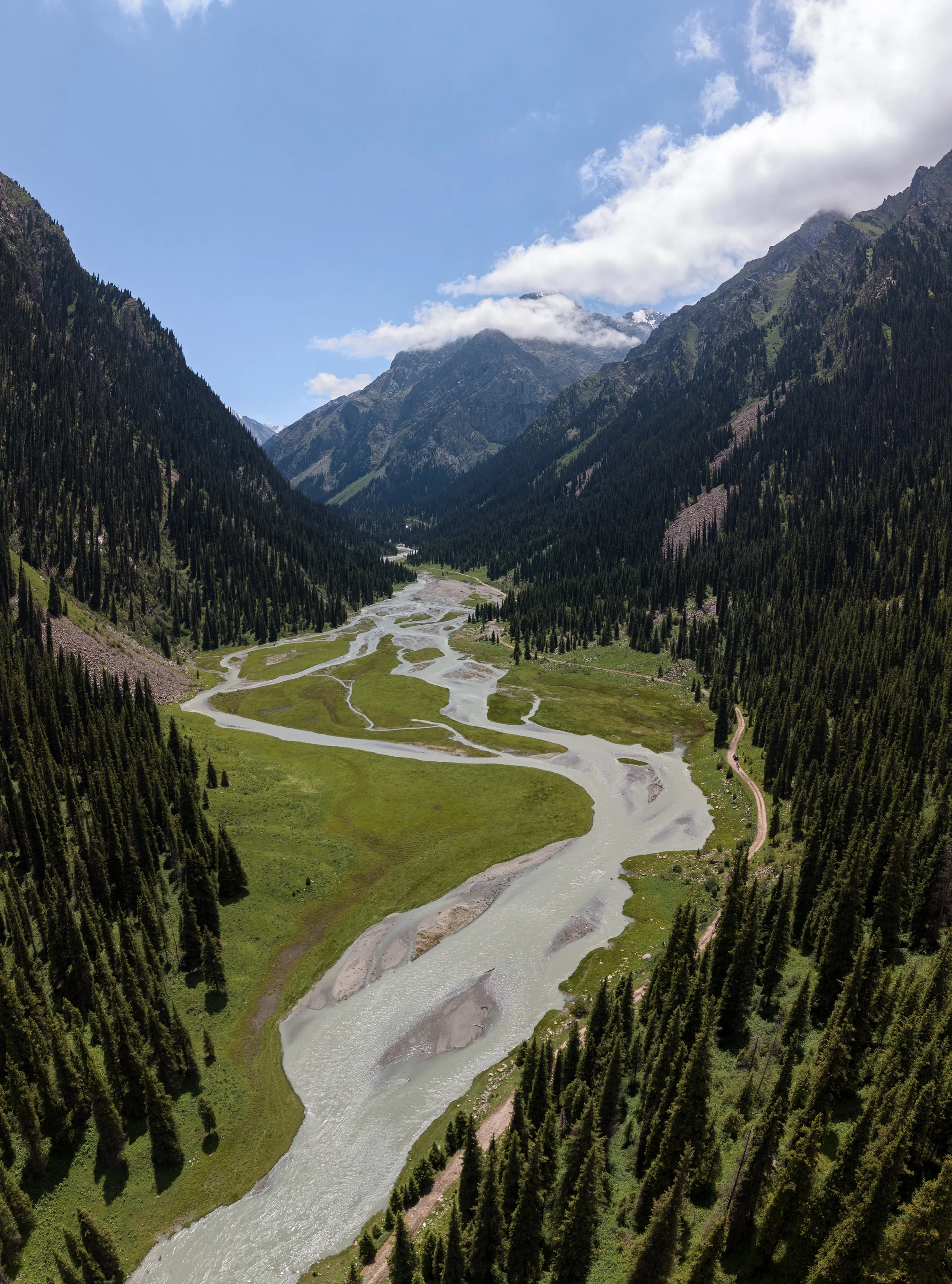
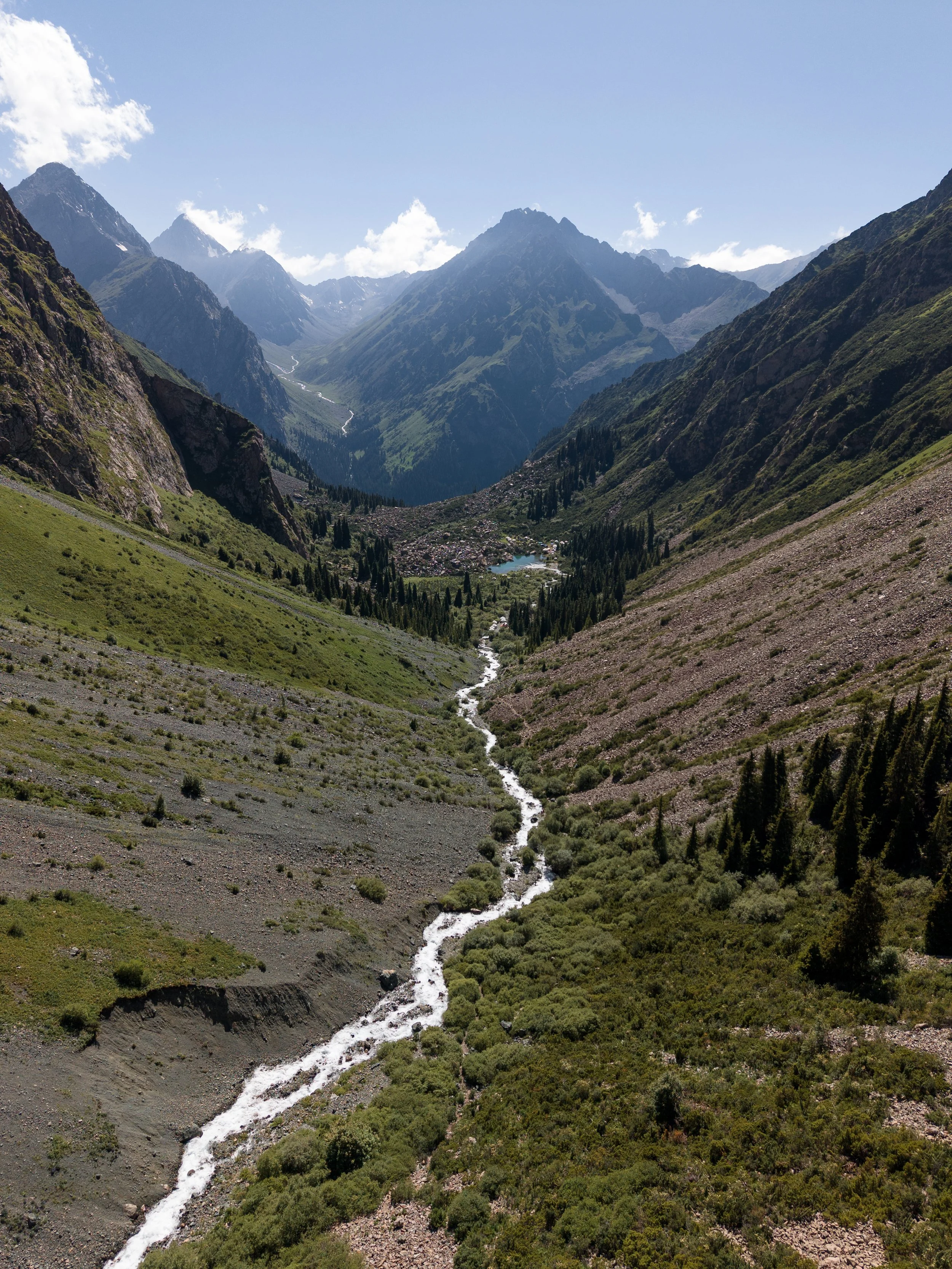
I actually jumped out around 2.5 km before Forest Gate so I could fly the drone and soak in the scenery before continuing on foot.
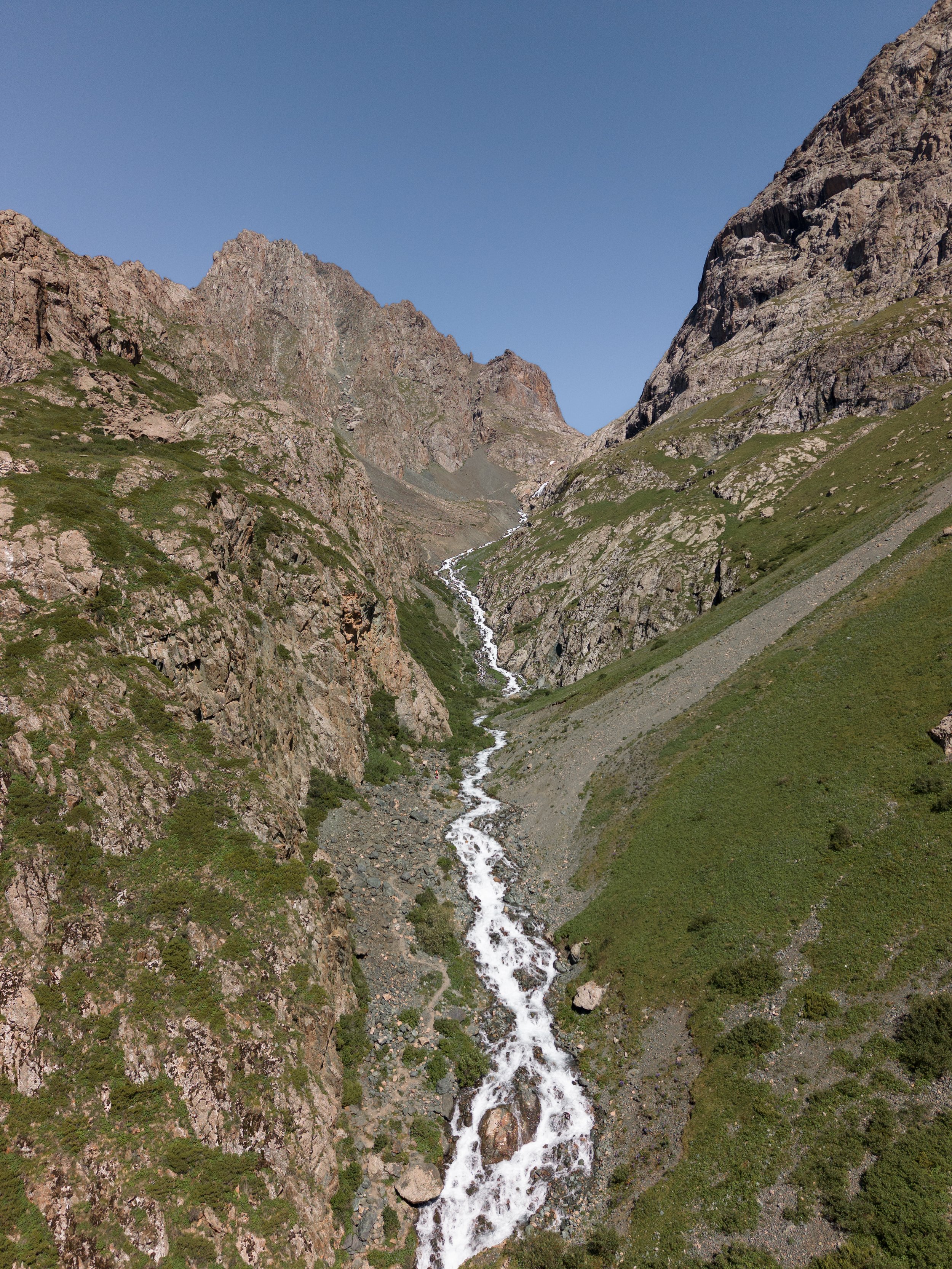
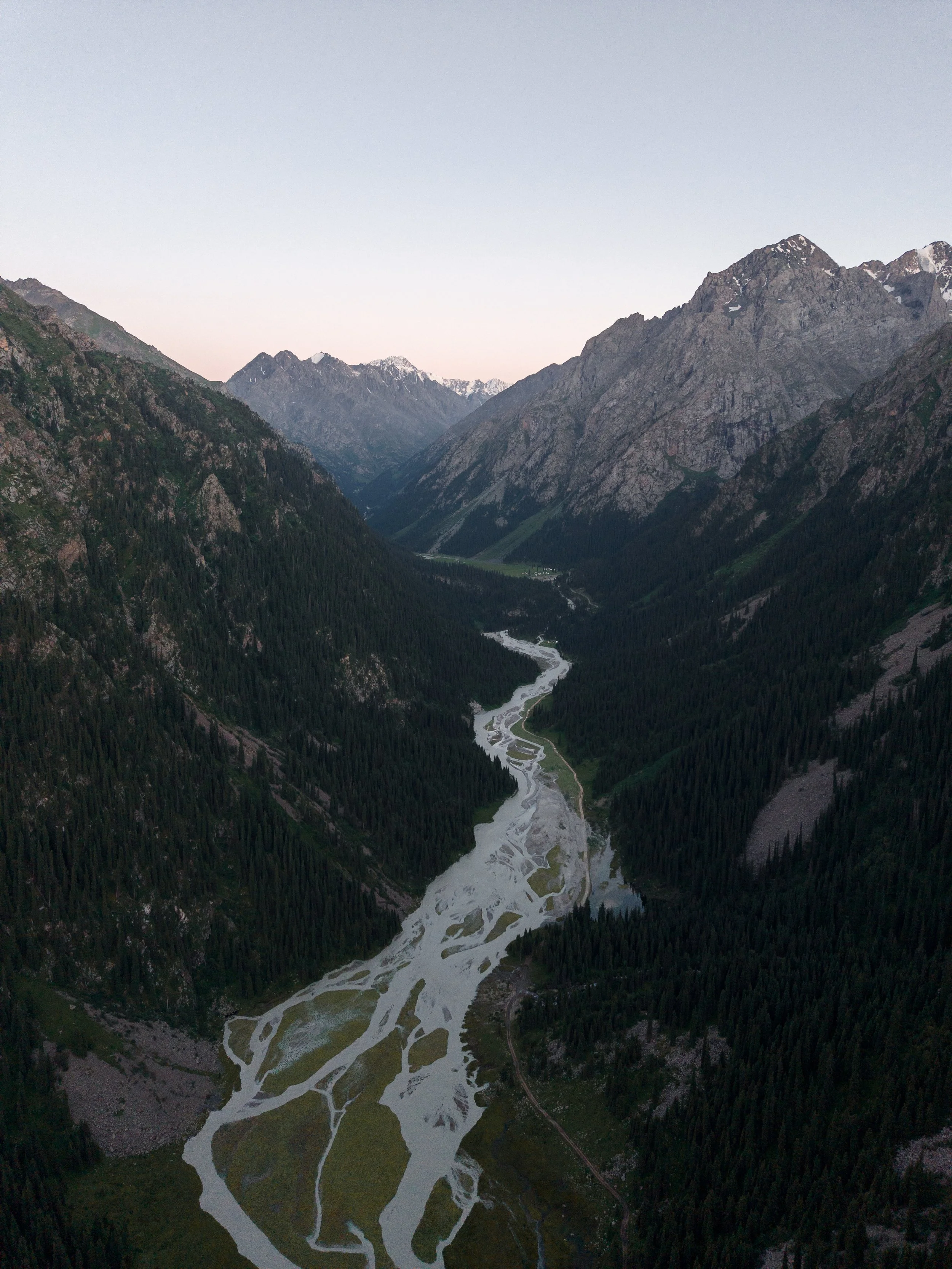
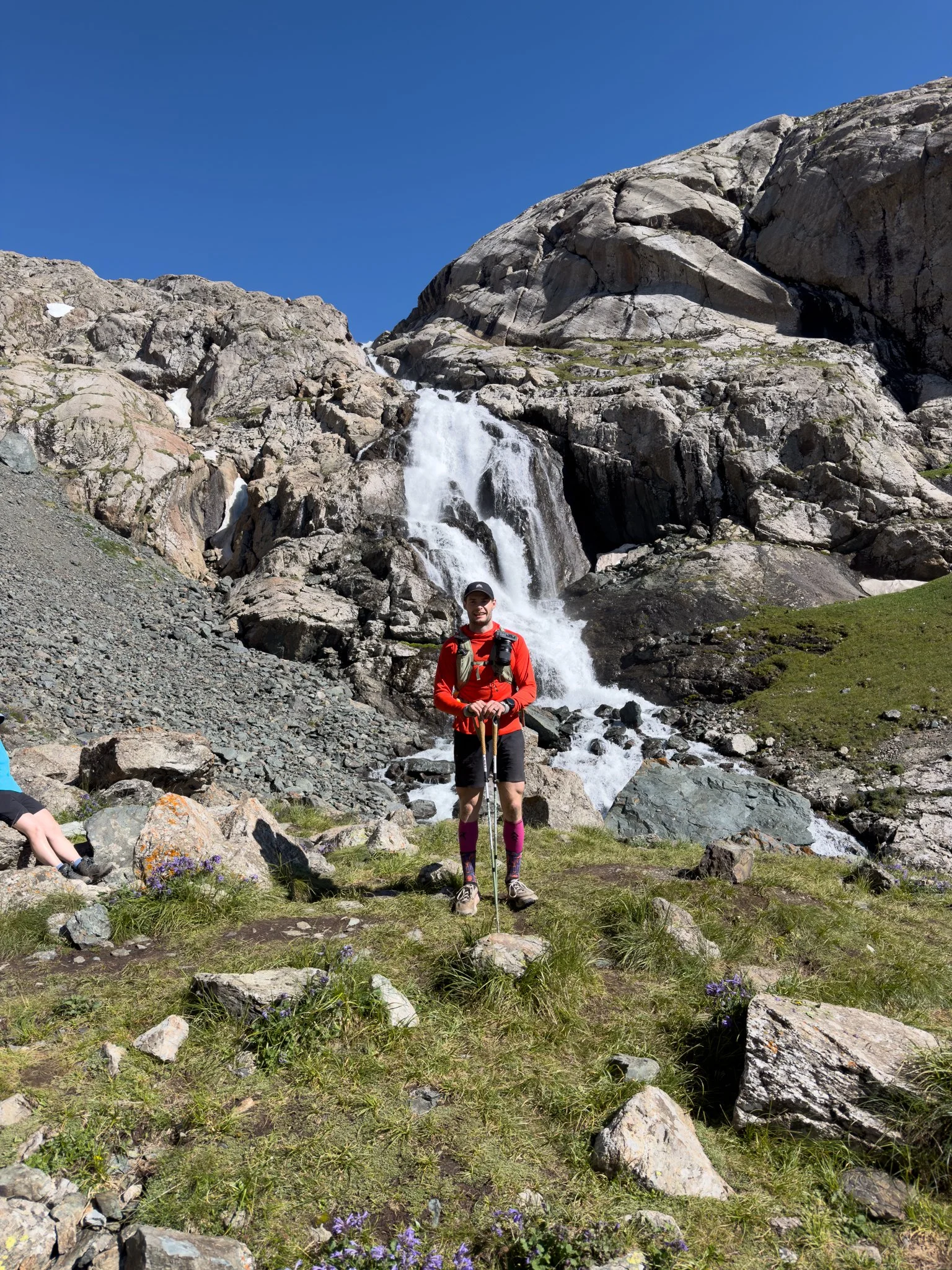
From Forest Gate, the trail climbed steeply through pine forest before opening into a spectacular alpine valley. The route isn't particularly sheltered and is very exposed to the sun, which made the climb even harder.
I passed two yurt camps, both of which had Wi-Fi and sold snacks and drinks, before getting stuck into the steeper second half of the climb, which consisted largely of loose scree.
Although the views got better the higher I climbed, the altitude made every step noticeably harder.
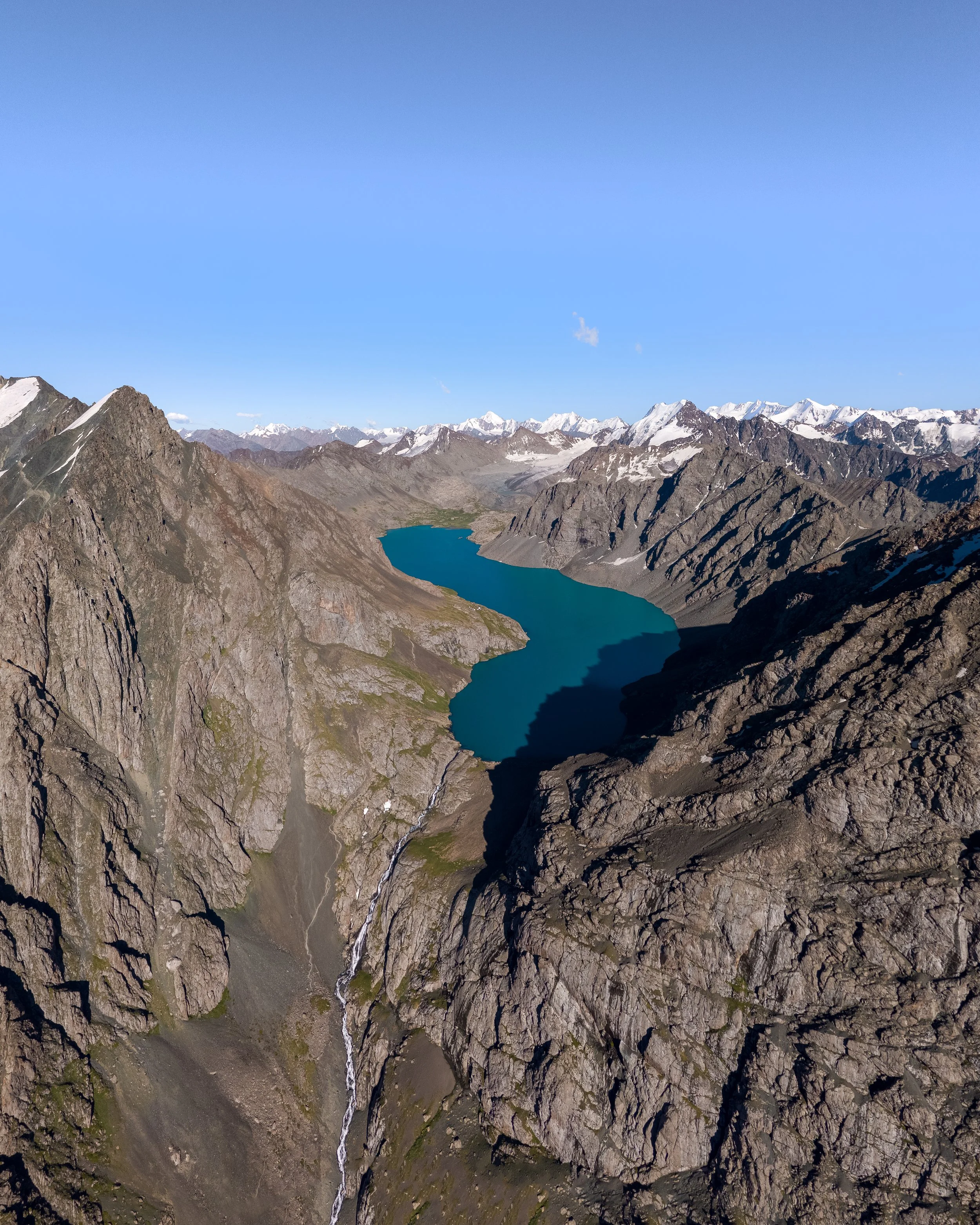
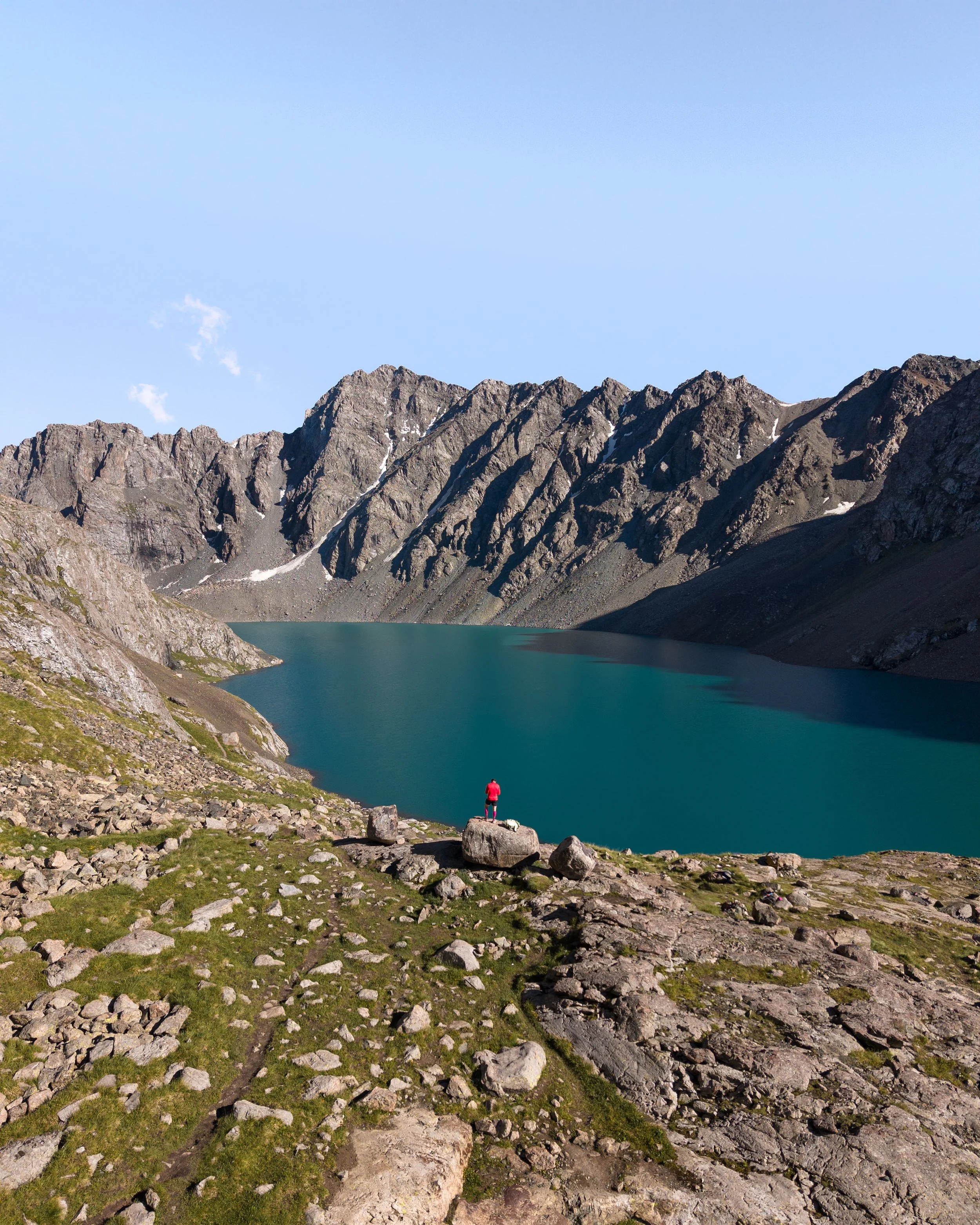
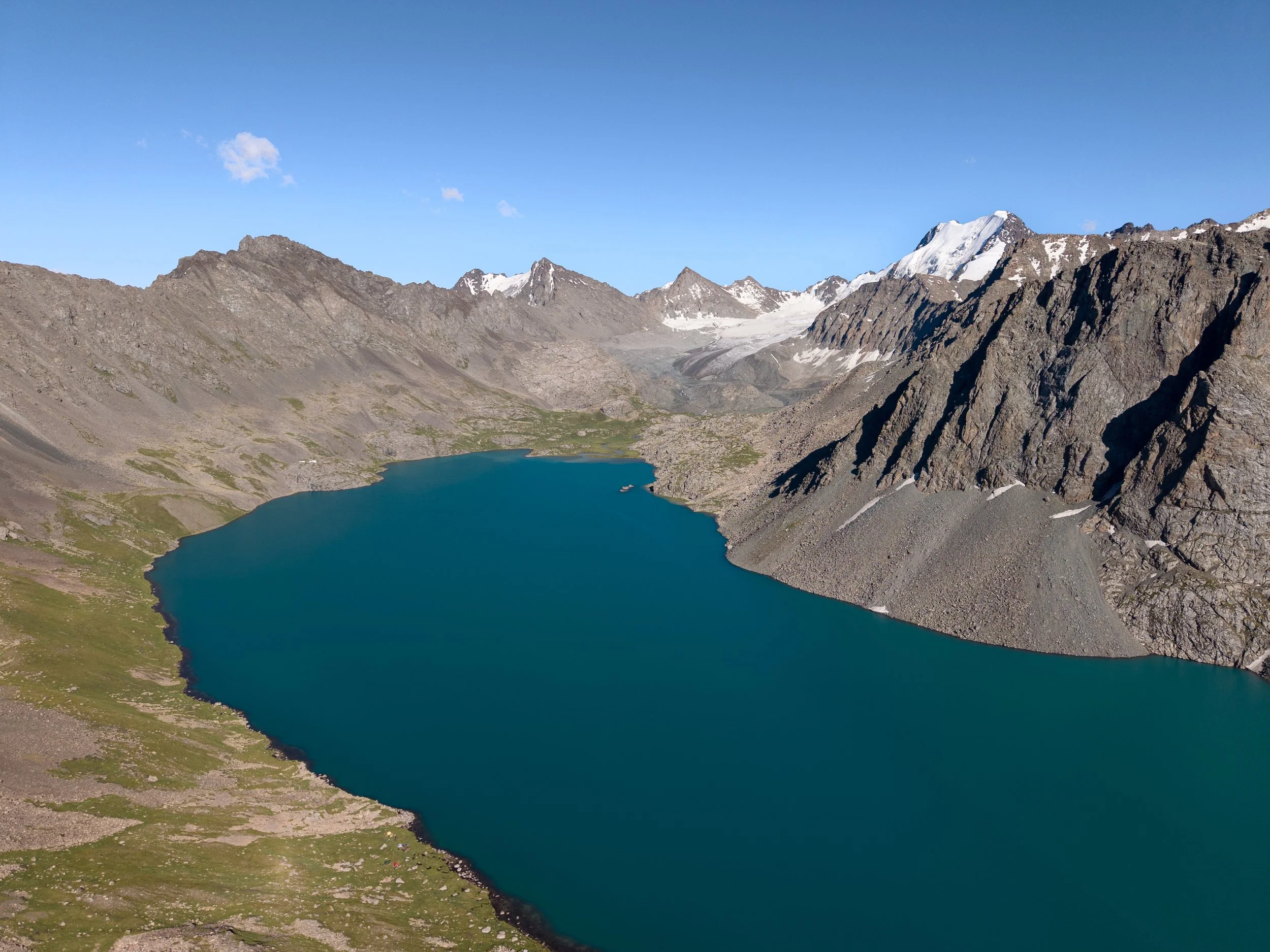
Six kilometres and two hours and 17 minutes after leaving Forest Gate, I finally reached Ala-Köl, and it was every bit as spectacular as I'd hoped.
The vivid turquoise water, surrounded by jagged peaks and a retreating glacier, made all the effort worthwhile. It was one of those places that genuinely looks even better in person than it does in photographs.
Eventually, I had to turn around and make the steep journey back to fort gate which I decided would be more enjoyable to run. Shortly after passing Forest gate, I was lucky enough to hitch a lift in a heavy-duty 4x4 back down the 10km rough forest road back my vehicle.
In total, I finished the day having hiked 17 kilometres with 1,370 metres of ascent in 5.5 hours. From Forest Gate, the hike is approximately 12 kilometres return with around 1,050 metres of ascent.
It wasn't part of the Kyrgyzstan Nomads itinerary. But if, like me, you travel for the mountains and don't mind a big day on the trails, it was worth every extra mile, especially as it ended up being one of the highlights of my entire time in Kyrgyzstan.
If you're planning to attempt it yourself, I'd strongly recommend leaving as early as possible and pre-booking a 4x4 shuttle from the park entrance to Forest Gate.
Day 7: Karakol to Bokonbayevo
Today's route crossed some of the most varied landscapes of the entire trip, taking us from lush mountain valleys to towering red rock formations before finishing in one of the most surreal landscapes I'd ever seen.
Our first stop was Jeti-Ögüz, one of the most iconic landmarks in the Issyk-Kul region. Its name translates to "Seven Bulls", referring to the enormous red sandstone cliffs that resemble a herd of bulls standing side by side.
There's a short uphill walk to a café overlooking the valley, which apparently serves great coffee alongside an even better view. We decided to give it a miss though, as we wanted to prioritise some of the other stops later in the day.
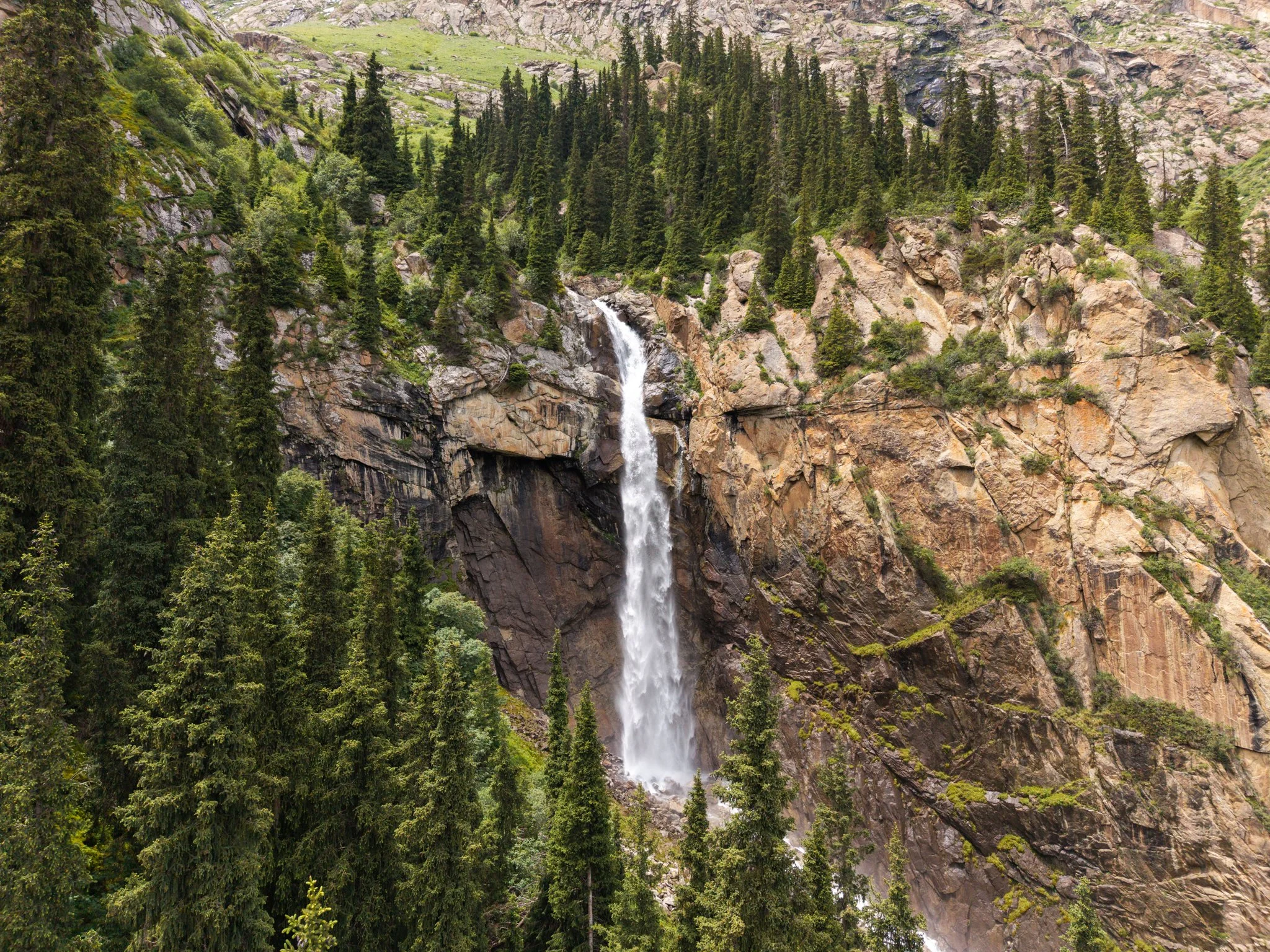
Next up was the Barskoon Valley, home to a series of waterfalls tucked away amongst pine forest and rugged mountain peaks.
Once again, we skipped the short hike to the waterfalls. Normally I'd have happily stretched my legs again, but with an eagle hunting demonstration booked for 4 pm, we didn't want to spend the day clock watching.
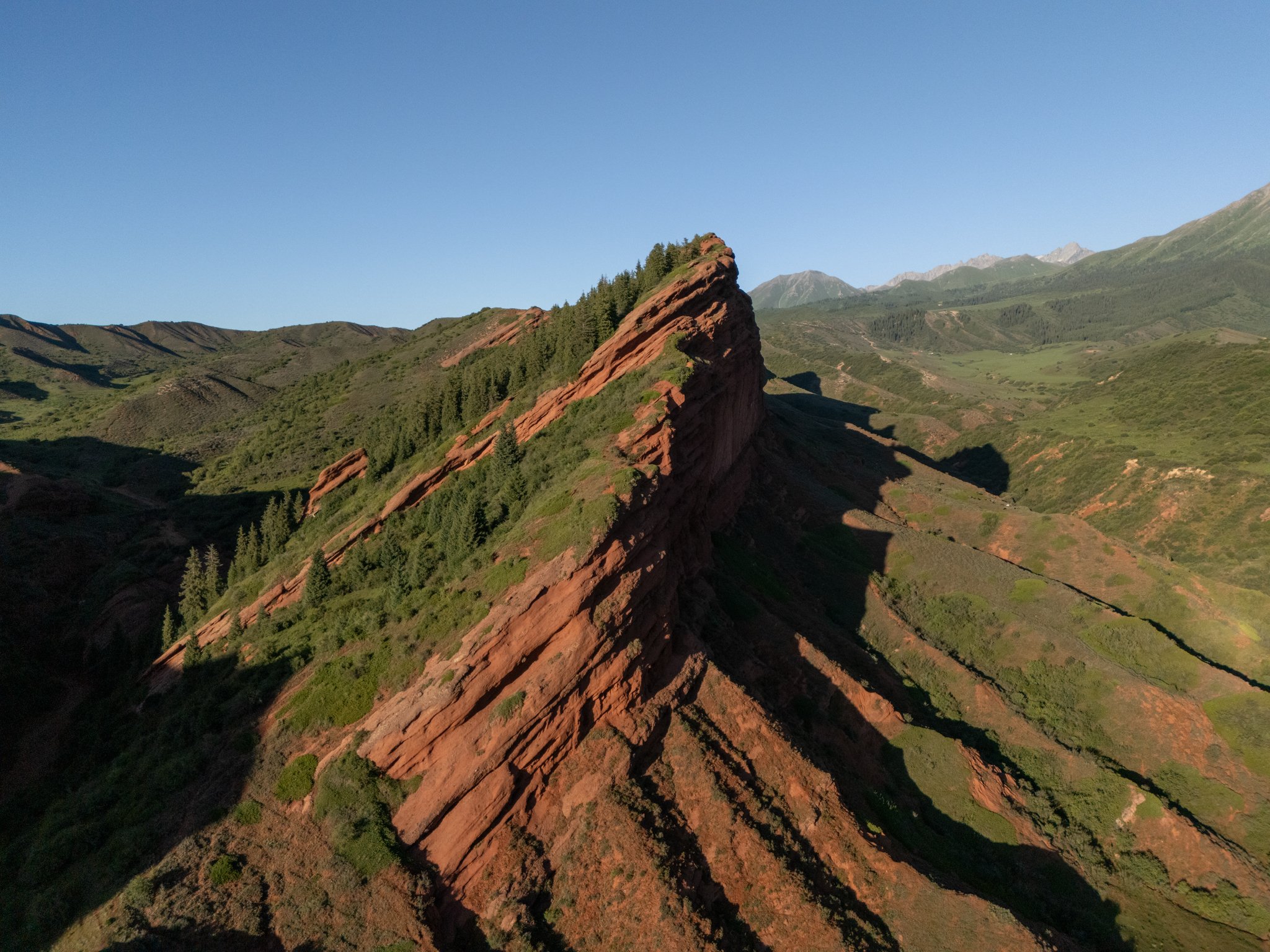
The drive along the southern shore of Issyk-Kul was beautiful in its own right. On one side, the vivid blue waters of the lake stretched towards distant snow-capped mountains, while on the other, colourful canyons and rocky hills rose from the roadside, looking as though they belonged on another planet.
Much of the road is currently being rebuilt ( and has been under construction for 4 years), so you'll alternate between beautifully surfaced tarmac and long stretches of dusty washboard gravel. Progress can be slower than you might expect, particularly when combined with the locals' rather creative interpretation of road lanes, but the scenery more than makes up for it.
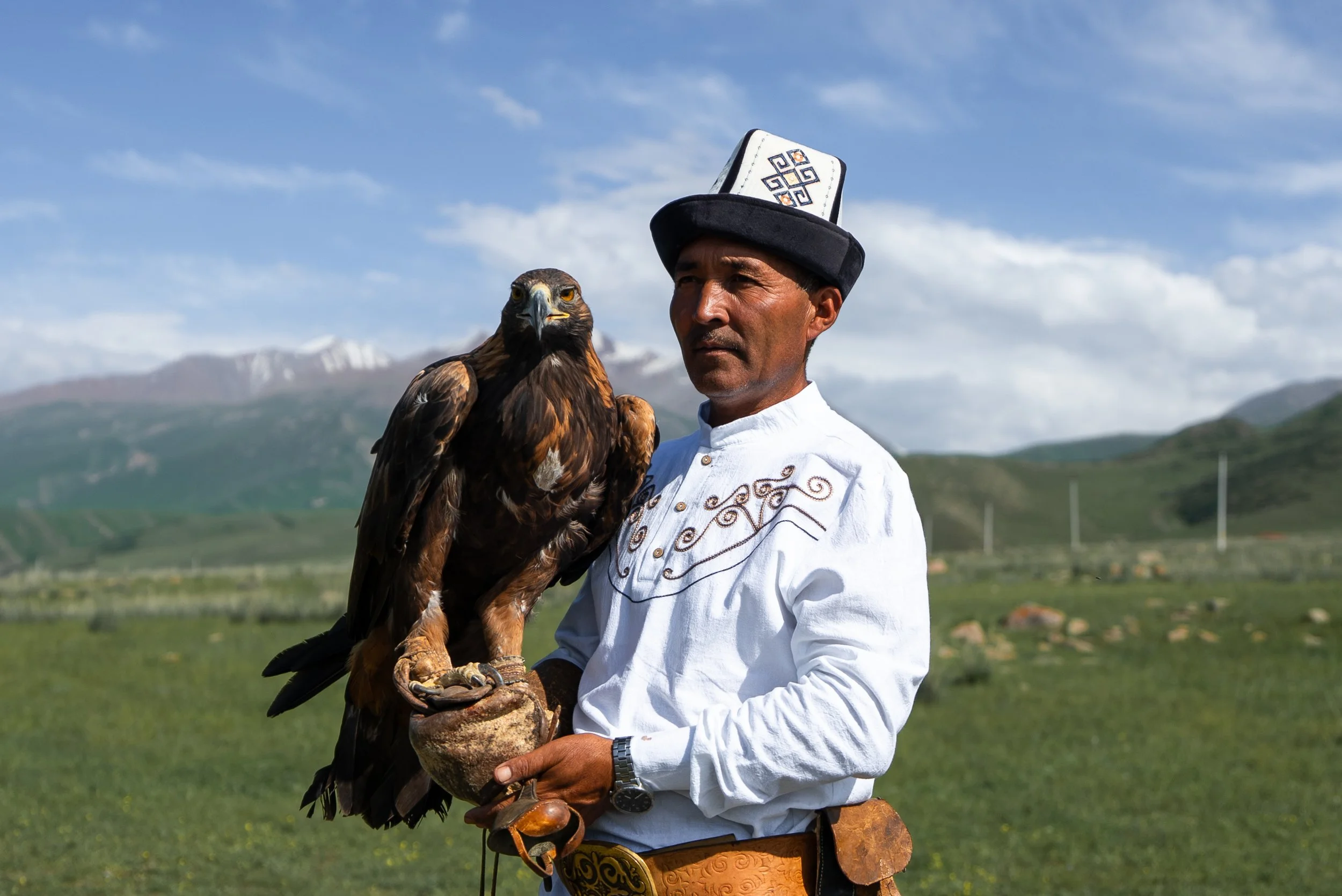
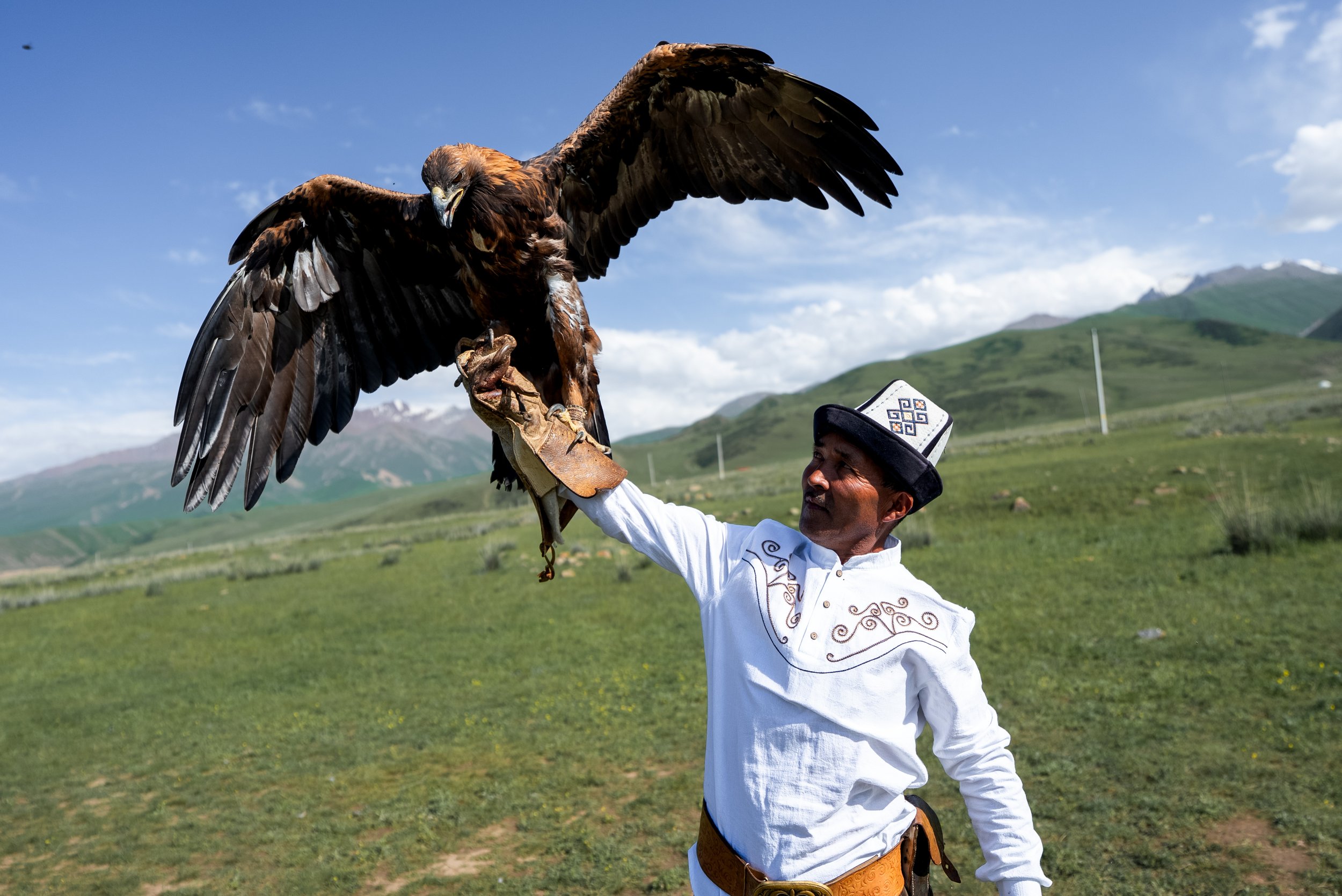
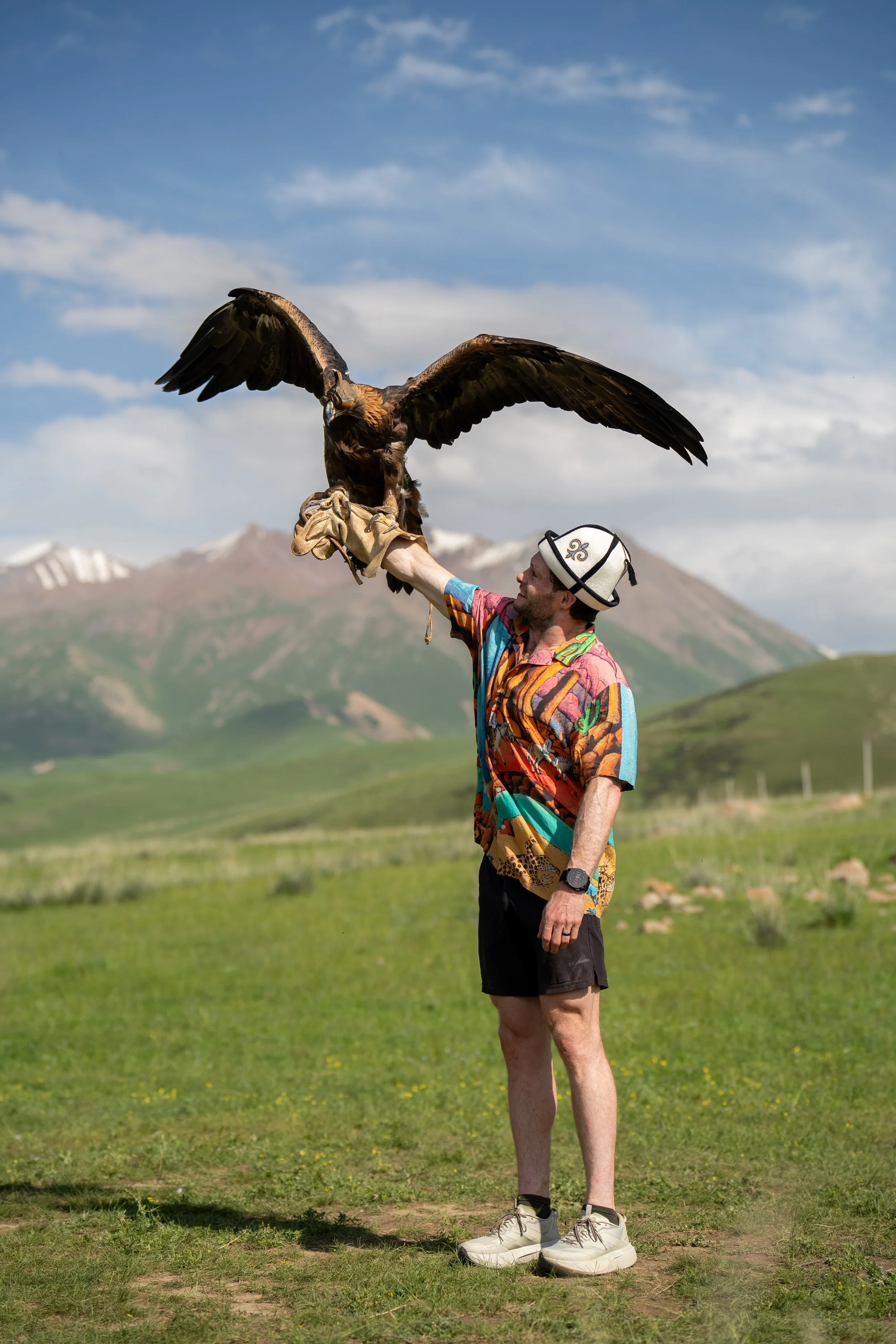
That afternoon we met Aitoo, one of only around 30 officially recognised eagle hunters in Kyrgyzstan, who has been practising the tradition for almost 30 years.
Eagle hunting, or Burkutchy, has been passed down through generations and remains one of Kyrgyzstan's most important nomadic traditions. Only female eagles are used for hunting. They are trained from around five months old, spend several years with their handler, before eventually being released back into the wild.
It was fascinating hearing Aitoo explain the bond between hunter and eagle, before watching the bird demonstrate its incredible speed and precision. We even had the opportunity to hold the eagle ourselves, which was considerably heavier than I'd expected.
Afterwards, we doubled back east towards Karakol for a quick swim, before our final stop of the day at Mars Canyon.
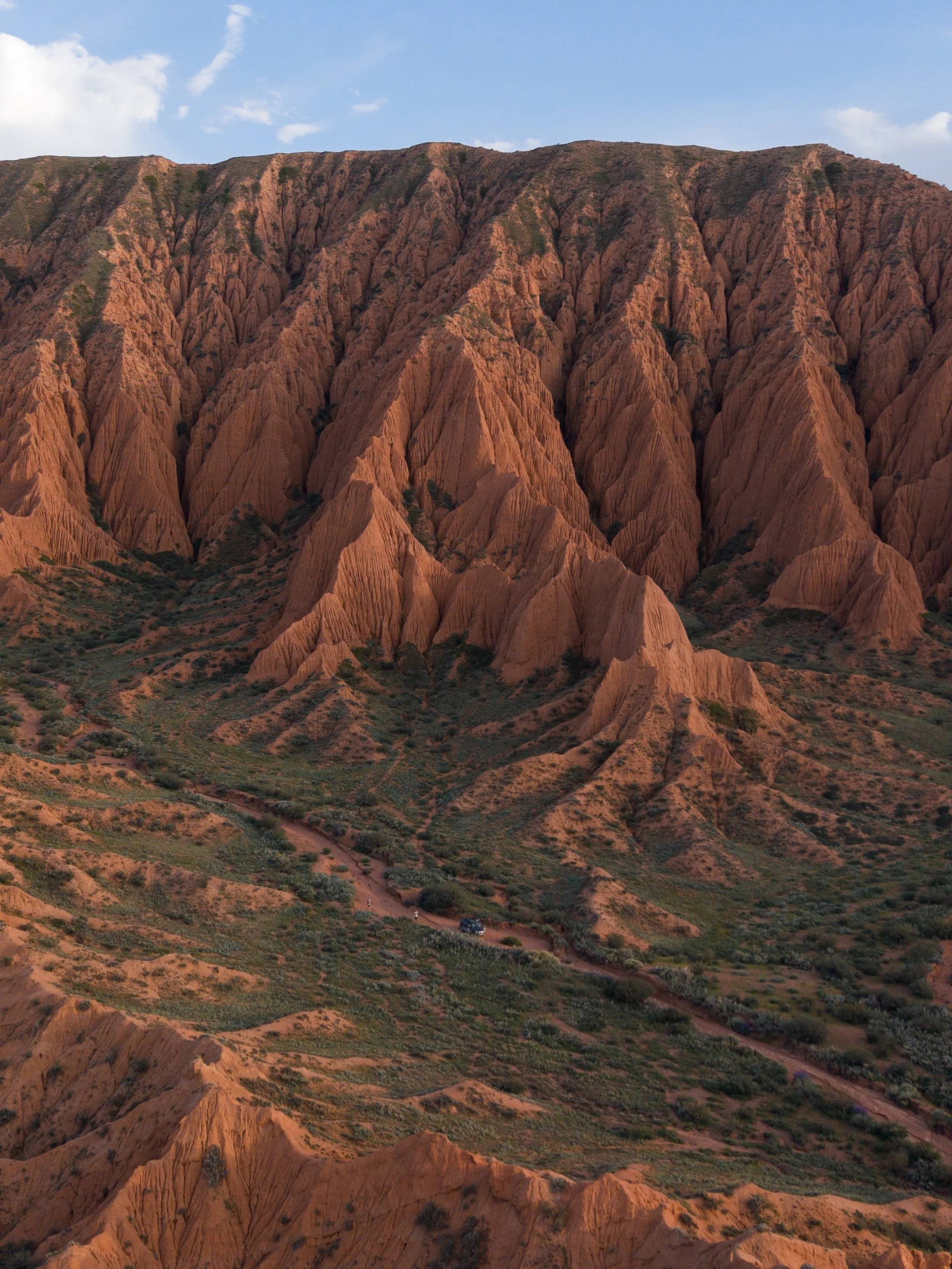
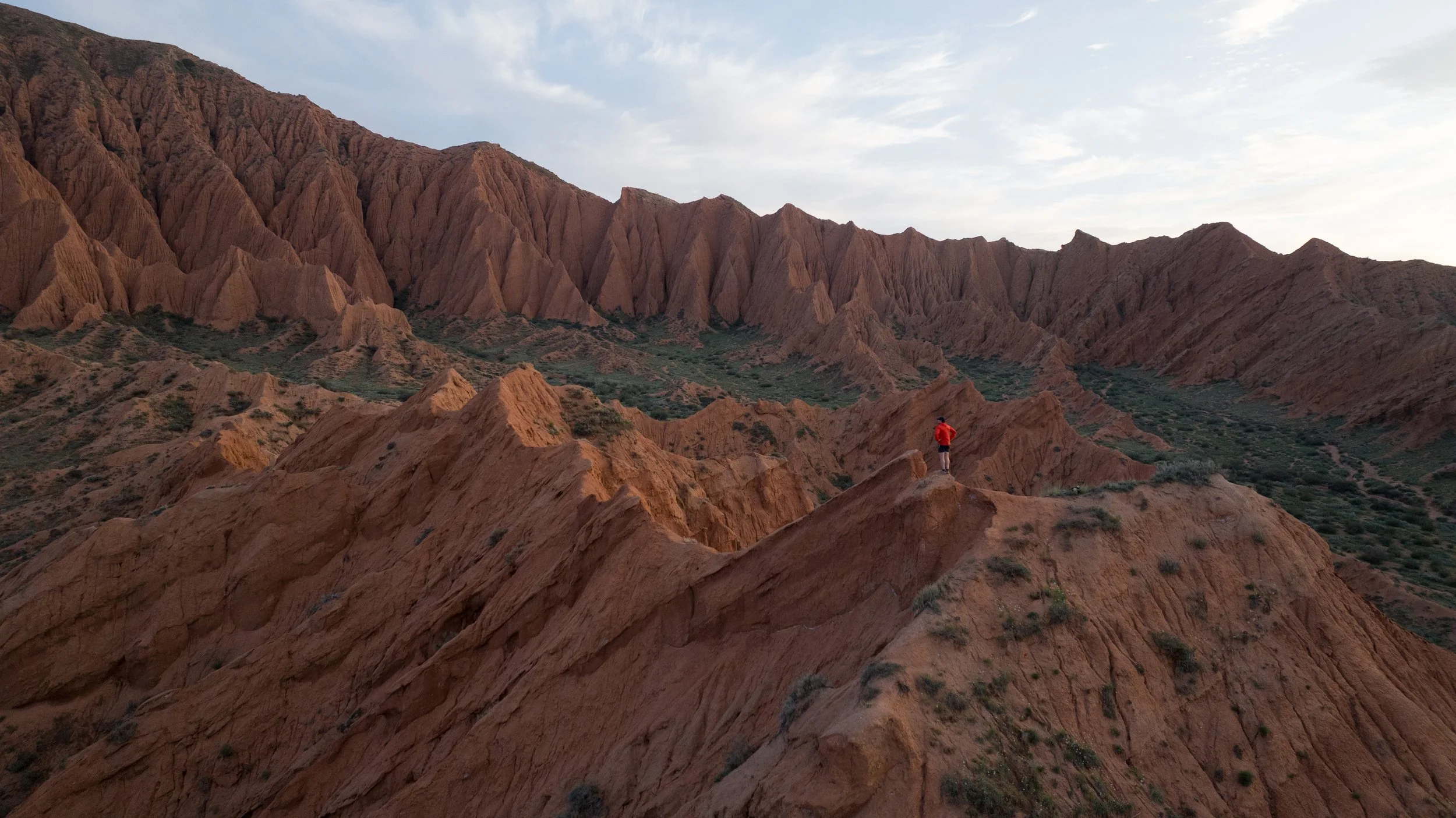
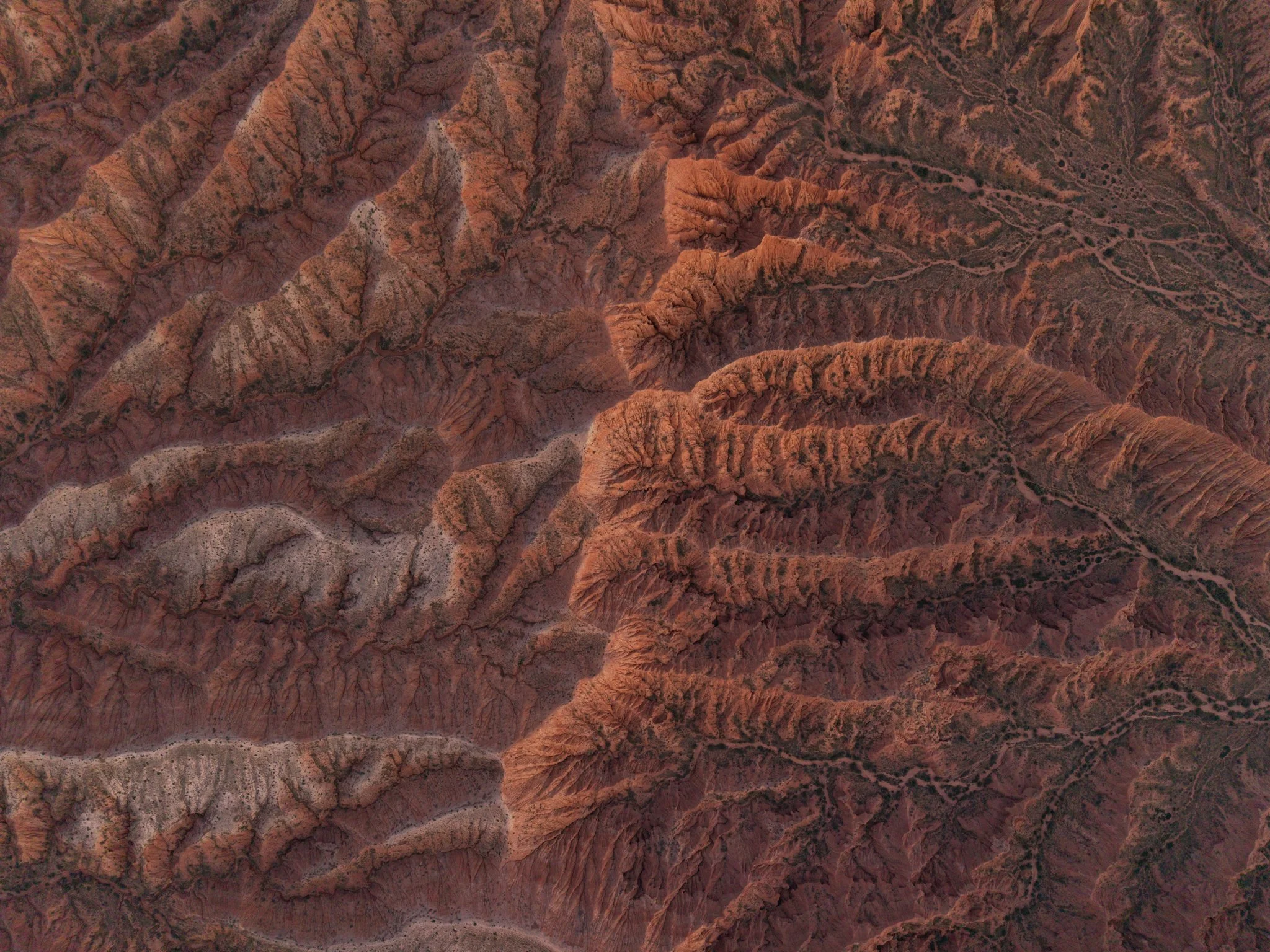
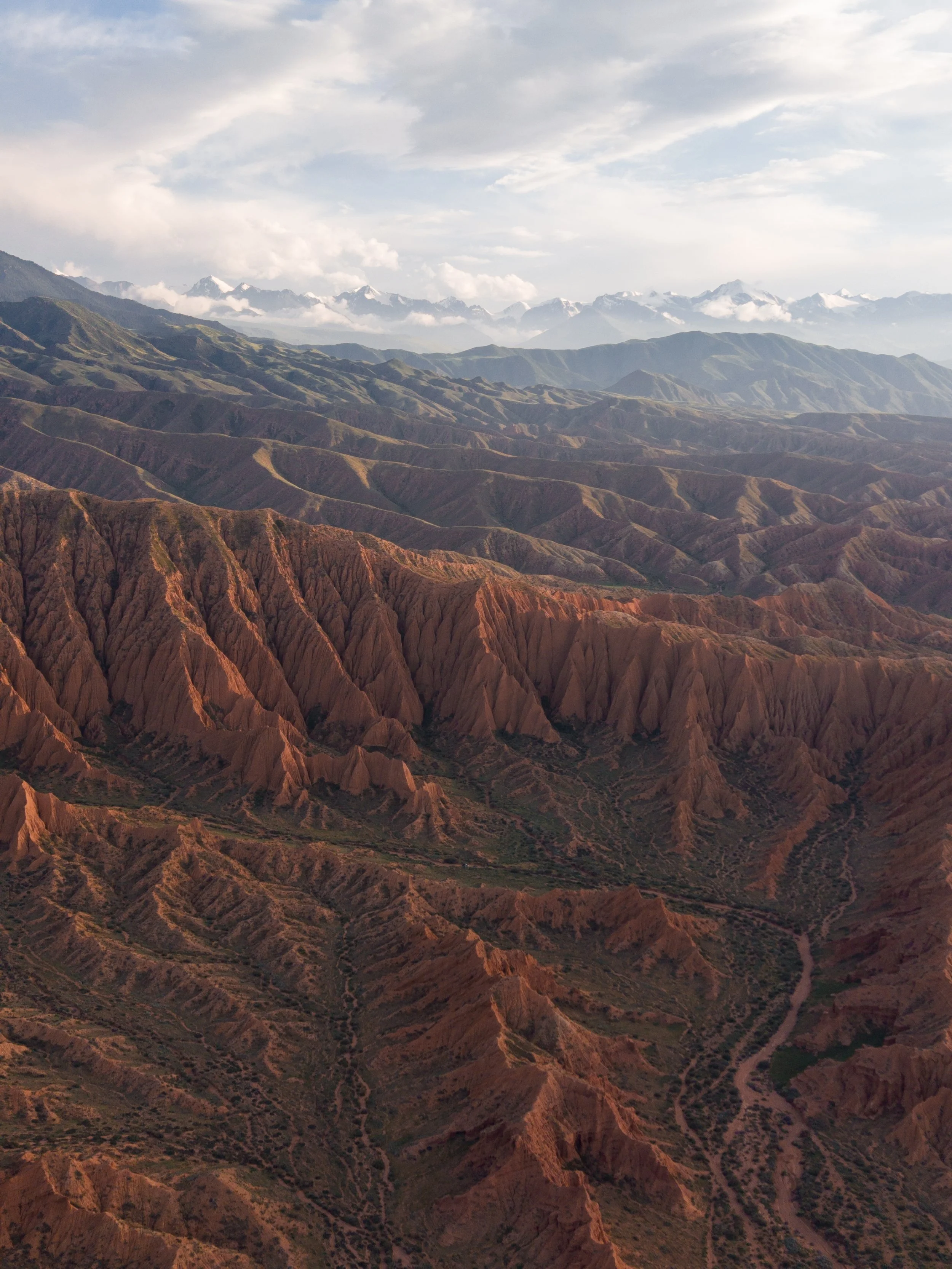
The name couldn't have been more fitting as the landscape looked completely alien. Deep red rock had been sculpted into endless ridges, folds and grooves that looked almost microscopic from above.
Alongside Rico and Mia, we spent sunset wandering across the canyon and flying the drones. The low evening light brought the whole place to life, highlighting every texture and layer in the rock.
We spent the night in another traditional yurt camp, although this one felt far more luxurious than the previous two. It had a large restaurant, excellent shower facilities and some of the friendliest hosts we met during the trip.
After another fantastic meal, we joined the owners for a few glasses of exceptionally strong Kyrgyz cognac, providing the perfect end to another unforgettable day on the road.
Day 8: Bokonbayevo to Chon-Kemin
With another day of adventure ahead of us, we packed up the car and left Bokonbayevo behind, beginning the drive towards Chon-Kemin.
Although one of the shorter driving days of the trip, it turned out to be one of the most varied.
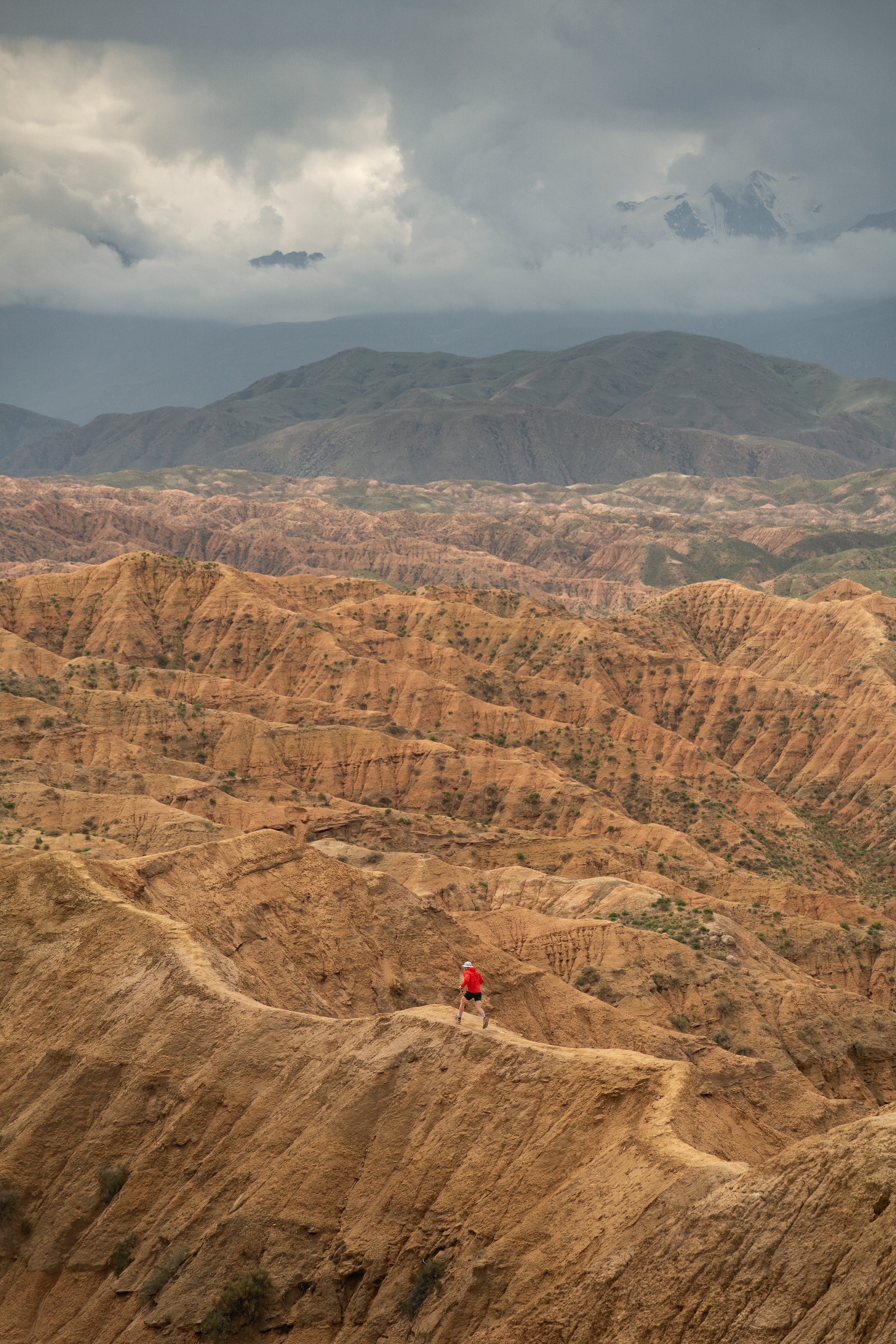
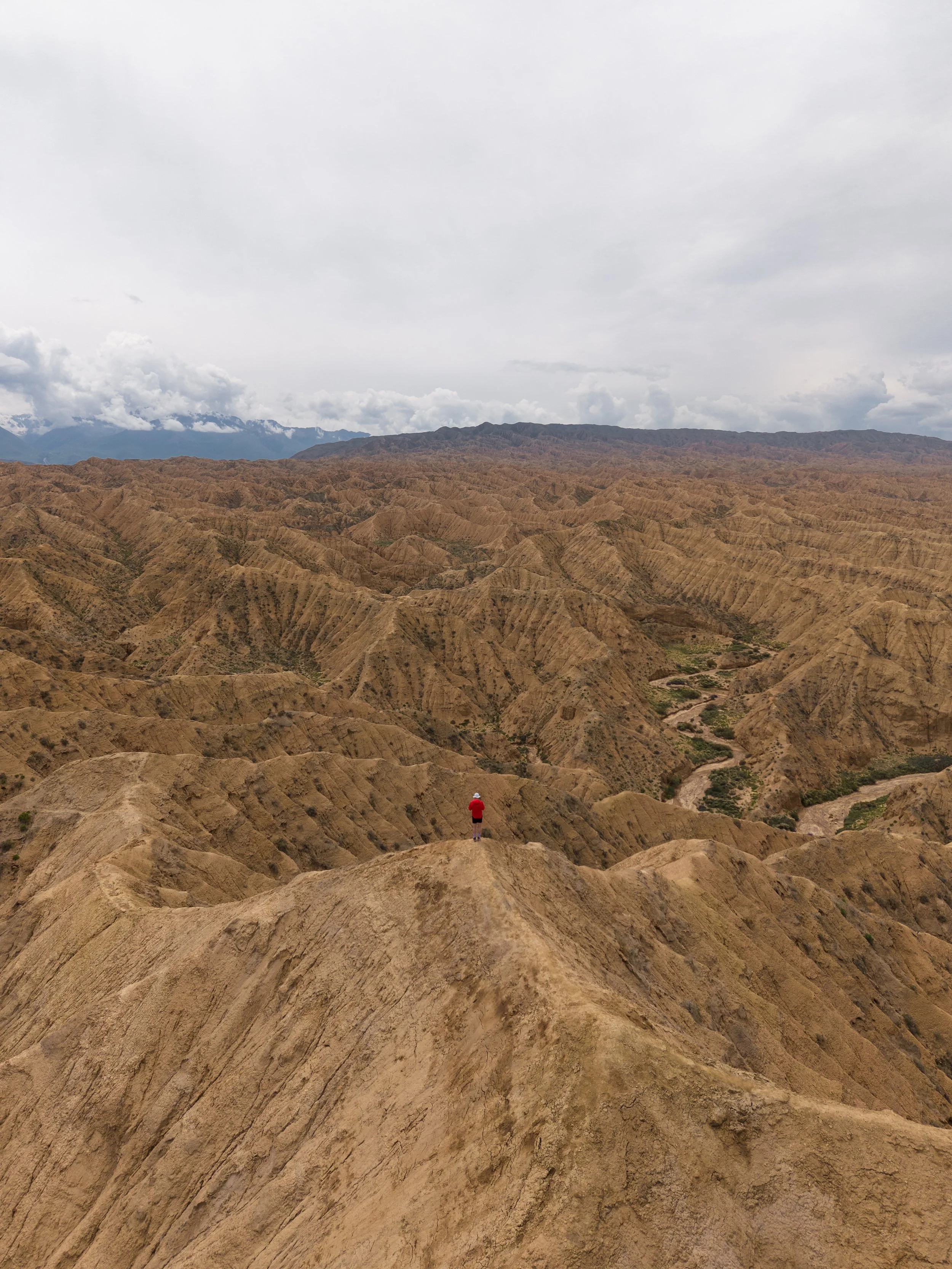
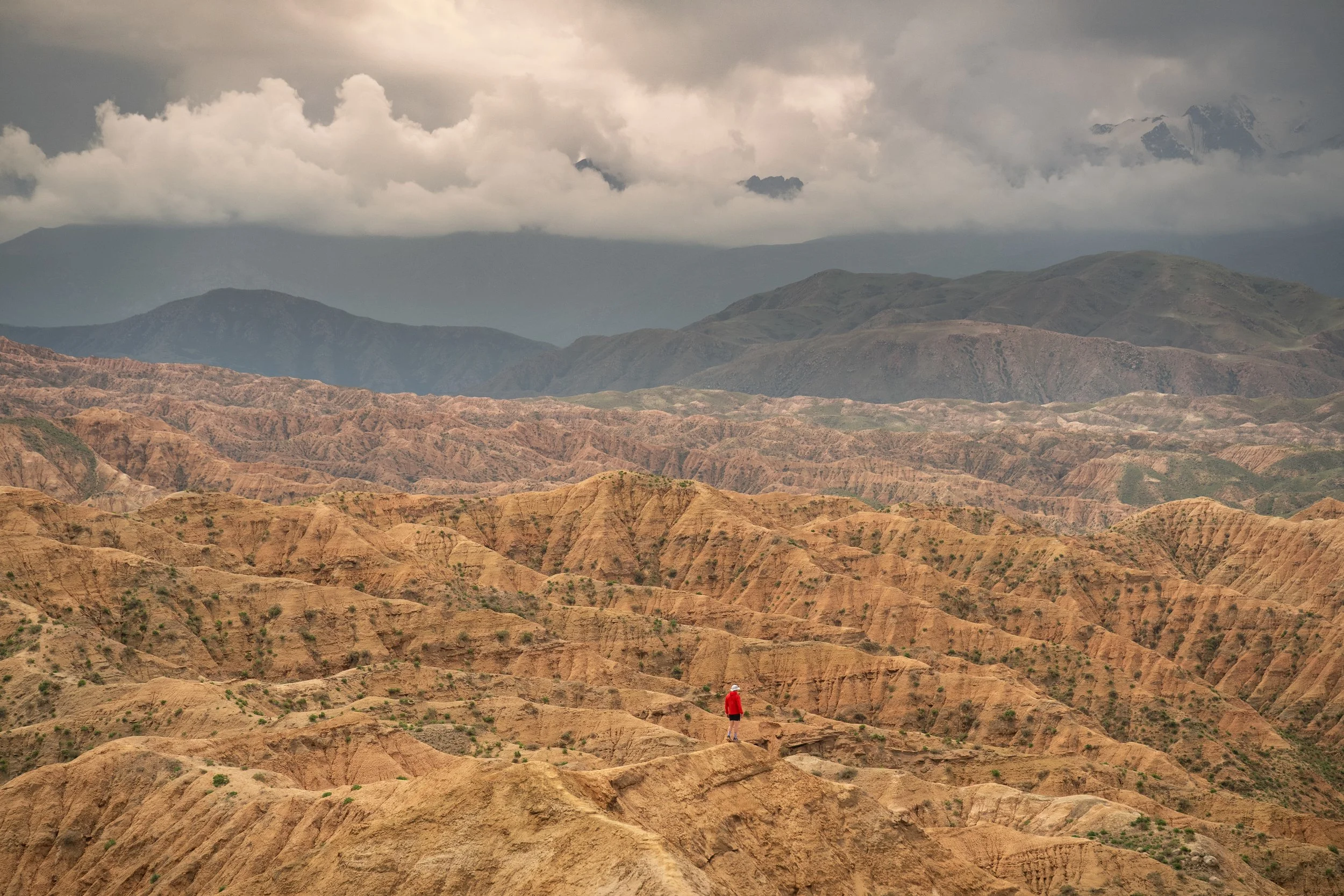
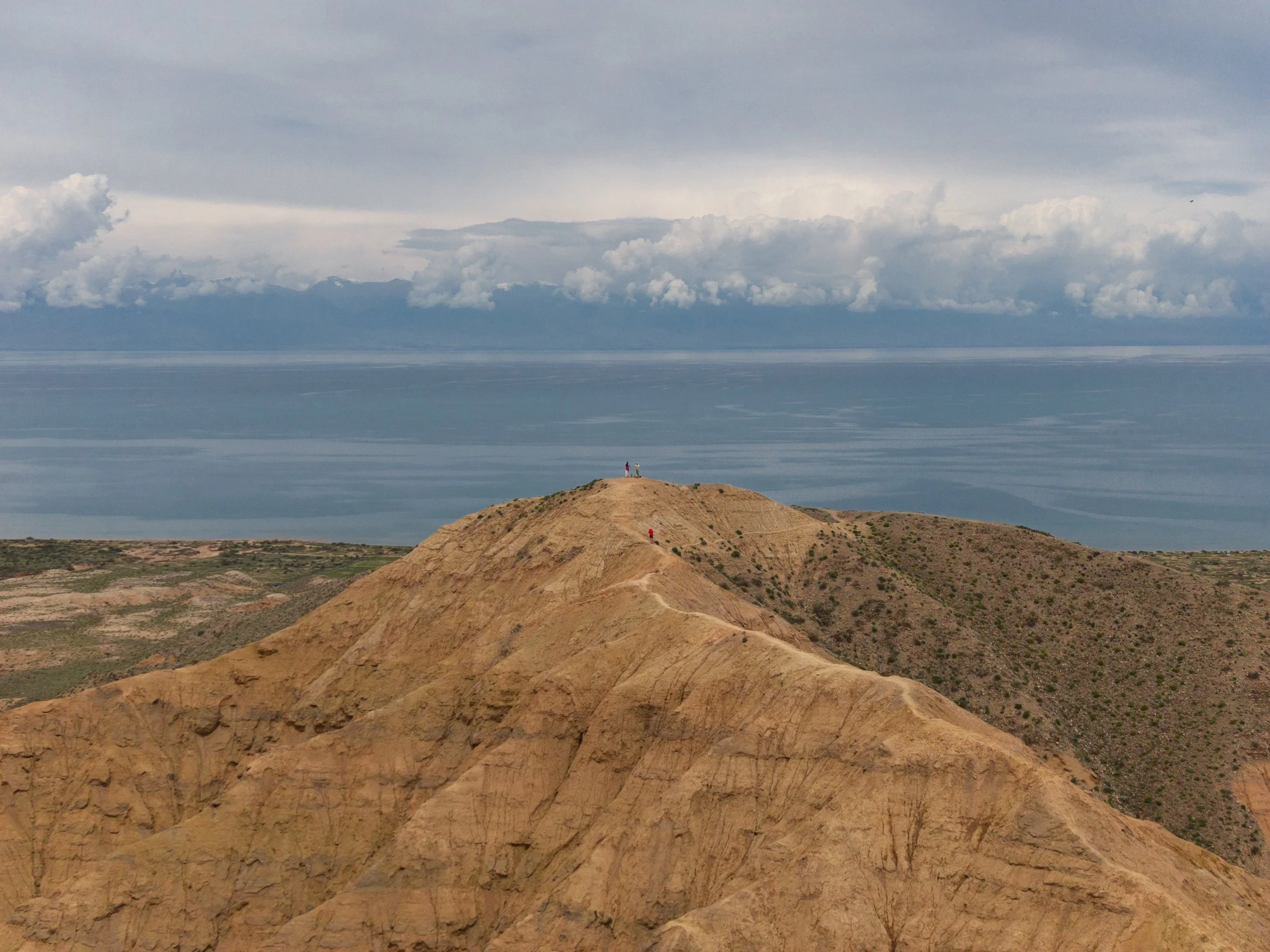
Our first stop was Ak-Sai Canyon, another spectacular red rock landscape on the southern shores of Issyk-Kul. Getting there was half the fun, as the track crossed a dried-up riverbed before weaving between towering canyon walls and eventually emerging onto the shores of Issyk-Kul.
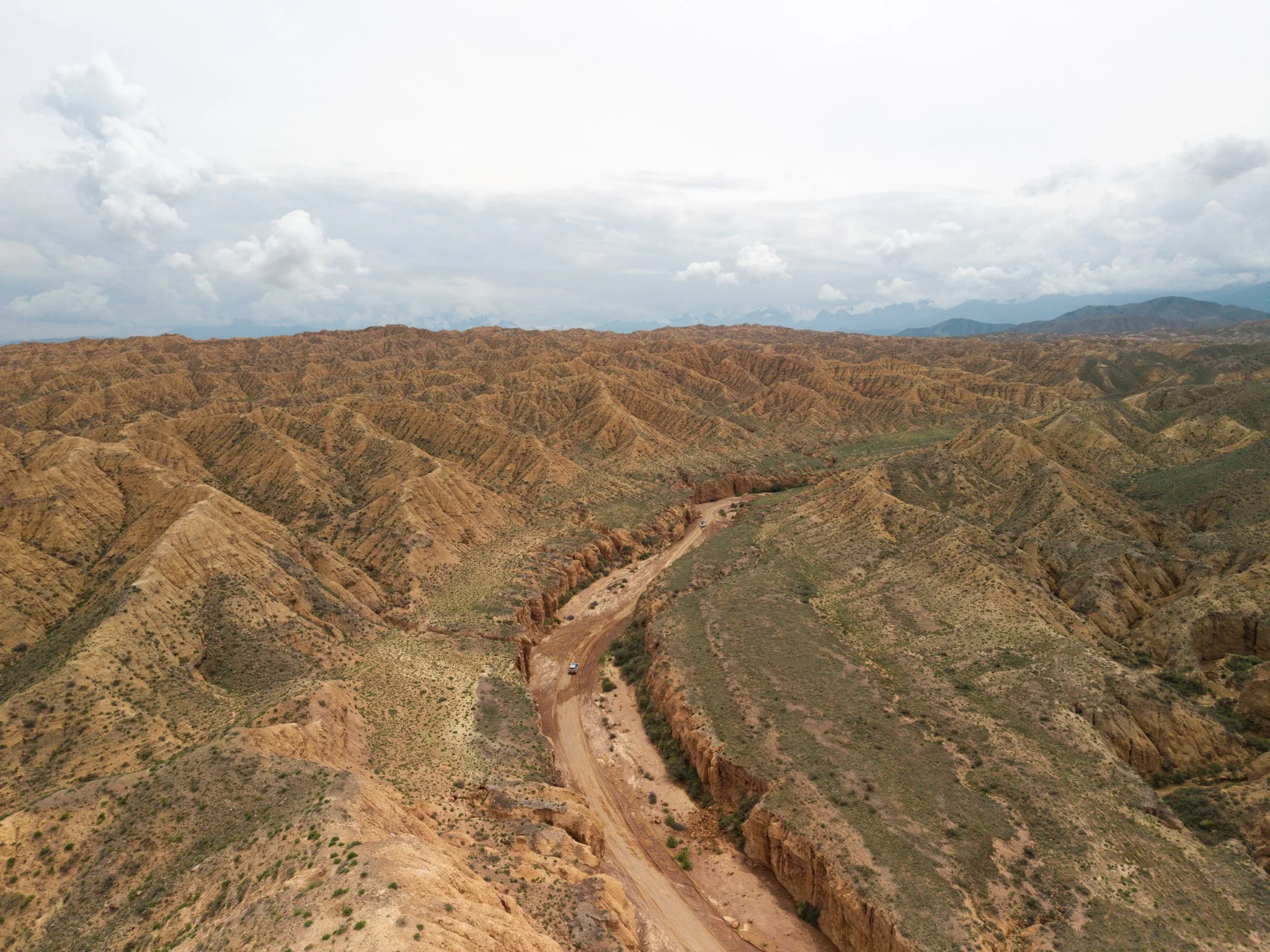
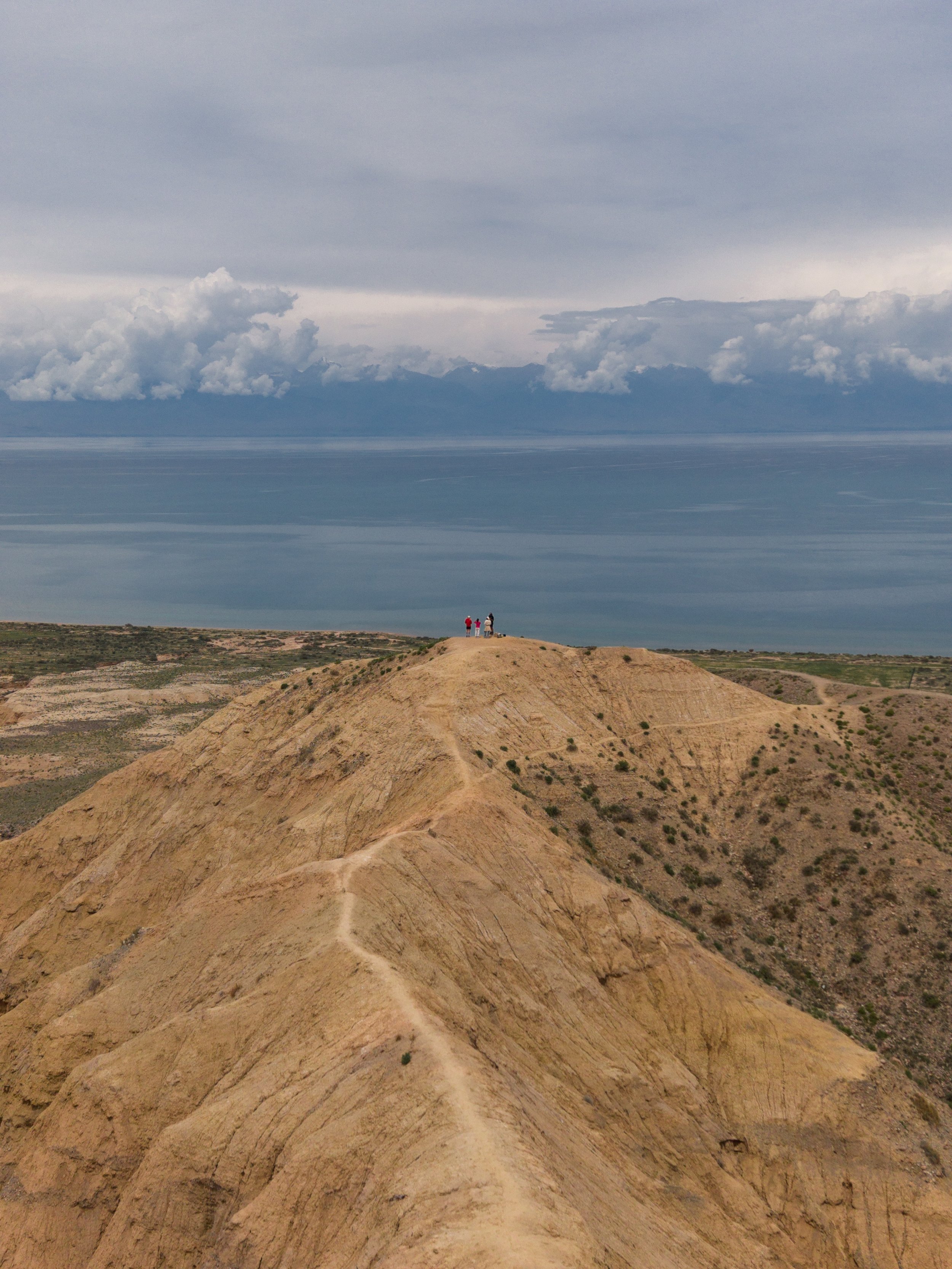
From the car park, it's only around a kilometre to the main viewpoint, but what awaited us at the top completely exceeded my expectations.
Ahead of us lay an endless maze of ridges, deep gullies, and sculpted sandstone stretching towards a backdrop of towering snow-capped mountains. Behind us lay the endless blue surface of Issyk-Kul, creating a spectacular 360-degree panorama.
As usual, what was supposed to be a quick stop turned into well over two hours. We wandered back and forth along one of the ridges, flew the drones and tried to do the place justice, although I don't think any photo or video could ever quite capture the scale of it.
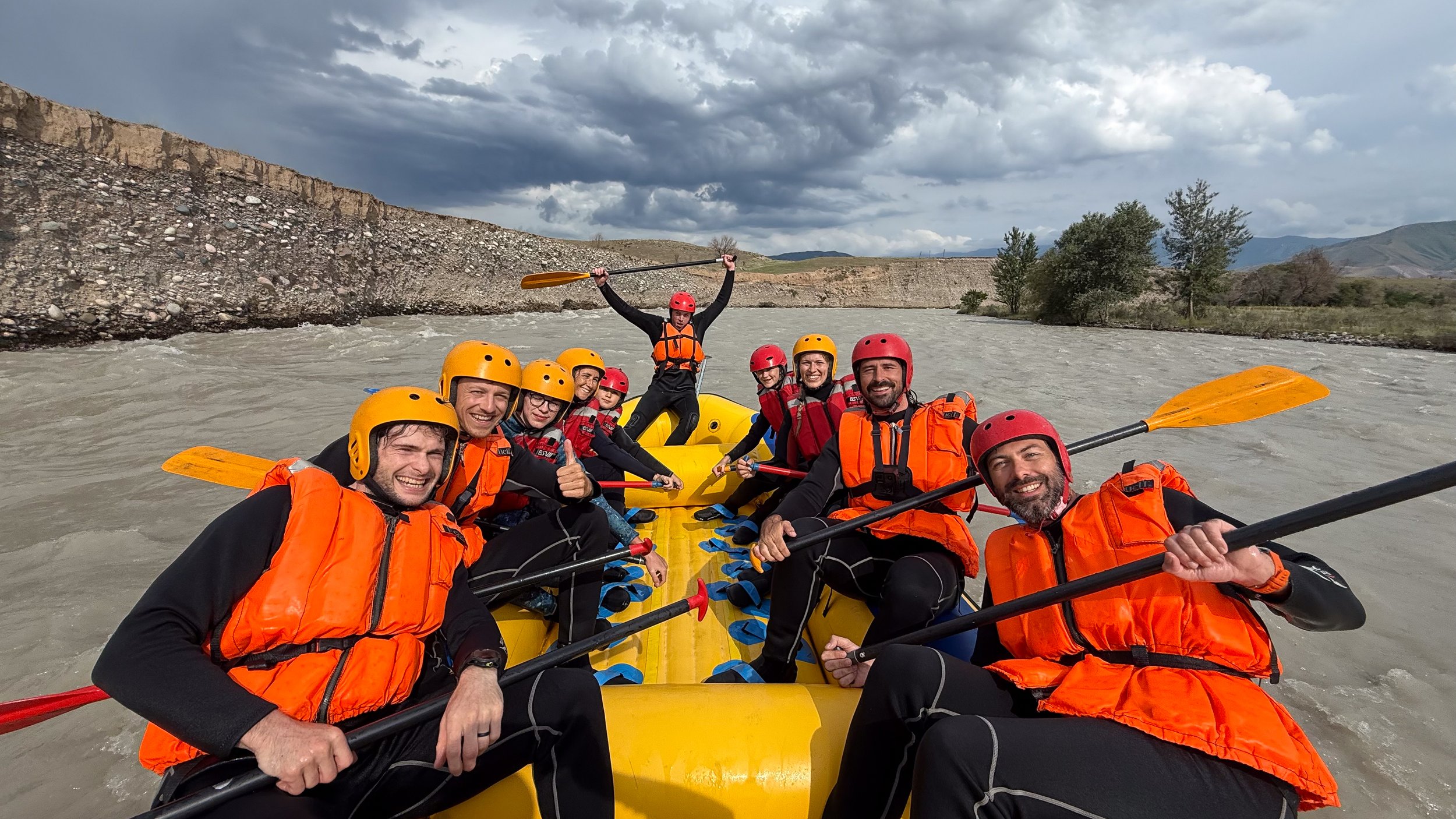
That afternoon, we swapped our hiking boots for wetsuits as we headed out on a white-water rafting session along the Chon-Kemin River.
We spent around an hour drifting 15 kilometres downstream, passing through a series of Grade II to IV rapids. It wasn't particularly technical or difficult, but it was great fun and another brilliant way to experience Kyrgyzstan from a completely different perspective.
By this point in the trip, we'd all got to know each other really well, so it was nice to spend an afternoon simply enjoying the experience together rather than constantly chasing the next viewpoint or flying the drone.
Waiting at the finish were our vehicles, which had been driven downstream while we were out on the river. After getting changed, it was only a short drive to our accommodation in Chon-Kemin.
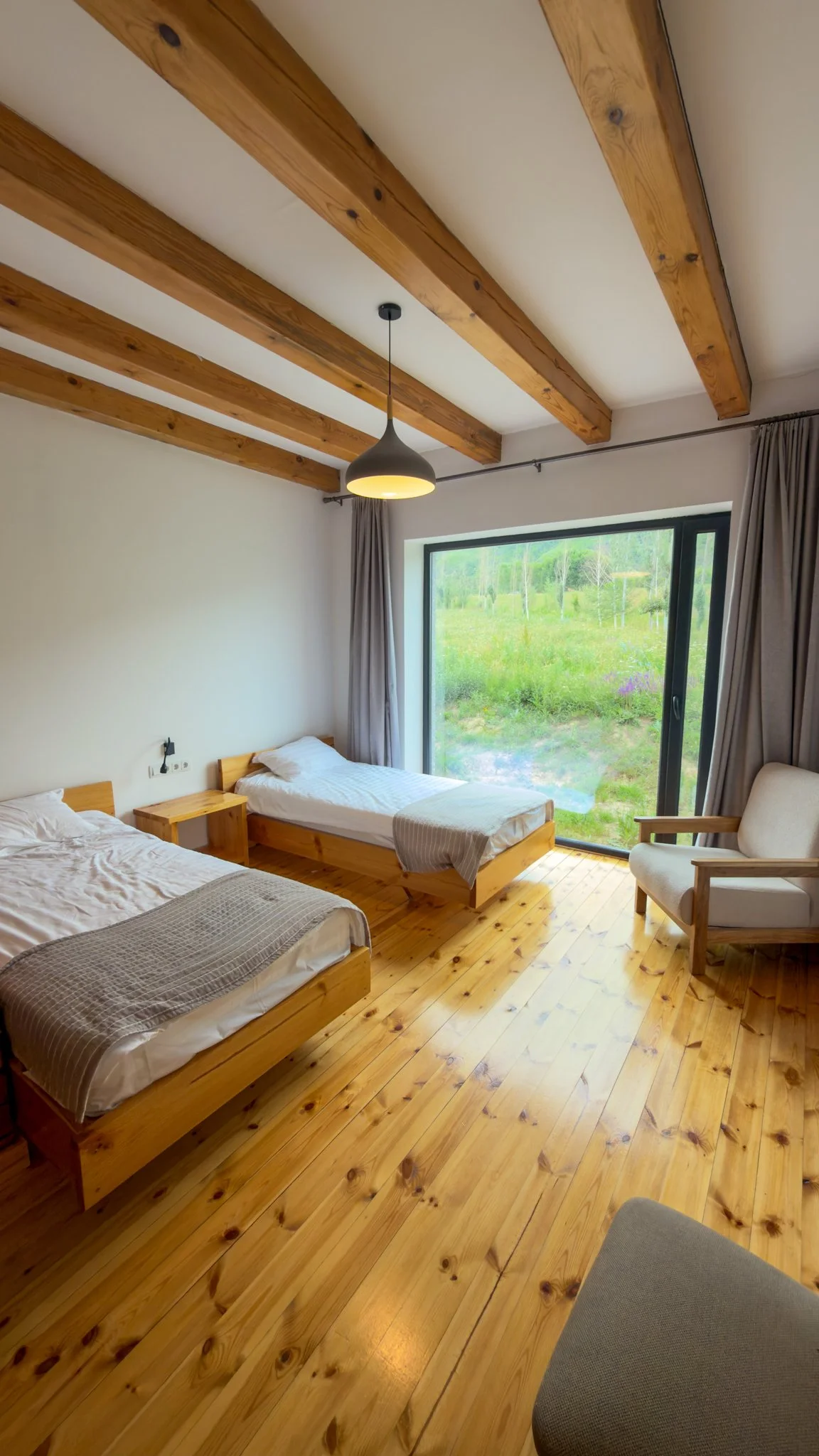
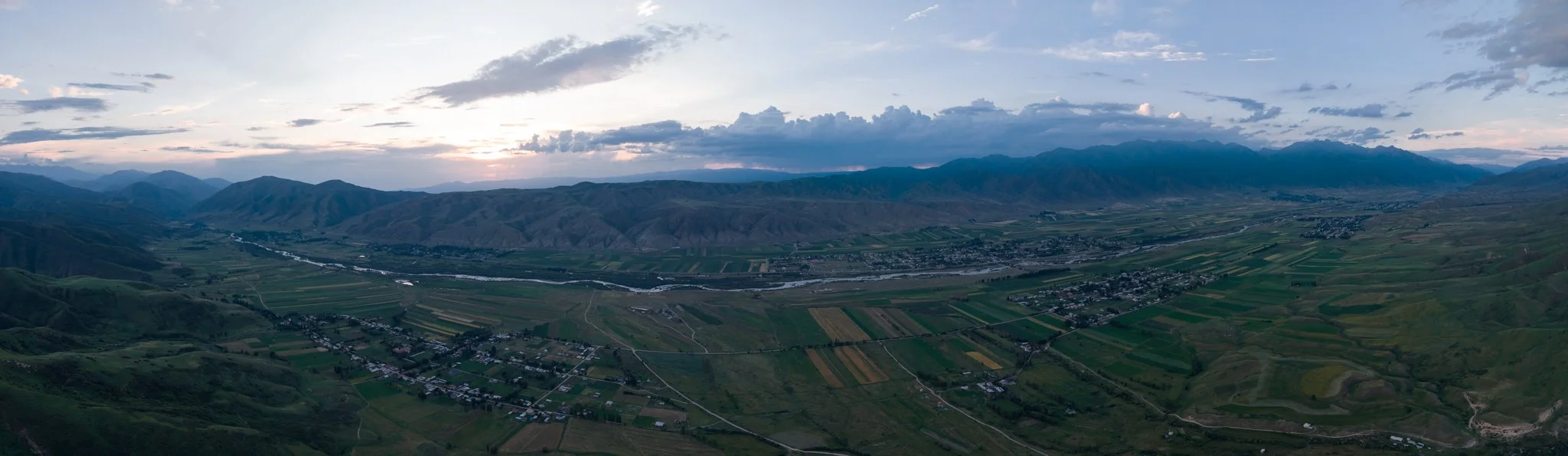
Set amongst rolling green hills with mountains rising on every side, it was a beautiful place to spend the evening. After a fantastic home-cooked meal, we settled in for one final night outside Bishkek, quietly wondering where the previous eight days had disappeared to.
Day 9: Chon-Kemin to Bishkek
It was hard to believe we were already onto the final full day of the road trip.
Rather than heading straight back to Bishkek, six of us drove deep into the beautiful Kegeti Valley for one final hike to Kel-Tor Lake.
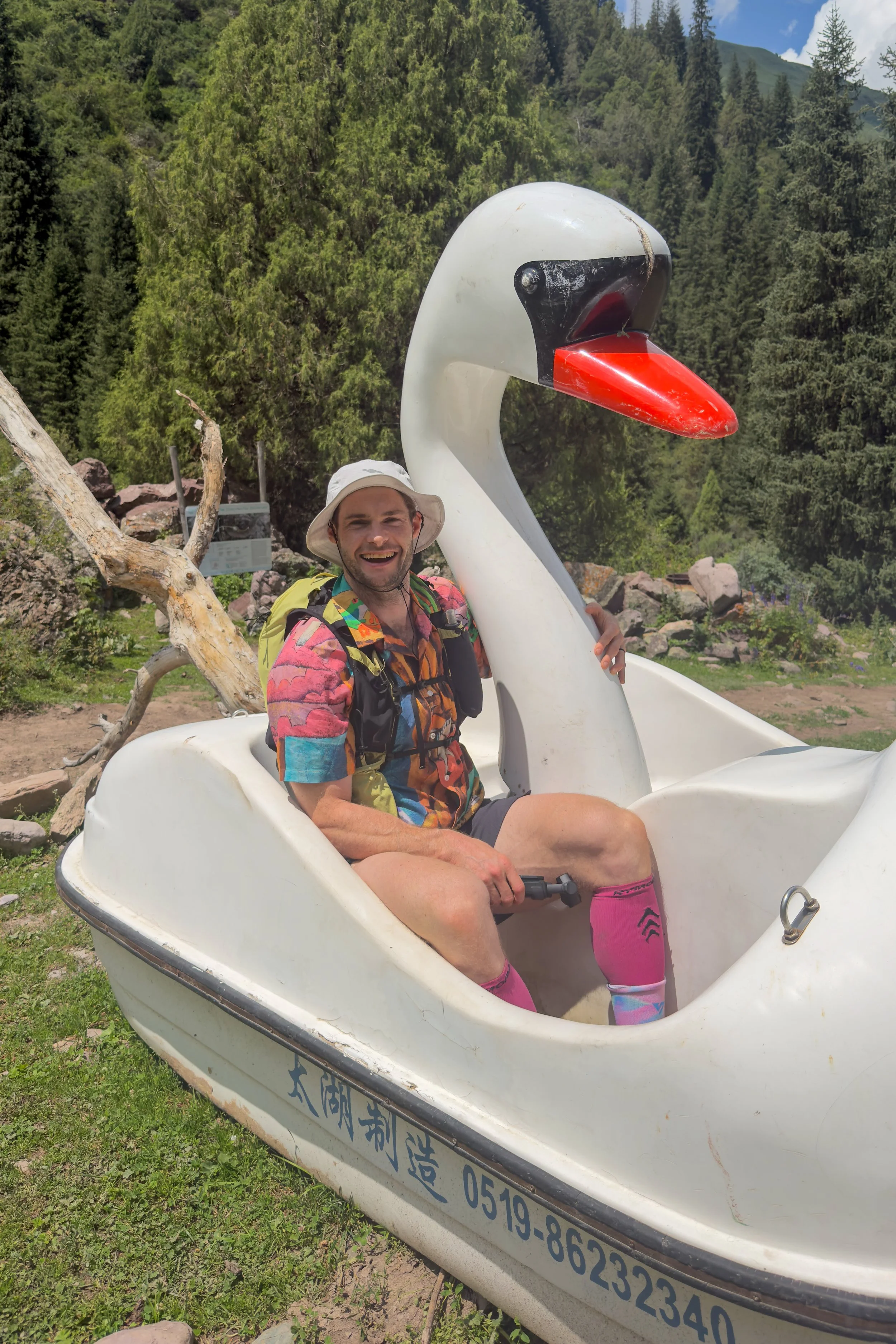
Starting at around 1,900 metres above sea level, the hike got off to a hilarious start we we passed a Swan pedalo a tth ebase of the trail, which was absolutley baffling.
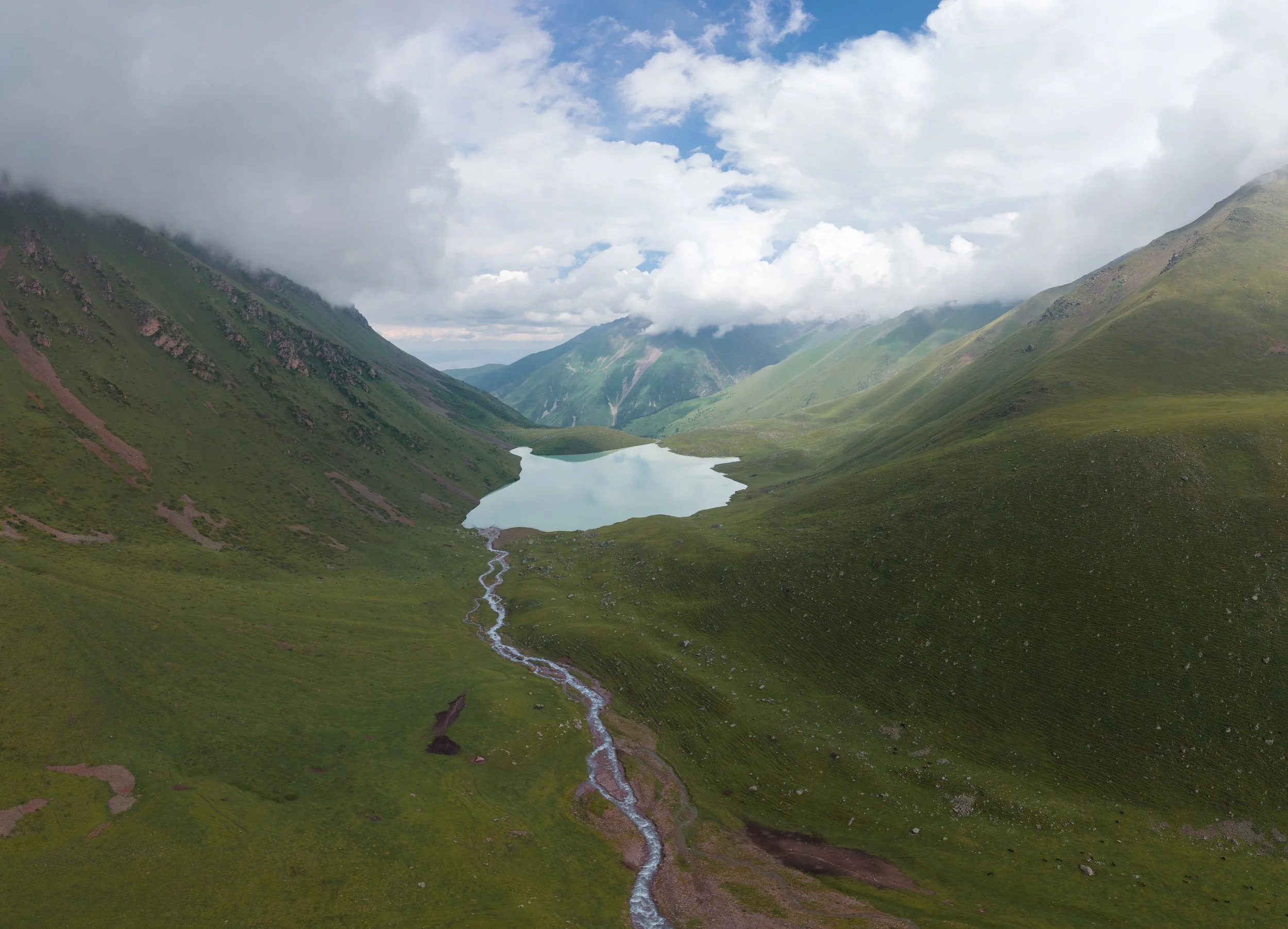
The trail started off steady alongside a fast-flowing river, before rising steeply through pine forest, past a yurt camp before opening out into a beautiful alpine valley.
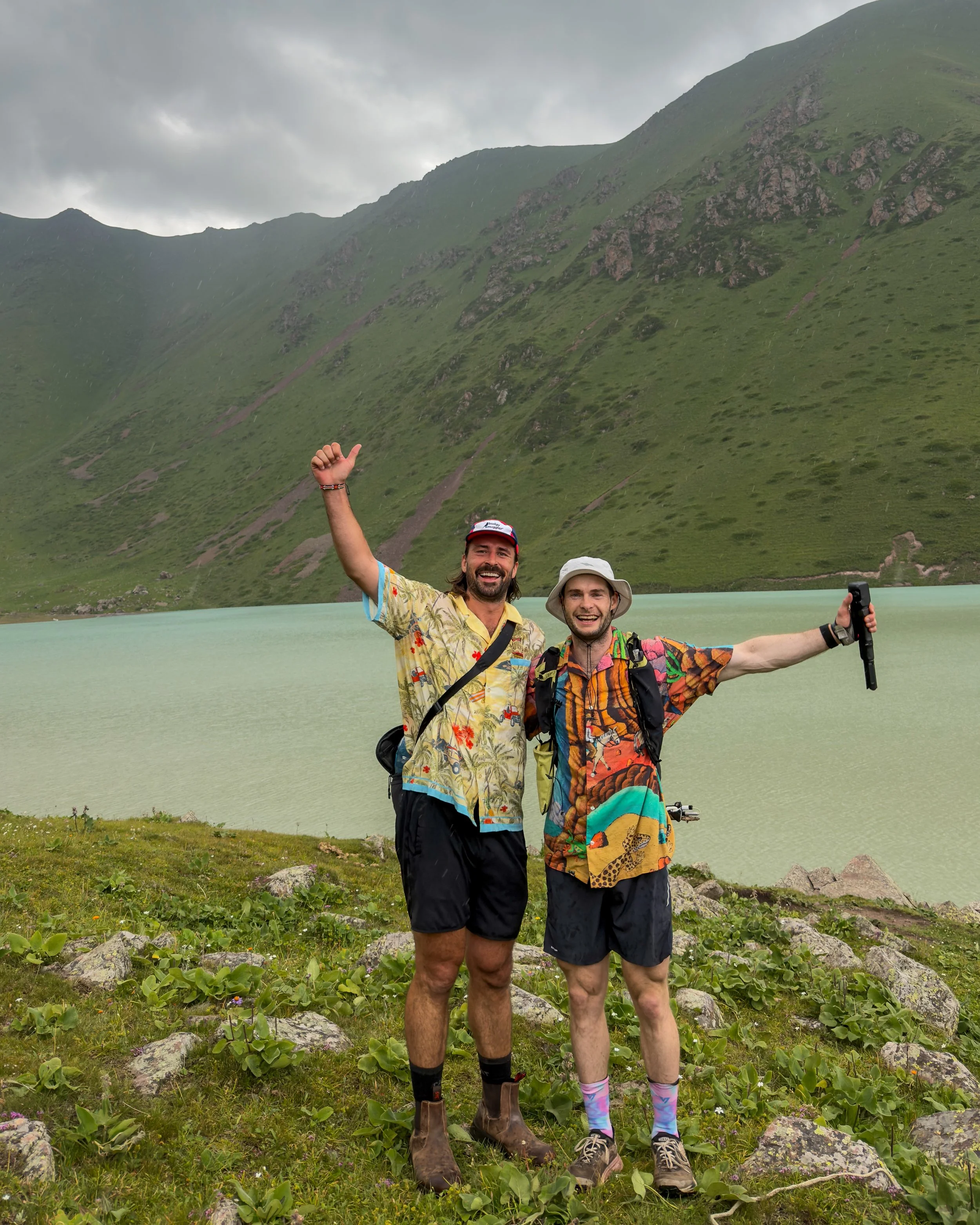
Harry and I couldn't resist pushing the pace and reached the lake in around an hour and 25 minutes, just in time for the weather to remind us who was really in charge.
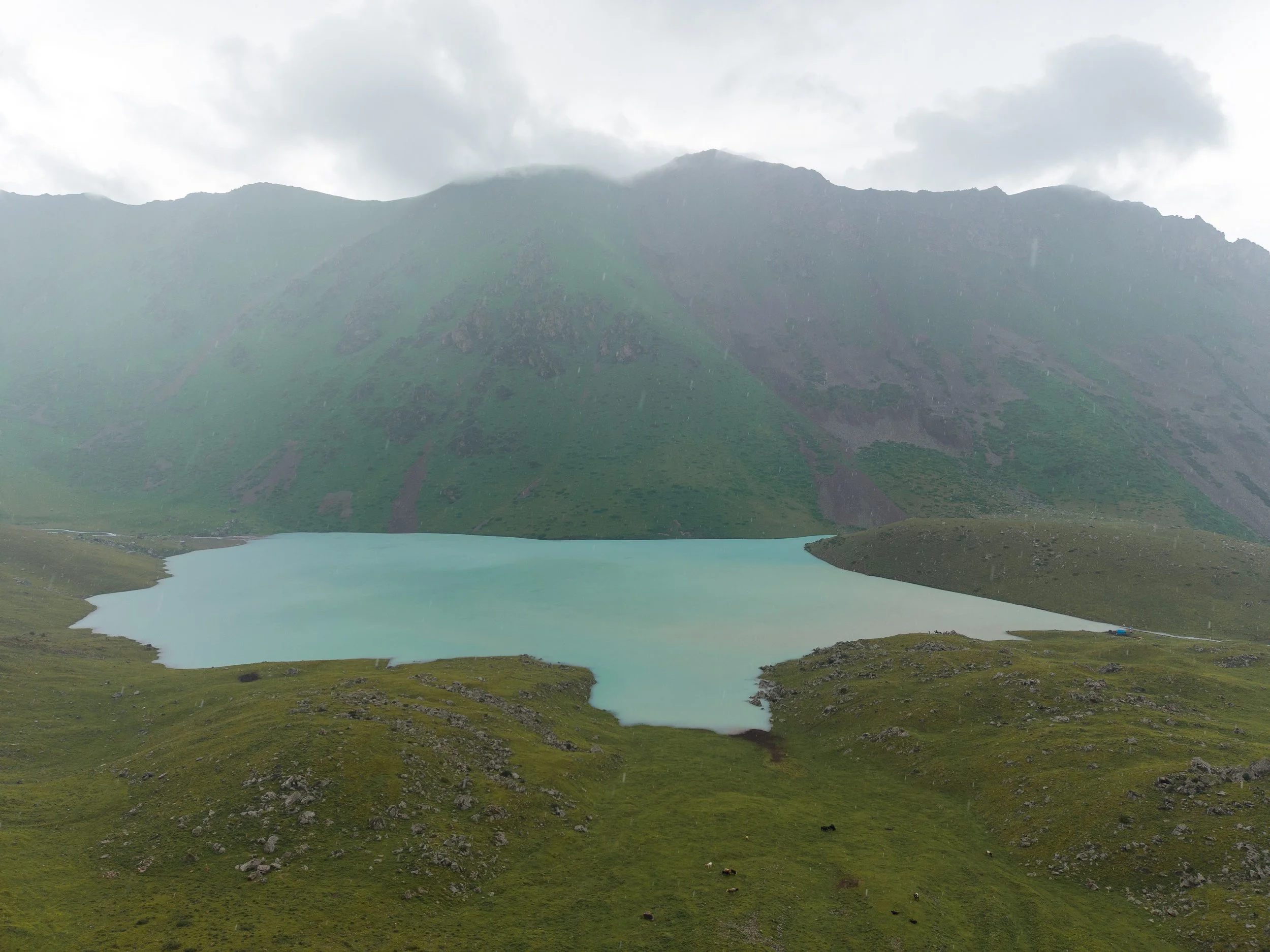
Almost the moment we arrived, thunder began echoing around the surrounding mountains before the heavens opened. To make matters worse, my drone was still hovering around 300 metres above the lake.
Thankfully, I managed to bring it safely back to the ground before making a dash for the nearest shelter, which turned out to be little more than a plastic sheet stretched between a few wooden poles. Safe to say it offered more moral support than actual shelter.
By the time the storm passed, we were absolutely soaked, but there wasn't much else to do other than laugh about it.
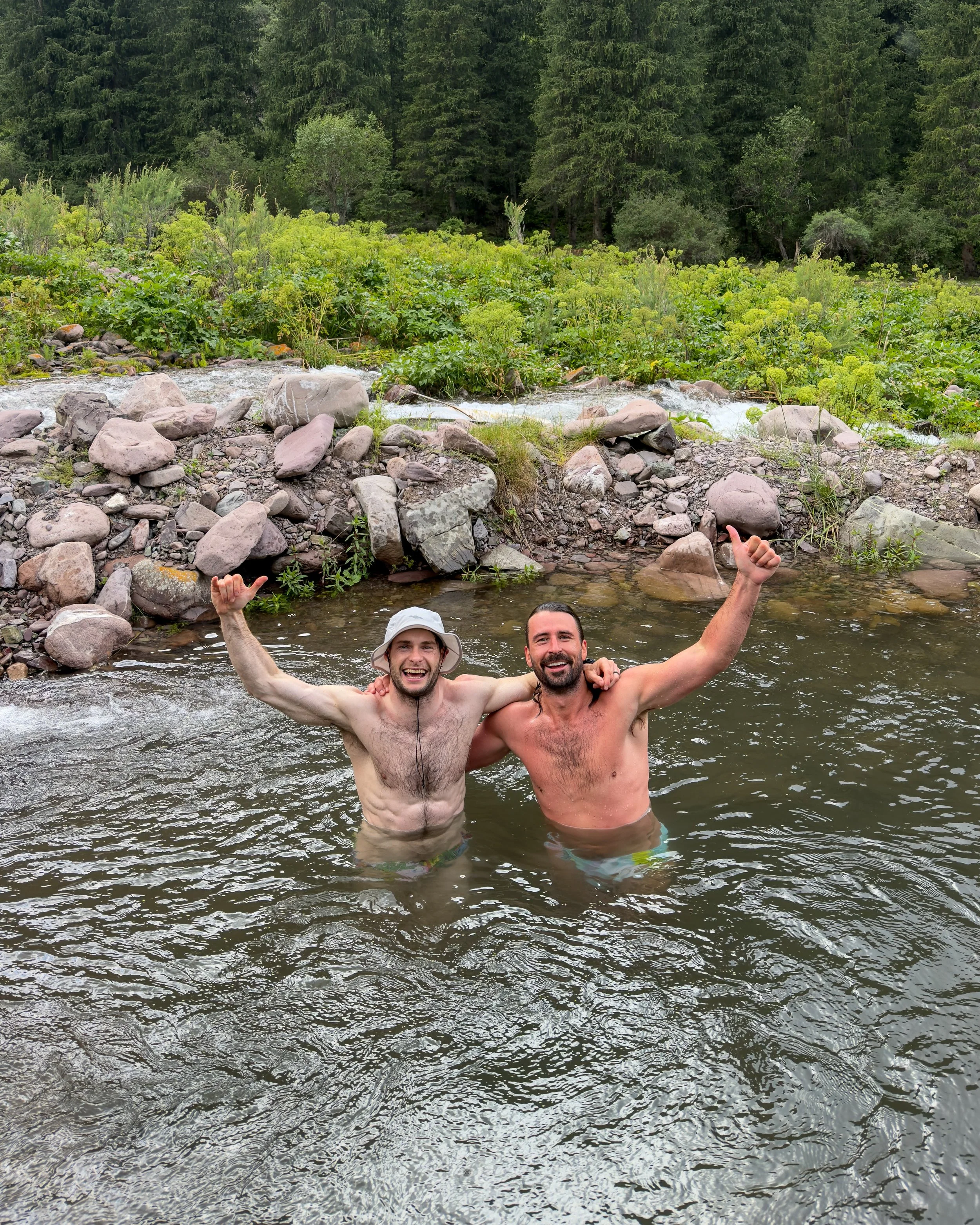
The walk back down was considerably quicker and, before leaving the valley, Harry and I decided to finish the hike in the best possible way, by soaking in the river beside the trailhead.
It was bitterly cold, but after a hot climb and an unexpected soaking from the storm, it somehow felt like the perfect way to round off our final hike in Kyrgyzstan. What’s more we were joined by Rhys and Abbie and also Julian and his son, which made the cold dip even more memorable.
In total, we covered just over 10 kilometres with around 850 metres of ascent in just under 3 hours, before making the final drive back towards Bishkek.
We reached the hotel having driven the trusty Subaru 1,617km over nine unforgettable days. It had tackled everything the Kyrgyzstan nomads Trip had thrown at it and much more, becoming just as much a part of the adventure as the places we'd visited.
That evening, me Harry, Rico, Mia, Abbie and Rhys headed out for one last meal (and a few beers) together.
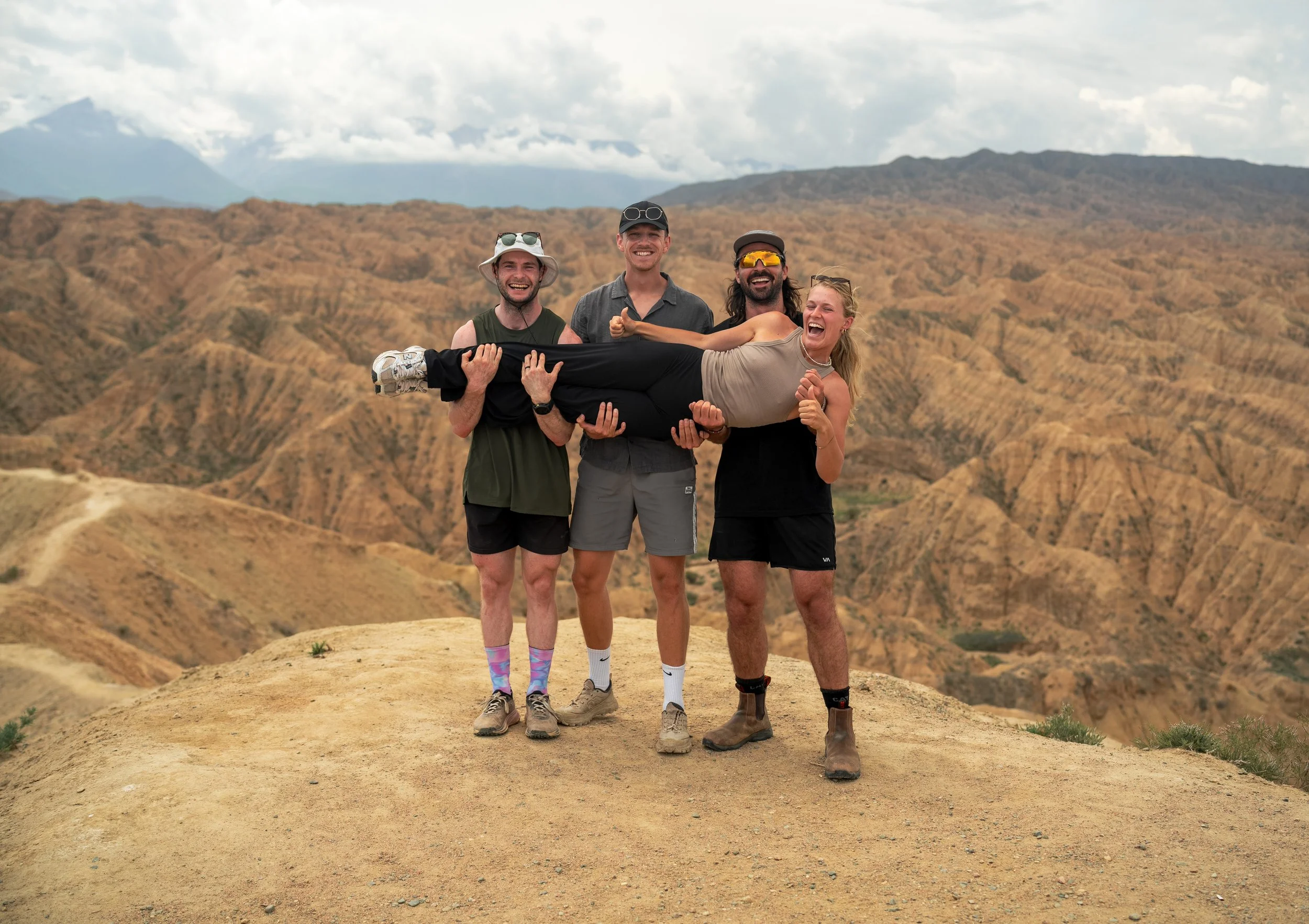
As much as the landscapes had been the star of the show over the previous nine days, it was the people who made the trip what it was. What had started as a group of strangers had somehow turned into a group of friends, brought together by endless hours on the road, shared meals, spontaneous roadside stops and the sensational scenery which Kyrgyzstan had offered us all.
It was the ideal ending to an unforgettable adventure
Final Thoughts
When I booked this trip, I expected incredible mountains, beautiful lakes and some fun roads to drive.
What I didn't expect was just how beautifully diverse and dramatic Kyrgyzstan would be.
The landscapes are quite simply some of the most impressive I've ever seen, and that's coming from someone who's explored the Dolomites, the Canadian Rockies, the Pacific Northwest, New Zealand and many other spectacular parts of the world.
Over the course of ten days, we drove almost 1,600 kilometres through towering mountain ranges, crossed high-altitude passes, wandered through red rock canyons that looked as though they'd been lifted from the American Southwest, swam in alpine lakes, rode horses across the steppe, slept in traditional yurts and experienced some of the warmest hospitality I've encountered anywhere in the world.
No two days ever felt the same. One morning we'd be driving through lush green valleys beneath snow-capped peaks, and by the afternoon we'd be exploring landscapes that looked more like Iceland, Patagonia or Utah. The sheer variety was unlike anything I've experienced on any other road trip.
One of the biggest strengths of the trip was just how well thought out the route was. Every driving day felt different, with a brilliant mix of mountain passes, viewpoints, hikes, activities and overnight stops. It never felt as though we were driving simply to get from A to B, and almost every hour revealed another landscape completely different from the last.
The Kyrgyzstan Nomads app deserves just as much credit. Once downloaded, everything worked completely offline, which proved invaluable given how often we found ourselves without signal. Each day included offline maps, detailed route descriptions, clickable Google Maps pins, recommended places to stop, eat and refuel, along with useful information about every destination. We found ourselves referring to it constantly and it removed almost all of the stress that usually comes with navigating such a remote country.
Despite having a structured itinerary, there was still plenty of freedom to make the trip your own. I swapped one of the planned days for my hike to Ala-Köl, while others in the group chose different stops and activities along the way. Having that balance between structure and flexibility meant everyone could tailor the adventure to suit their own interests.
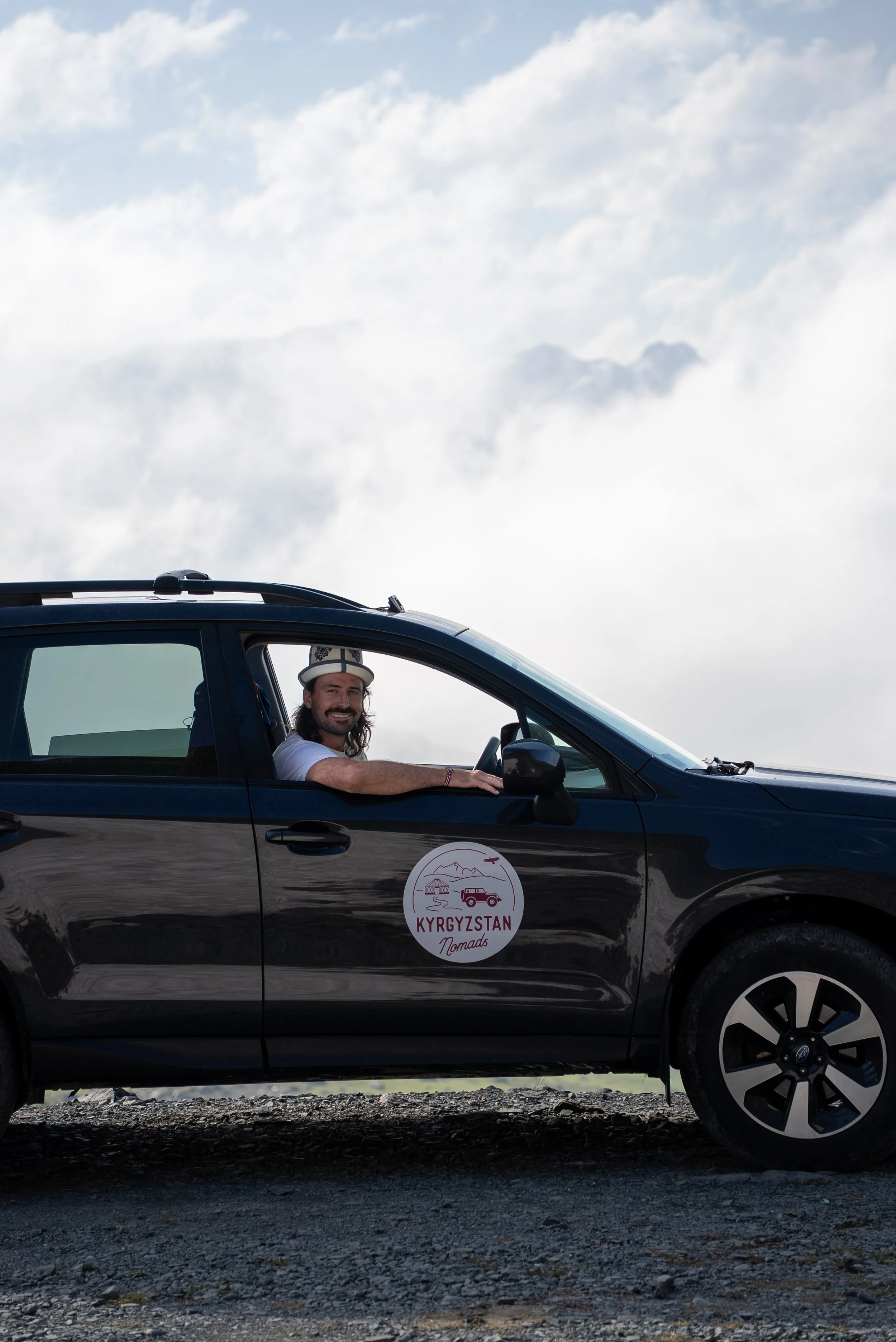
The Subaru Forester also deserves a mention. Over nine days it tackled everything we threw at it, from winding mountain passes and rough gravel roads to long driving days, all while being comfortable, reliable and genuinely enjoyable to drive. On a self-drive adventure like this, having complete confidence in your vehicle makes a huge difference.
Travelling with Harry made the trip even better. We've been close friends for years and share the same slightly unhealthy obsession with travel, landscapes, content, and chasing adventure. Whether it was stopping every five minutes because we'd spotted another ridiculous viewpoint or spending far too long trying to get the perfect drone shot, I genuinely can't think of anyone I'd rather have shared this adventure with.
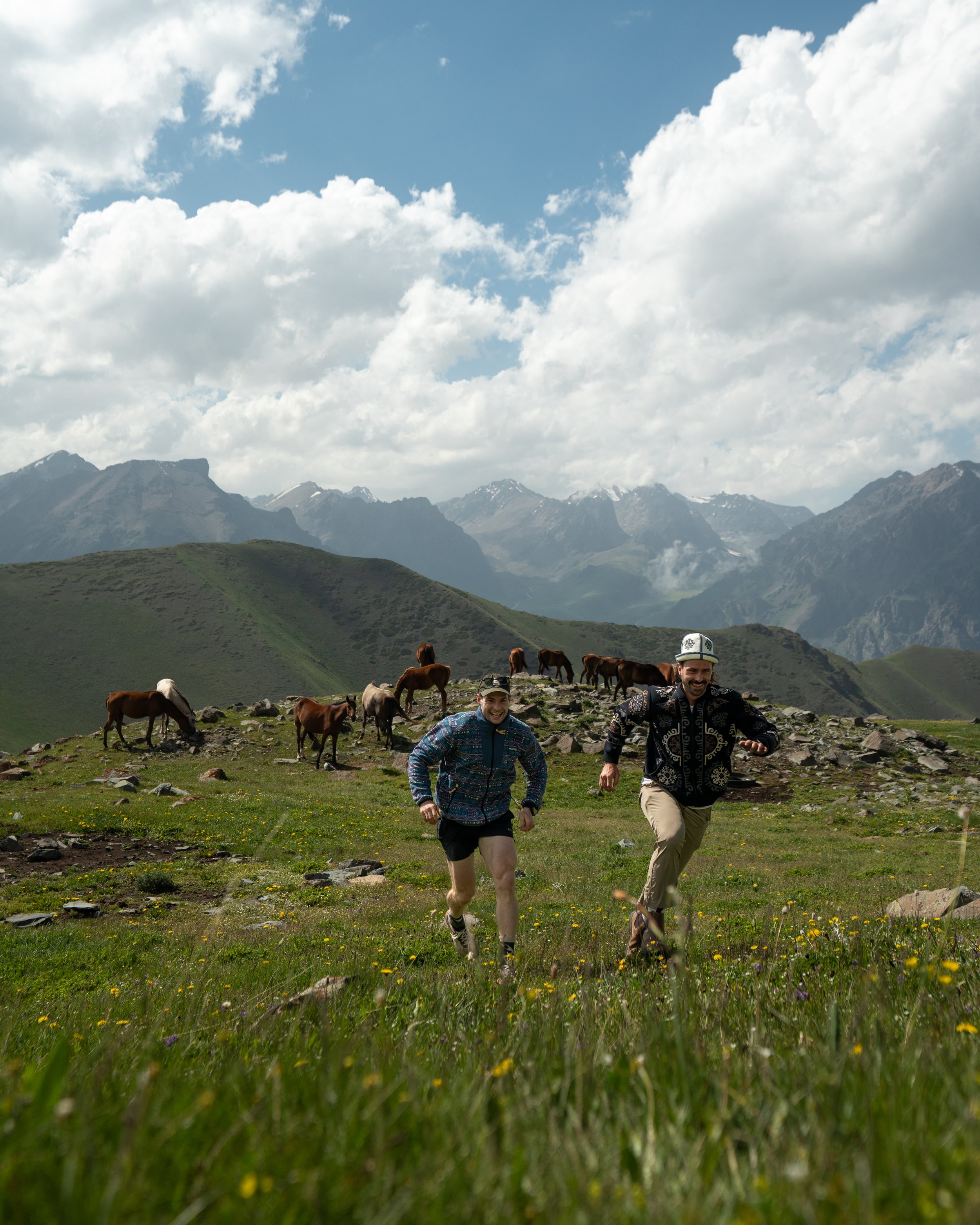
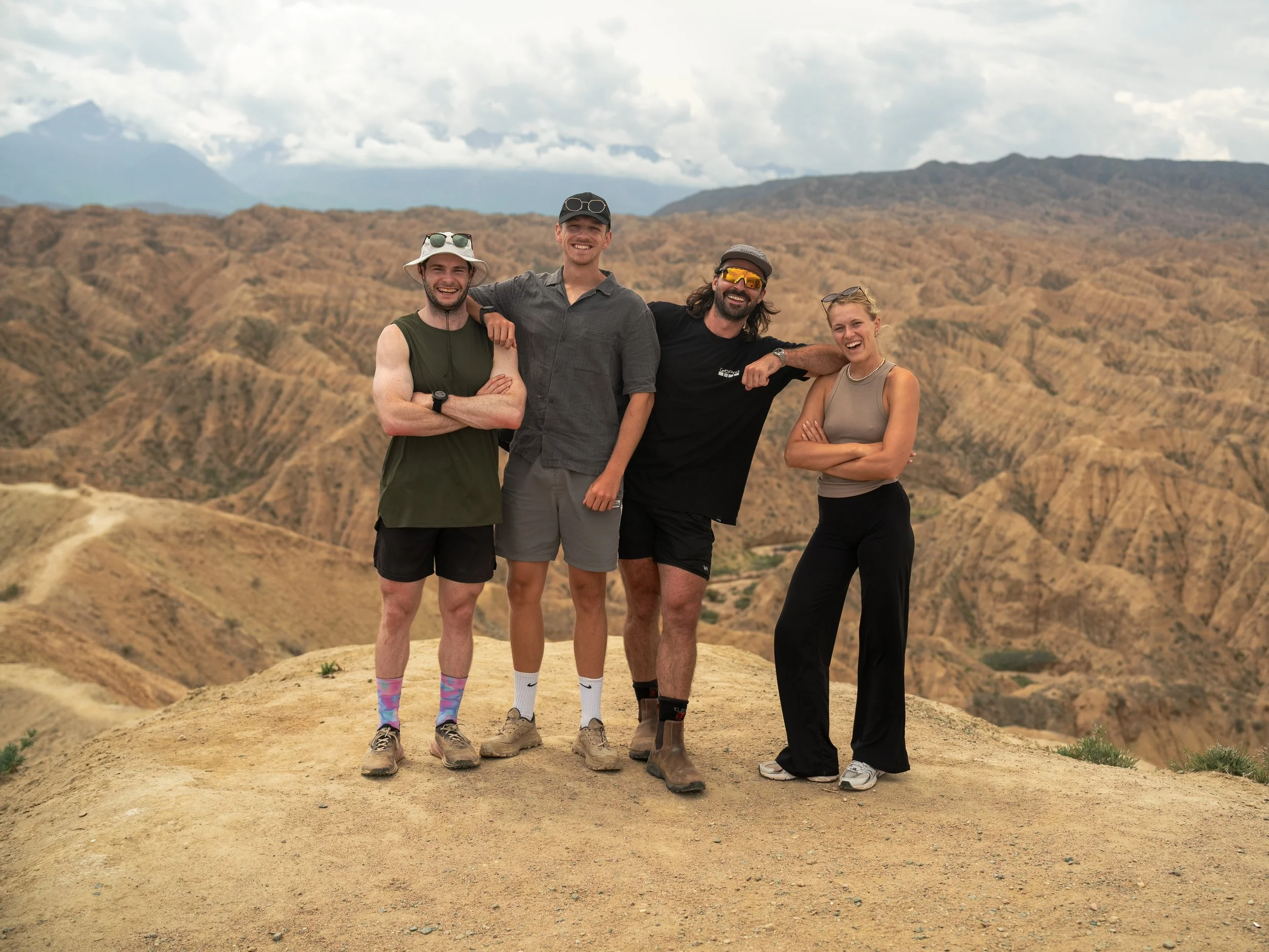
The rest of the group also played a huge part in making the trip so memorable. What started as a group of complete strangers quickly turned into a group of friends, brought together by long days on the road, shared meals and increasingly ridiculous stories. By the end of the trip, it genuinely felt like we were saying goodbye to people we'd known for far longer than nine days.
Out of everyone, a special mention has to go to Rico and Mia. As fellow content creators, we immediately clicked and ended up spending a huge amount of the trip together. Whether we were helping each other capture content, flying the drones or stopping for yet another ridiculous viewpoint, they made an already brilliant trip even more enjoyable. I have no doubt we'll cross paths on another adventure somewhere in the world.
If I could change one thing about the route, it would be the drive along the northern shore of Issyk-Kul. Compared to the wild, rugged landscapes we'd experienced elsewhere, it felt noticeably more developed and lacked the same sense of adventure. That small criticism aside, this was genuinely one of the best road trips I've ever done.
If you're looking for an adventurous self-drive destination that still feels relatively undiscovered, I honestly can't think of many places I'd recommend more highly than Kyrgyzstan. Booking through Kyrgyzstan Nomads also removes hours of planning, research and logistical headaches, leaving you free to enjoy the anticipation before the trip and focus entirely on the adventure once you arrive.
I came expecting an incredible adventure, and it delivered in spades.
The road trip gave me the perfect introduction to Kyrgyzstan, but I also feel like I've only scratched the surface of what this incredible country has to offer. I'll definitely be back, as I'd love to spend even more time in the mountains, tackle some of the country's incredible multi-day hikes and explore the remote corners we simply couldn't fit into ten days.
If you fancy booking the Kyrgyzstan Nomads trip you can find out all the information on their website below
My Top Tips for Visiting Kyrgyzstan
After spending ten days road-tripping around Kyrgyzstan, these are the things I wish I'd known before I arrived. Hopefully they'll help you make the most of your own adventure.
-
As soon as you arrive in Bishkek Airport, I'd recommend buying an eSIM.
We used Beeline, which offered unlimited data for around $12 USD. The staff even installed it on my phone while I waited for my luggage, making the whole process incredibly easy.
Coverage was surprisingly good throughout the trip. Signal was excellent in towns and cities and only really disappeared in the more remote mountain areas, where there was no signal regardless of which network you used.
-
Cash is king in Kyrgyzstan.
Outside of larger supermarkets, fuel stations and some restaurants, card payments are still relatively uncommon, particularly in rural areas, yurt camps and smaller villages.
I'd recommend exchanging or withdrawing enough Kyrgyz Som while you're in Bishkek. It's far better to be looking at cash than looking for it.
I withdrew £15,000 SOM (£130) using my Starling card In Bishkek and that was more than enough to get me through the trip as I paid mostly for fuel using my card
-
There are three apps I'd recommend downloading before your trip:
Yandex Go for taxis around Bishkek. Think of it as Central Asia's version of Uber and it's by far the easiest and cheapest way to get between the airport and the city.
Google Translate, with both the Russian and Kyrgyz language packs downloaded for offline use.
Maps.me, which I've used all over the world. It works offline and shows hiking trails, viewpoints, restaurants, accommodation, supermarkets and countless other points of interest. You can also save your own pins. The free version includes ten downloadable regions, and the whole of Kyrgyzstan counts as just one.
-
One of my favourite purchases from the trip was a traditional Kalpak, the iconic white felt hat worn by Kyrgyz men.
You can usually pick one up in Osh Bazaar for around 500 Som.
Not only is it a brilliant souvenir, but I found it became a real conversation starter. Everywhere Harry and I wore ours, locals smiled, commented on them or came over for a chat. We only ever had positive interactions.
-
Even if you're visiting in the middle of summer, don't assume you'll only need warm weather clothing.
During our trip in early July, I spent most days driving around in a vest, shorts and Crocs, with temperatures comfortably above 30°C in some of the valleys. Yet by the evening at Song-Kul, over 3,000 metres above sea level, I was wearing a lightweight down jacket, a beanie.
The weather can also change incredibly quickly. A clear blue sky can turn into a thunderstorm in a matter of minutes, especially in the mountains. When it rains, it tends to rain properly, so a decent waterproof jacket isn't optional in my opinion.
I'd also recommend packing lightweight layers rather than bulky clothing. It allows you to adapt throughout the day as you climb and descend thousands of metres in elevation.
Finally, don't forget a pair of Crocs, sliders or flip-flops. You'll regularly be asked to remove your shoes before entering homestays and yurts, so having something easy to slip on and off makes life much easier than constantly undoing hiking boots.
-
If you're planning on doing any hiking or spending time in Kyrgyzstan's more remote mountain regions, I'd strongly recommend bringing a satellite messaging device, such as a Garmin inReach Messanger plus
Mobile signal is surprisingly good in towns and along many of the main roads, but once you head into the mountains it can disappear completely. During our stay at Song-Kul and on my hike to Ala-Köl, I spent long periods without any signal at all.
I carried my Garmin inReach throughout the trip, which allowed me to send messages, photos and voice notes back home even when I was completely off-grid. More importantly, it gave me peace of mind knowing I could contact the emergency services if something went wrong.
Hopefully you'll never need it, but when you're travelling through such remote landscapes, it's one of those bits of kit that's far better to have and not need than need and not have.
-
I'd strongly recommend hiring a proper 4x4.
It'll make the rough roads considerably more comfortable and open up access to many of Kyrgyzstan's best viewpoints, mountain passes and yurt camps.
Our Subaru Forester was absolutely perfect for this itinerary and handled everything we threw at it with ease.
If you're planning to visit some of Kyrgyzstan's most remote regions, you may need a more specialised, high-clearance 4x4. That said, many of these places can also be reached using local 4x4 taxis or even on horseback, so I don't think it's worth hiring an extreme off-road vehicle unless you have a very specific itinerary.
-
One thing we quickly realised was that driving in Kyrgyzstan takes far longer than the distances would suggest.
It's not because the roads are particularly difficult, but because they're often slower than expected and you'll find yourself stopping constantly. Every mountain pass seems to reveal another incredible viewpoint, river, canyon or valley that's impossible to drive past without pulling over.
For that reason, I'd recommend getting on the road as soon after breakfast as possible. Get your bags packed, load the car before you eat and be ready to leave as soon as you've finished breakfast. Those extra 30 to 60 minutes in the morning make a huge difference by the end of the day.
Before setting off, it's also worth checking how long it'll take to reach your accommodation that evening, including all of your planned stops.
That'll give you a much better idea of how much time you actually have to spend at each location.
If you're travelling with Kyrgyzstan Nomads, this couldn't be easier. The app includes the entire day's route with all the suggested stops already built in, so if you have signal, you can simply tap the Google Maps link and it'll calculate the full route, including every stop and the estimated driving time.
Harry and I got caught out a couple of times by spending too long at the beginning of the day, only to realise we still had several hours of driving ahead of us. We then had to rush through some of the later stops, which was a shame.
-
This might sound like strange advice, but don't linger too long at every viewpoint.
Kyrgyzstan is one of the few countries I've visited where almost every corner reveals another incredible landscape. If you spend an hour at every stop, you'll soon find yourself rushing through places later in the day.
We definitely made that mistake on a couple of occasions.
Unless it's somewhere you've specifically been looking forward to visiting, enjoy the view, take a few photos, soak it all in and then continue your journey. Chances are there's another equally spectacular viewpoint just a few kilometres further down the road.
-
If you get the chance, I'd highly recommend stocking up on snacks, drinks and lunch supplies at a Globus supermarket.
They're the largest supermarket chain in Kyrgyzstan and, in my experience, had by far the best selection of food. Most stores also have an excellent fresh deli counter where you can pick up sandwiches, salads, pastries and other ready-made meals, which are perfect for taking on the road.
If you don't come across a Globus, keep an eye out for SPAR instead. We stopped at one on the drive between Bokonbayevo and Chon-Kemin and were really impressed by the quality of the fresh food, especially the deli counter.
Having a few snacks and a packed lunch in the car also gives you much more flexibility, allowing you to stop and eat at one of the countless scenic viewpoints rather than having to drive into the next town looking for a restaurant.
-
If possible, fill up at Bishkek Petroleum fuel stations.
They're easy to recognise by their green branding and, unlike many smaller stations, they accept card payments.
Many independent fuel stations only accept cash or QR code payments, and you'll normally need to go inside the kiosk before they'll activate the pump.
-
One of the best things about travelling in Kyrgyzstan is that some of the most memorable experiences are often the ones you never planned.
It's easy to become fixated on ticking off every viewpoint, waterfall or attraction you've marked on your map, but don't be afraid to change your plans if something better comes along.
Some of my favourite moments happened because we made spontaneous decisions. We continued over a mountain pass instead of turning around, skipped a few planned stops that didn't appeal to us and dedicated an entire day to hiking to Ala-Köl because the weather was simply too good to ignore.
None of those decisions were part of the original plan, yet they all ended up making the trip even better.
My advice would be to have a rough itinerary, but don't be afraid to adapt it. If the weather is perfect, make the most of it. If you stumble across an incredible viewpoint, stay a little longer. If somewhere isn't living up to your expectations, move on.
Kyrgyzstan rewards curiosity, and some of the best memories come when you allow yourself the flexibility to follow it.
What Should I Pack for Kyrgyzstan?
The best advice I can give is to pack for every season.
Even though we visited in early July, temperatures varied enormously depending on where we were. Most days I was driving around in shorts and a vest, yet by the evening at Song-Kul I was wearing a beanie and a lightweight down jacket. Add in the occasional thunderstorm and you'll soon realise why layers are far more useful than bulky clothing.
If you're planning on doing plenty of hiking, I'd also recommend taking a Sateliite messaging hiking poles and suitable footwear alongside electrolytes.
You’re regularly travelling and hiking above 3,000 metres, where the combination of altitude, heat and dry mountain air can leave you dehydrated much quicker than you might expect. I drank electrolytes almost every day, particularly after hikes and long days in the car, and I'd definitely pack them again.
Another piece of kit I wouldn't travel without is a satellite communicator. I carried my Garmin inReach throughout the trip, and it allowed me to send messages, photos and voice notes back home when we had no mobile signal, including during our stay at Song-Kul and on my hike to Ala-Köl. It also provided peace of mind should anything have gone wrong in the mountains.
-
Waterproof jacket
Windbreaker
Waterproof overtrousers
Lightweight down jacket
Fleece
Tops X 2-7 - I highly recommend merino as they're naturally anti-odour
Shorts x 2-4
Pants and socks
Casual lightweight trousers
Hiking trousers
Swimwear
Cap or bucket hat
Beanie
Thin gloves
Buff
Footwear
I wore Crocs and trail shoes for the duration of the trip. I don’t think you need waterproof footwear as its roasting, and even if your shoes do get wet, they will dry quickly
Hiking boots or trail shoes
Second pair of casual footwear
Sliders, Crocs, or flip-flops (essential, as you'll often remove your shoes before entering homestays and yurts)
Other
10 to 25 litre hiking daypack
Hiking poles
Dry bags
Microfibre towel
Water filter (optional, but useful if you're planning longer hikes or visiting more remote areas)
You can find my hiking kit List here: https://ohwhataknight.co.uk/my-hiking-gear
Electronics
Camera & Drone
Power bank
European Travel adaptor
Charging cables
Garmin inReach or another satellite communicator
Health & Toiletries
Suncream
Sunglasses
Electrolyte tablets
Wet wipes
Hand sanitiser
Personal medication
Paracetamol or Ibuprofen
Imodium
Antiseptic cream
Mosquito repellent
Help support what I do
I created and I run this website in order to help inform, amaze, inspire people (for free) to get outside and explore the adventurous side of the UK and beyond.
Although I do run some google ads, I have limited them in order to make your experience on this website far more enjoyable.
If you’d like to support this website, you can use the affiliate links below to book your accommodation or transport. These come at no extra cost to you, but help keep this site running.
If you are felling generous you can also buy me a coffee to say thank you, and give me a follow on social media.
Book your car using Discover Cars
Book your accommodation using Booking.com
Thank you, and if you have any questions, leave them in the comments below or drop me an email!
